

Editor’s Note: These twelve photographs from the Spiti–Ladakh high-altitude desert form a quiet visual essay on the geometry hidden in raw landscape — proof that what looks like chaotic terrain is, underneath, built from a small set of repeating forms: branching, tiling, triangulating, curving. The same toolkit shows up at every scale, from a centimeter-wide crack to a kilometers-wide valley.
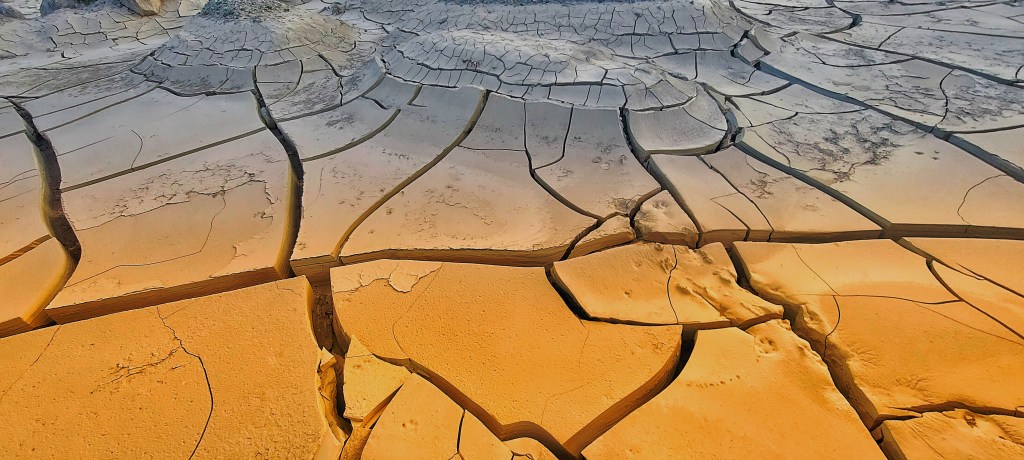
As wet clay dries and shrinks, tension cracks self-organize into a polygonal tiling that minimizes total crack length, the same packing logic behind honeycombs and basalt columns.
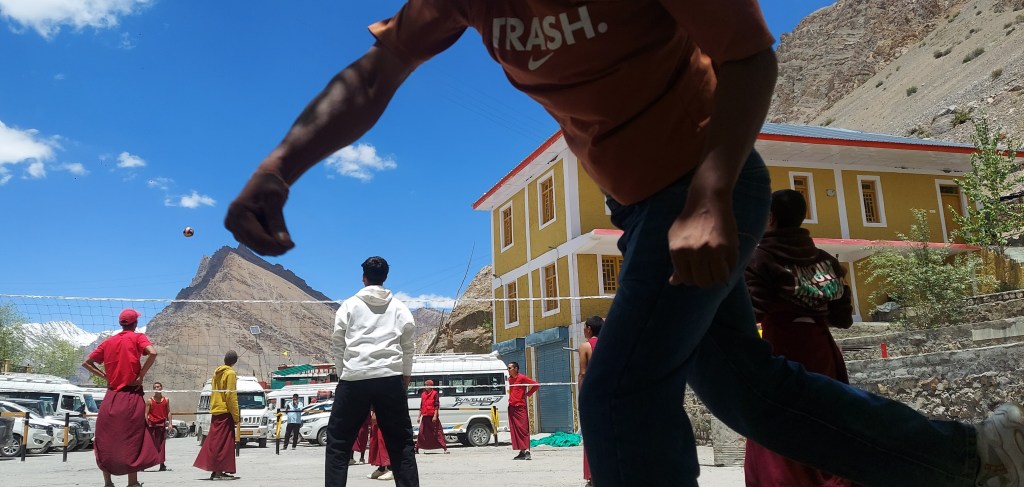
A literal coordinate grid in the net, with the ball’s arc tracing a clean parabola against it — and rectilinear buildings standing in deliberate contrast to the jagged peaks behind them.
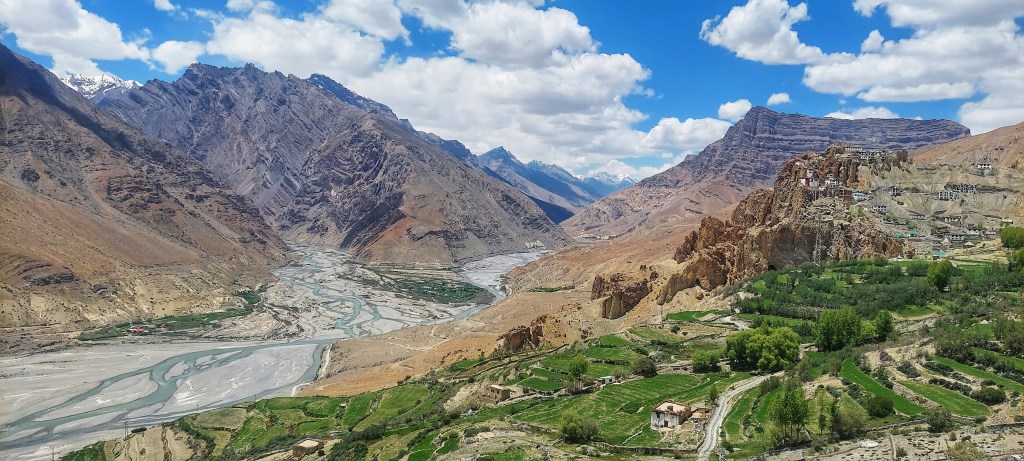
Braided channels split and rejoin in a fractal branching pattern, a visual cousin of how drainage networks minimize energy dissipation; the monastery’s right angles read as a Euclidean island in non-Euclidean terrain.
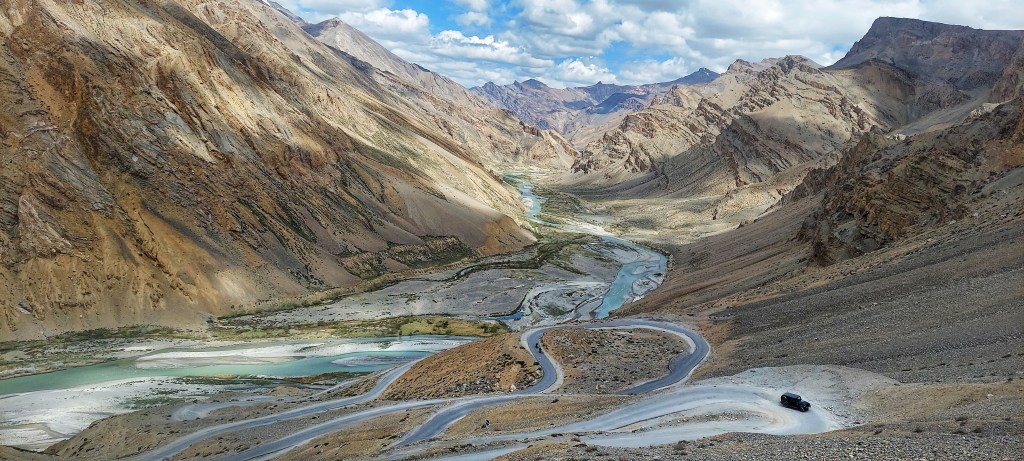
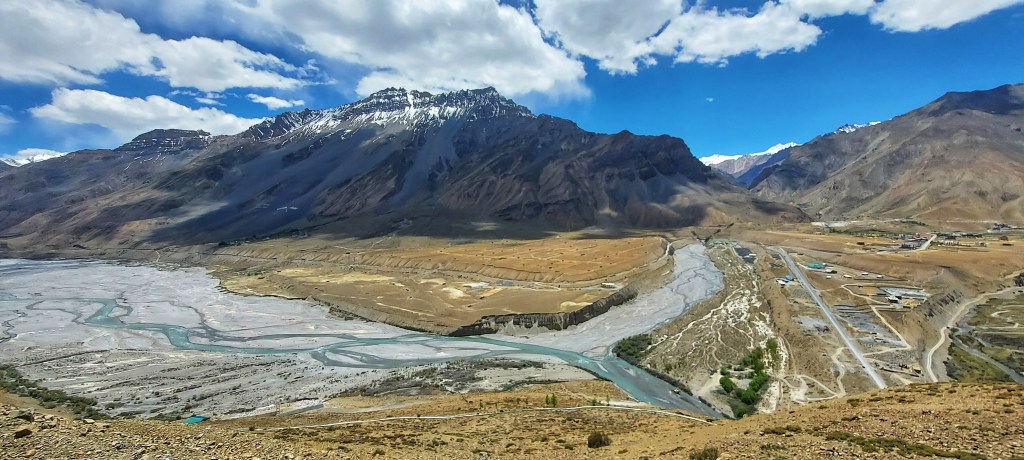
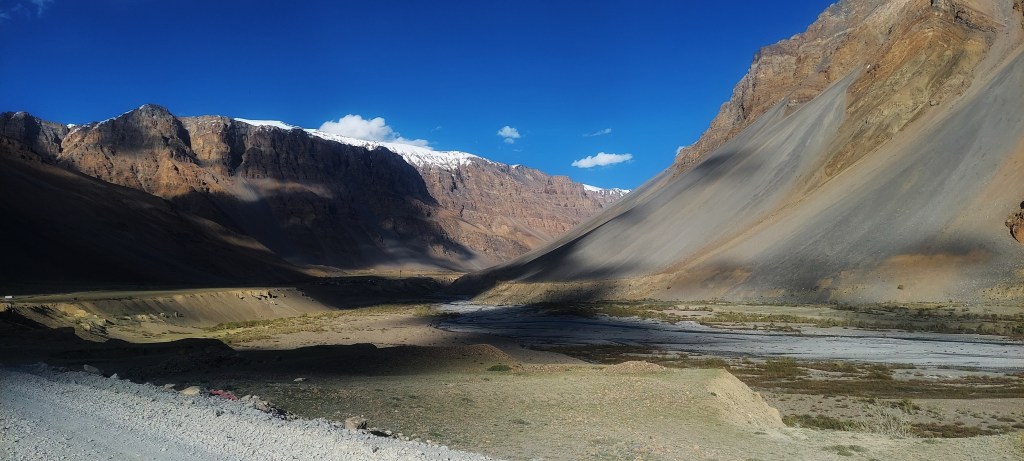
A human echo of river-meander geometry: the road solves the problem of gaining altitude the way a stream solves the problem of losing it, gradually and with curves rather than straight lines.
The same self-similar branching as the confluence shot, but wide enough to show how the pattern repeats almost identically at a larger scale.
The peaks’ overlapping triangular planes give the eye depth cues even without stereo vision, each ridge a slightly smaller triangle nested behind the last.
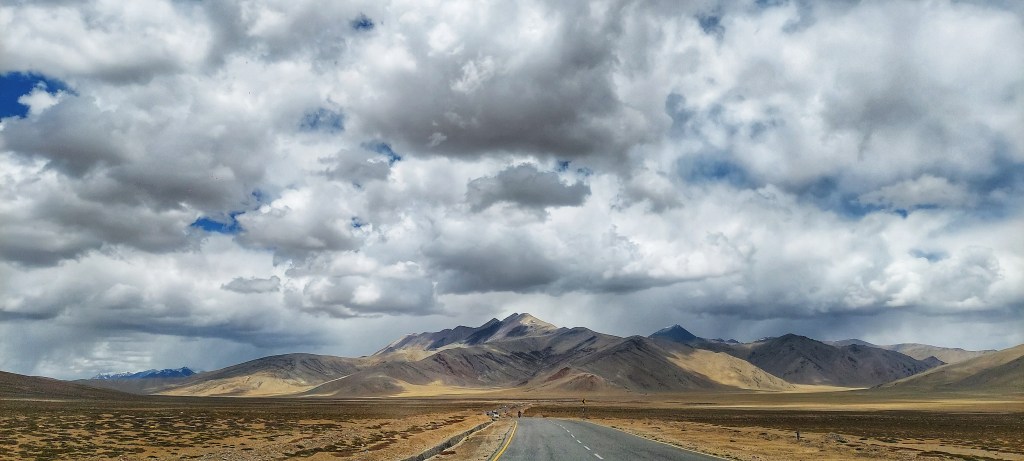
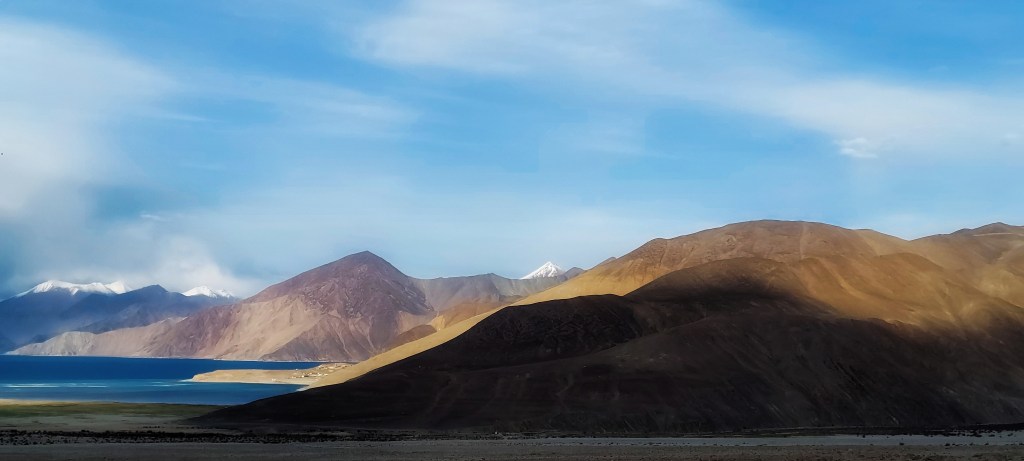
A diagonal sightline doing the compositional work of an implied triangle, pulling the eye from foreground road to the distant peak that anchors the frame.
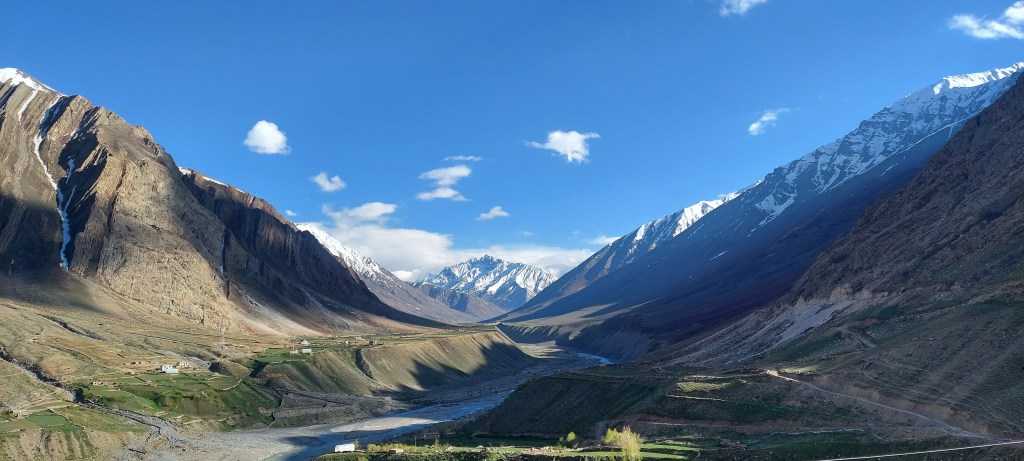
Cultivated fields impose a faint grid onto the valley floor, a soft rectilinear pattern laid gently over the river’s organic curve.
The shoreline’s pale alluvial fan is a sediment-deposition shape governed by the same angle-of-repose logic as a sandpile.
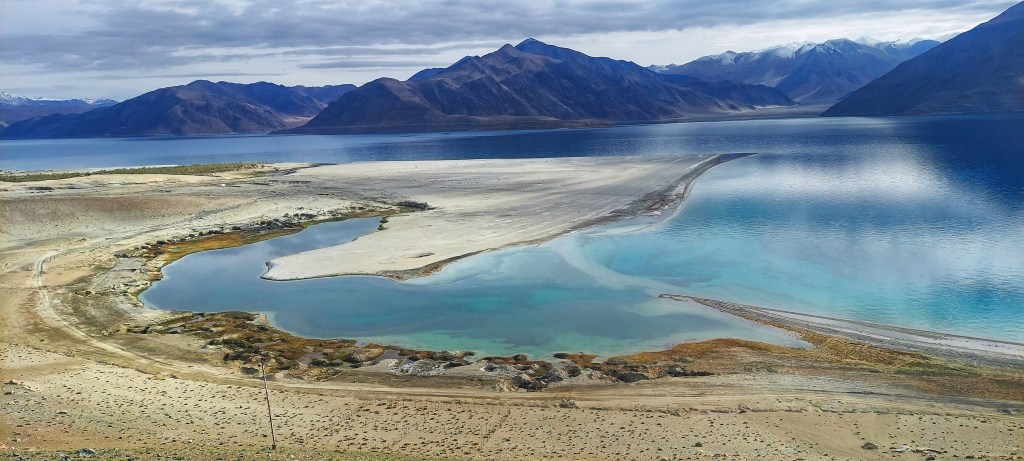
A wider, calmer version of the same fan geometry, this time framed by water on three sides so the eye reads the spit of land almost as a peninsula floating in blue.
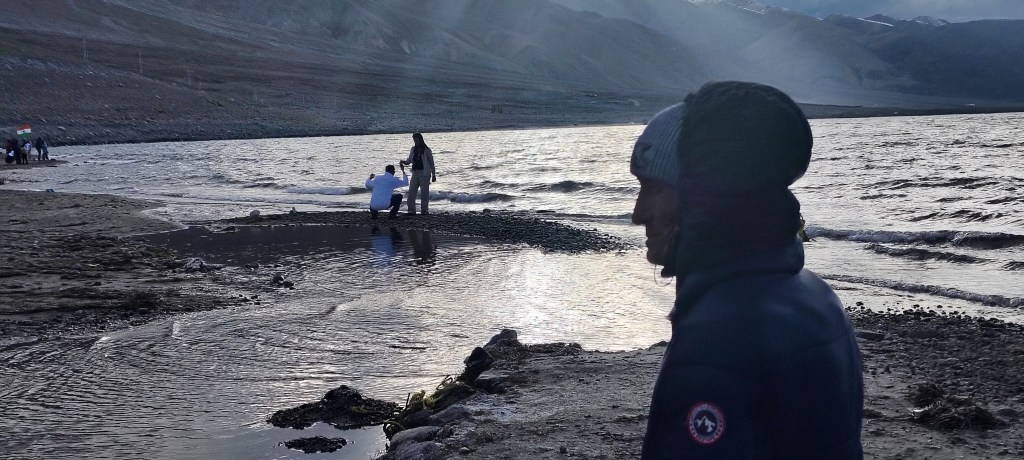
Here the geometry is almost incidental — a loose human cluster against the lake’s straight horizon line — and it’s the contrast between the two that makes the moment feel intimate rather than monumental.
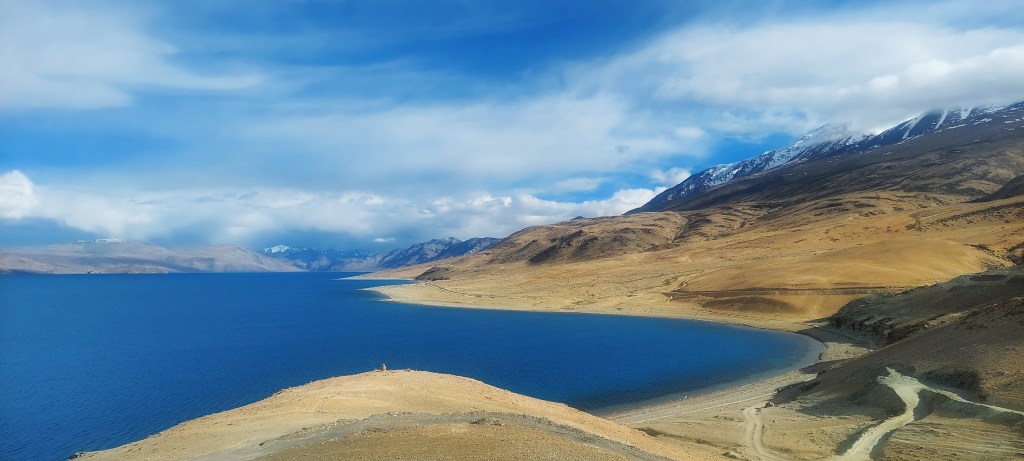
A curving shoreline used the way photographers lean on the rule of thirds: a diagonal that carries the eye from the cairn in the foreground out toward the vanishing point of the bend.
Dr. Sreedeep Bhattacharya is an Associate Professor with Shiv Nadar University. As a Sociologist, he is interested in various aspects of contemporary visual and popular culture. He travels to Ladakh every year for his love for the landscape.

