

Tea, Labour, and Temporary Stillness in Indian Street Markets
Markets are built on movement.
Nothing within them truly rests. Customers bargain quickly. Scooters weave through conversations. Vegetable crates change hands before sunrise. Shopkeepers memorise faces faster than names. Labour repeats itself so relentlessly that exhaustion dissolves into routine. Yet, within this constant movement, tea appears. Not ceremonially. Not luxuriously. In paper cups balanced beside weighing scales, in steel tumblers resting on wooden counters, and in hands roughened by years of labour, tea becomes a brief permission to pause.
These moments of pause became apparent while observing the markets. Vendors who had been standing for hours leaned quietly against shutters. Flower sellers sat in silence before the next customer arrived. Delivery workers gathered around tea stalls, speaking little. Conversations softened, and faces drifted away from business, if only for a few minutes. At first, these moments seemed ordinary, almost forgettable. Tea stalls are so deeply woven into the fabric of Indian street life that they often disappear into the background of everyday movement. However, the longer the observation continued, the more significant these pauses became. Tea was never simply being consumed. It was being used—as rest, routine, conversation, silence, and, at times, a temporary escape from the repetition of labour.
This photo essay is not about tea itself. It is about what people carry silently while drinking it. The market never truly stops. Transactions continue. Voices overlap. Money changes hands. Yet, amidst this constant activity exist brief moments of stillness—moments in which workers quietly reclaim fragments of themselves before returning once again to labour.
In these markets, tea becomes more than a drink. It embodies routine, companionship, silence, negotiation, fatigue, memory, and survival. The compositions are intentionally imperfect because the market itself is imperfect—crowded, unpredictable, noisy, interrupted, and constantly shifting. That authenticity became an essential part of the visual language of the essay.
The project was also drawn to the subtle way tea transforms the atmosphere of the market, even if only briefly. During tea breaks, body language softens. People who had been calling out prices moments earlier sit quietly beside one another. Workers gather without formal invitation. Conversations drift away from commerce towards ordinary thoughts, complaints, jokes, or comfortable silence. These moments reveal a side of the market that exists beneath commerce—one built upon shared fatigue, familiarity, and survival.
The sequencing of the photographs intentionally follows this rhythm. Some images are crowded and socially active, while others become quieter and more solitary. A selection of photographs appears in black and white to slow the visual pace of the essay and emphasise stillness, routine, and emotional weight. Rather than documenting the market chronologically, the narrative unfolds emotionally—from movement to pause, from noise to silence, and eventually back to labour.
These photographs do not seek to romanticise hardship or idealise working-class life. Instead, they focus on the quiet interruptions within labour—moments in which people briefly step outside performance and productivity. In a market where everything is constantly being bought, sold, carried, weighed, or negotiated, these pauses feel profoundly human.
Each image captures not productivity, but interruption. Not commerce, but pause. Not performance, but breath.
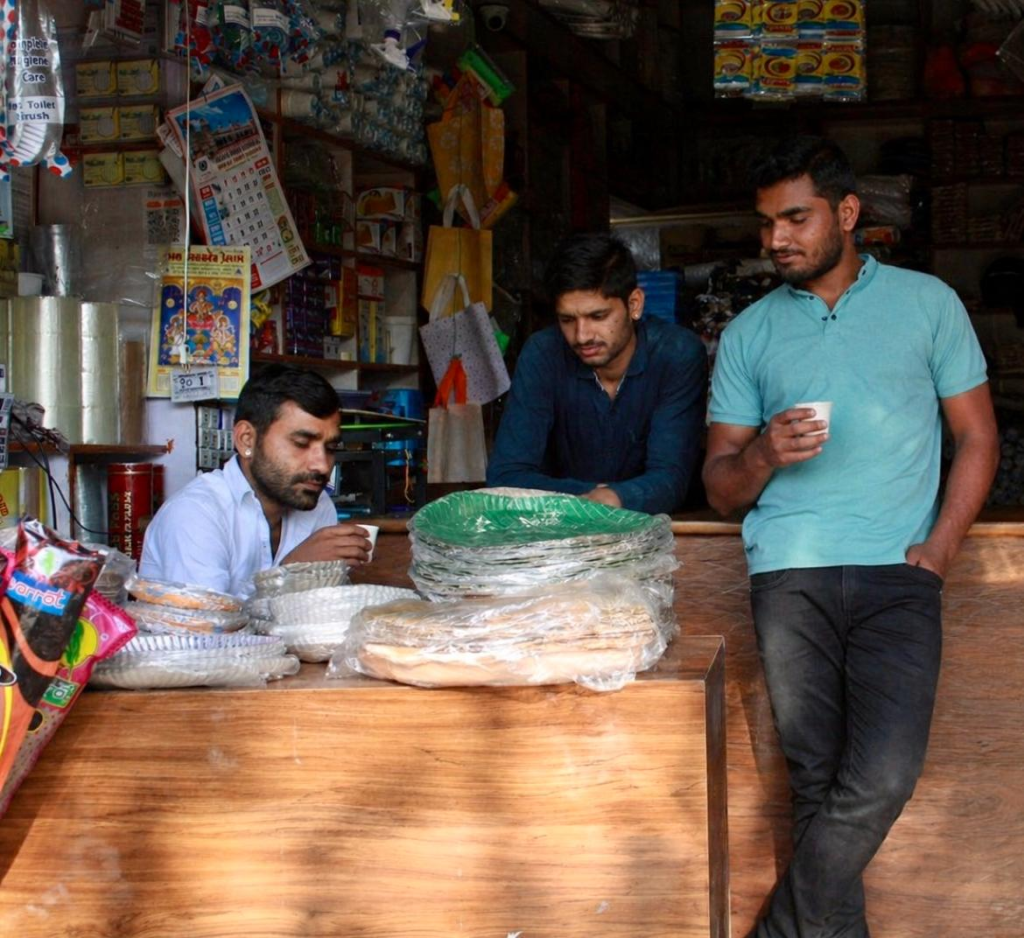
The shop was open, but nobody seemed eager to start speaking again. One man stared quietly into his tea while another kept glancing towards the entrance, unable to fully separate rest from responsibility. What stayed with me was how natural the silence felt. In the middle of a crowded market, exhaustion had created its own language.
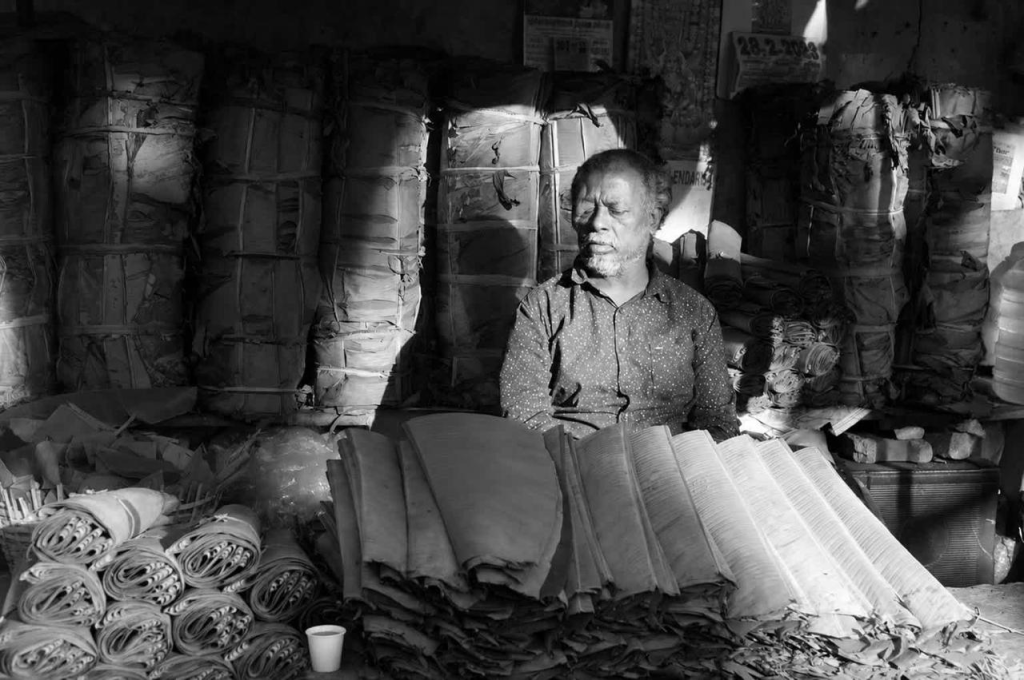
Sunlight briefly touched his face before shifting away again. He closed his eyes for a moment while customers waited outside the frame. Around him, work continued uninterrupted, yet this small pause felt deeply personal—a rare moment when fatigue became visible instead of being hidden behind routine.
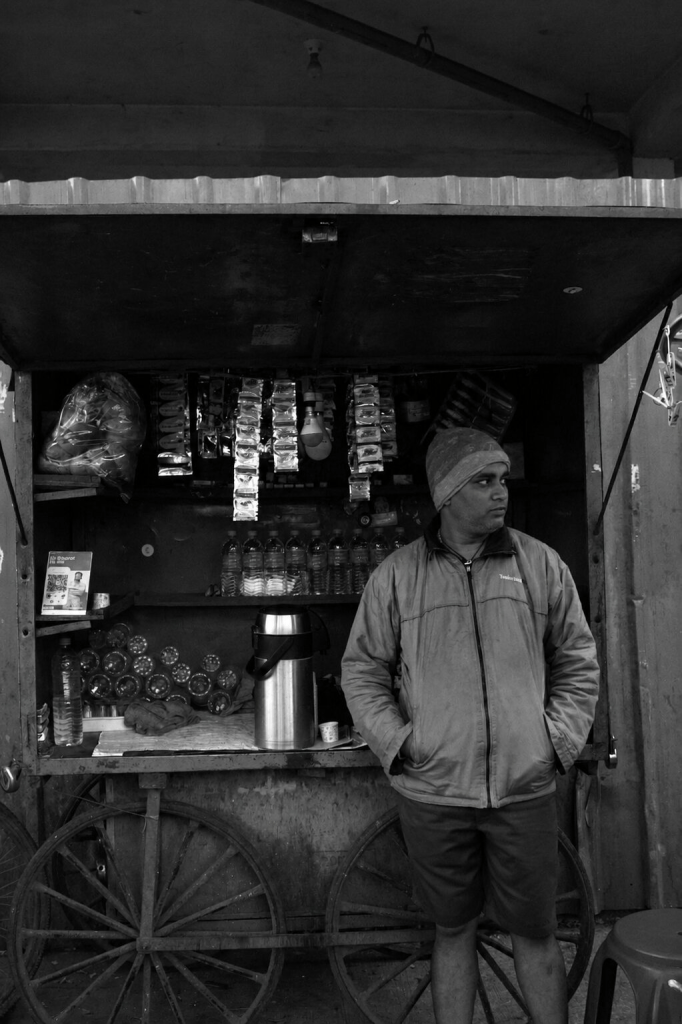
Before most shops had fully opened, he had already begun serving tea across the market. The cart functioned less as a business and more as a rhythm that workers unconsciously followed. Every morning began here, somewhere between the first customer and the first moment of exhaustion.
The tea had already gone cold, but nobody seemed in a hurry to leave the conversation. Vegetables remained unsold beside them while the market continued moving around their stillness. For a few minutes, they allowed themselves to exist beyond labour.

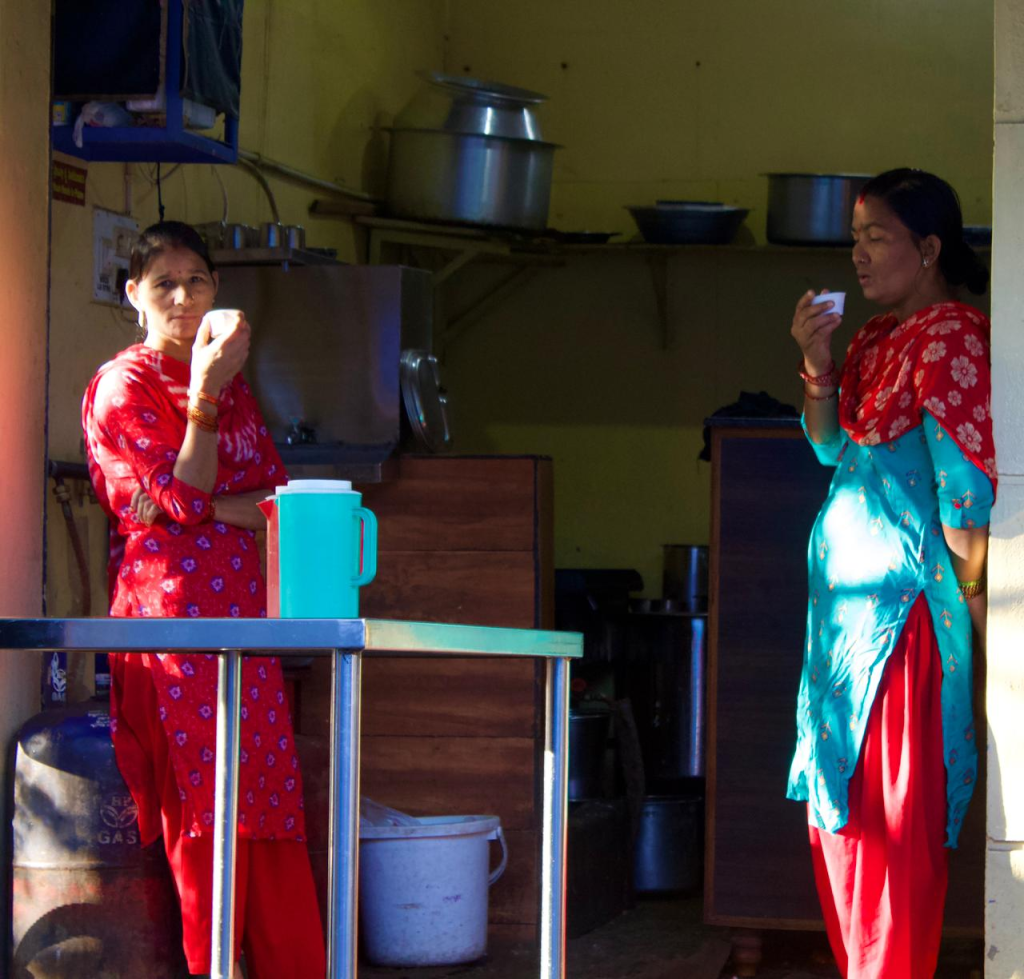
One of them laughed quietly and said that tea tastes different when there is finally time to sit down. Inside the dim room, the noise of the market softened into conversation. The photograph captures not leisure, but the rarity of uninterrupted rest.
He stood watching the street while absent-mindedly sipping tea from a steel tumbler. Customers passed, scooters crossed the road, and transactions continued around him. Yet his pause remained strangely calm, untouched by the speed surrounding it.
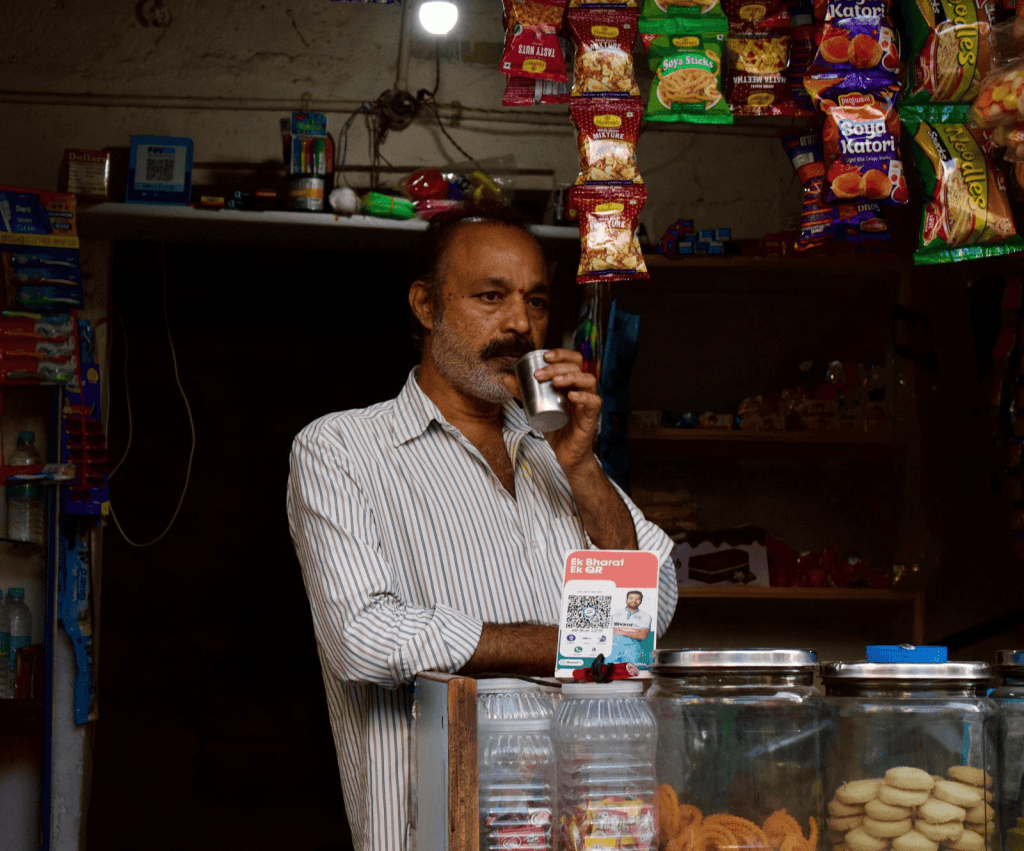
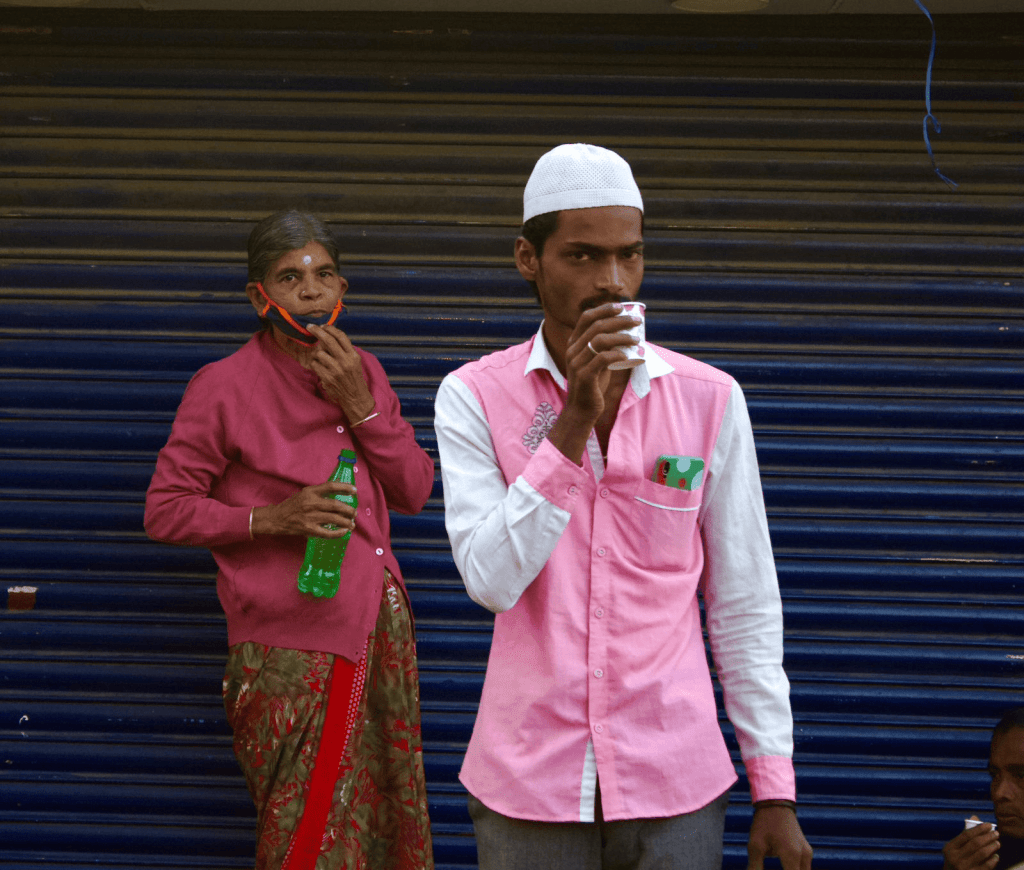
Even while drinking tea, his attention never fully left the road ahead. His eyes followed movement more closely than the cup in his hand, as though rest itself could not be trusted for too long.
Sunlight streamed into the shop, illuminating him for only a few moments before disappearing again. A customer arrived immediately after the photograph was taken, ending the pause almost instantly. In the market, rest survives only in interruptions.
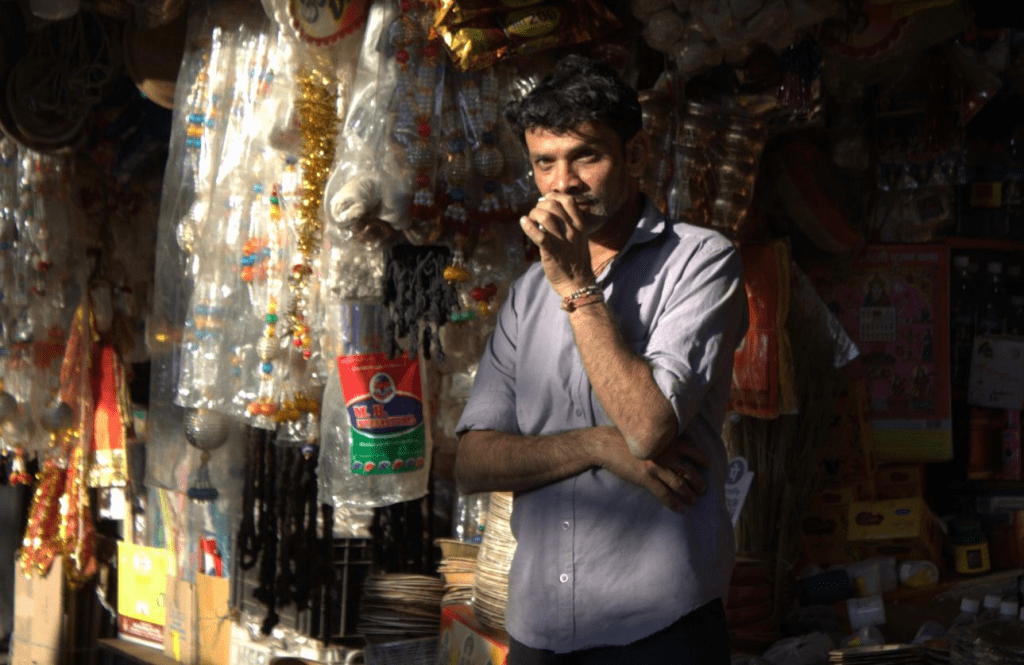
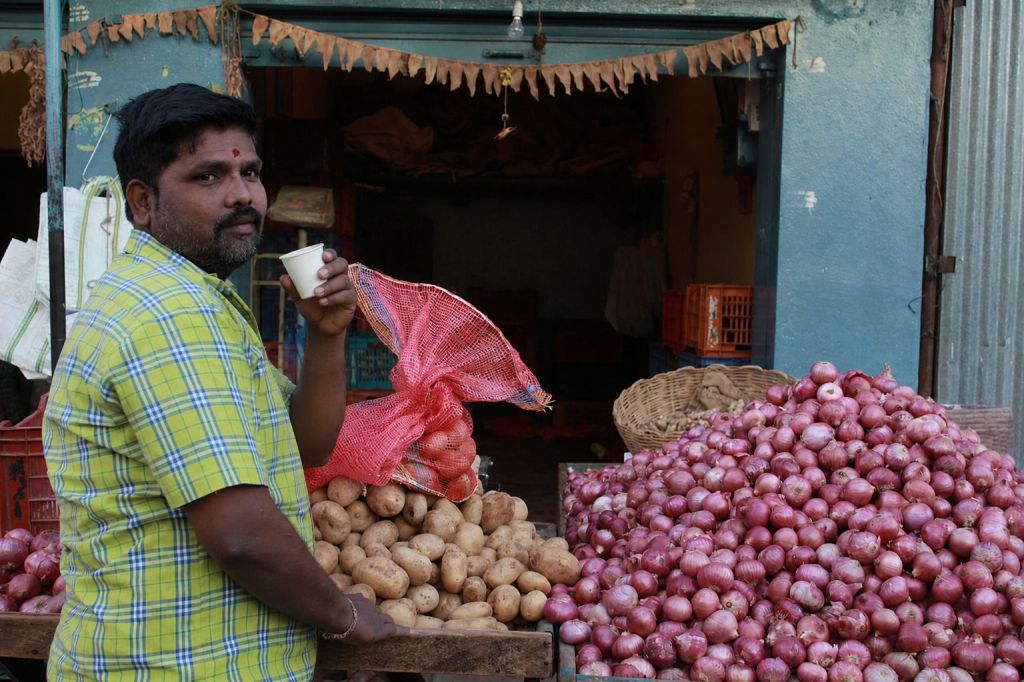
He joked about rising vegetable prices while holding the smallest cup in the market. Around him were piles of onions waiting to be sorted, weighed, and sold. Yet, for a few minutes, the conversation drifted away from business and towards shared exhaustion.
She had been awake long before sunrise, arranging flowers for the morning rush. By afternoon, the tea in her hand seemed less like refreshment and more like permission to briefly stop working.
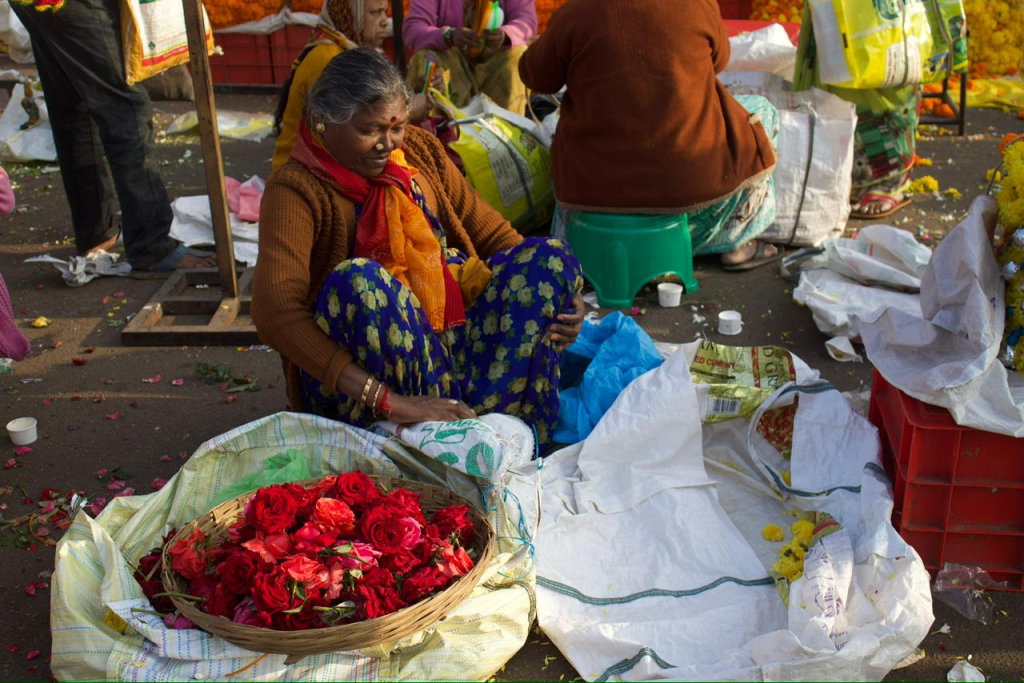
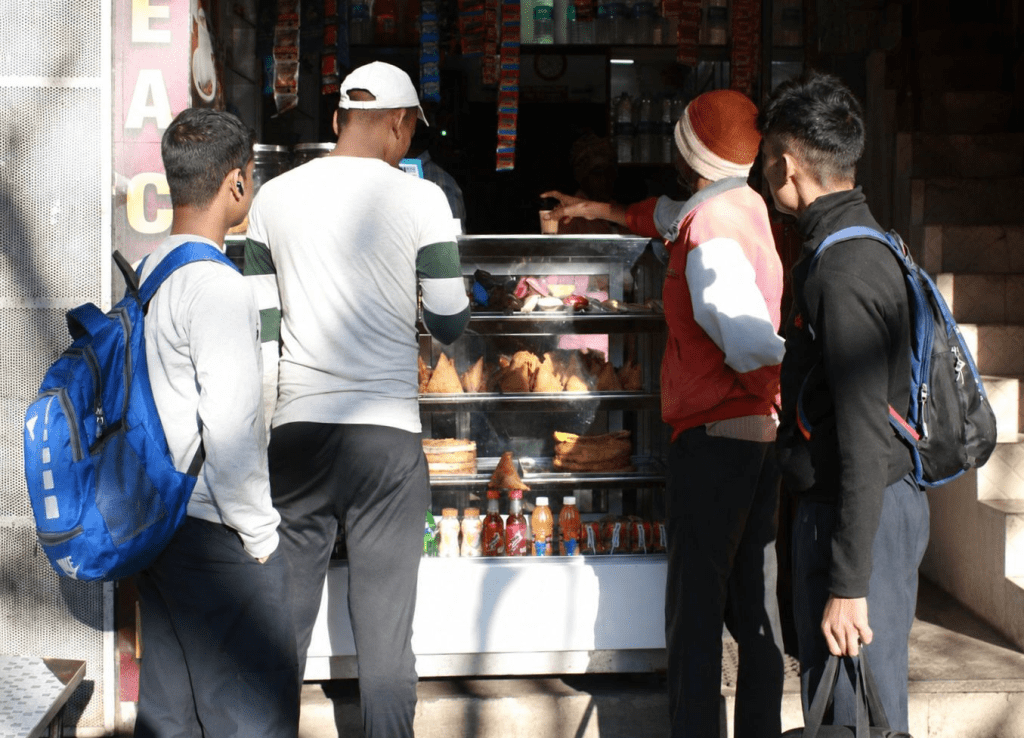
They arrived one by one, drank quickly, exchanged a few words, and disappeared back into the schedules waiting outside the frame. The tea stall became less a destination and more a temporary refuge between responsibilities.
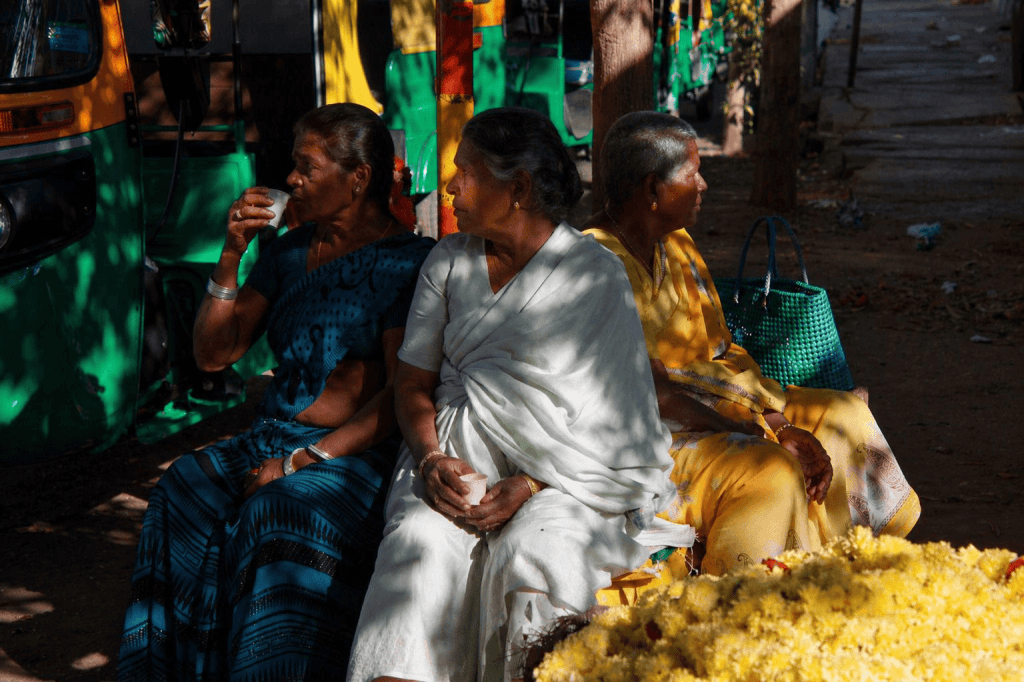
The three women sat together in borrowed shade while traffic and customers moved nearby. Their stillness felt temporary, almost accidental. In crowded markets, moments of rest are rarely given openly; people quietly create them for themselves.
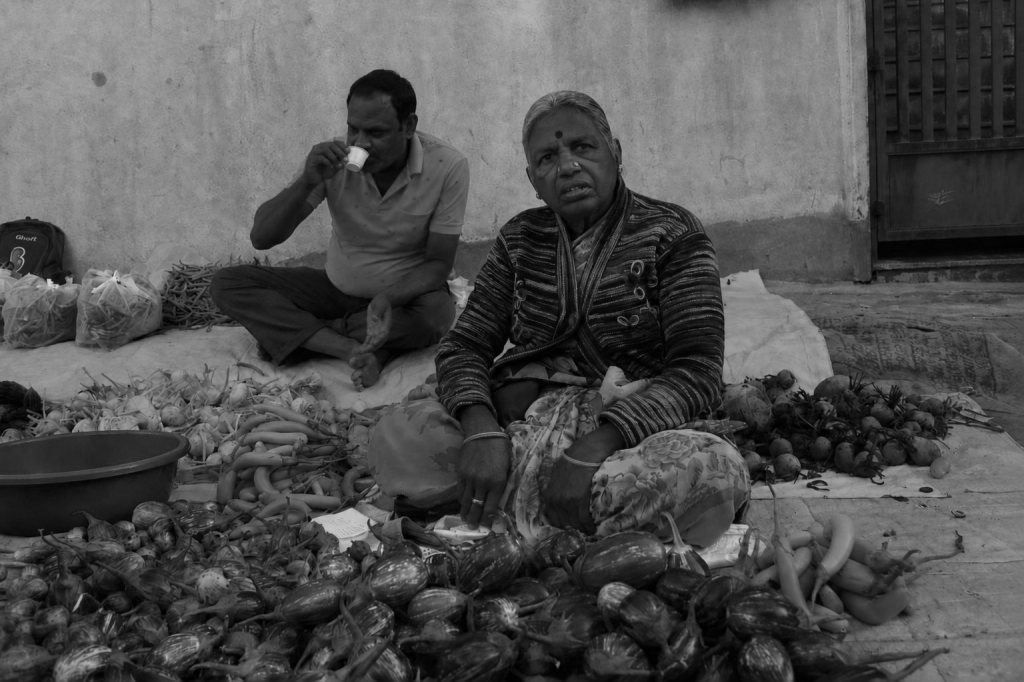
Even during rest, their hands remained close to the vegetables, ready for the next customer. The market appeared to pause for a moment, but labour still lingered in their posture, attention, and routine.
The market continued after every photograph. Shutters reopened. Customers returned. Voices rose once again. But for a few moments, between transactions and responsibilities, people allowed themselves to pause.
This essay exists within those pauses.

