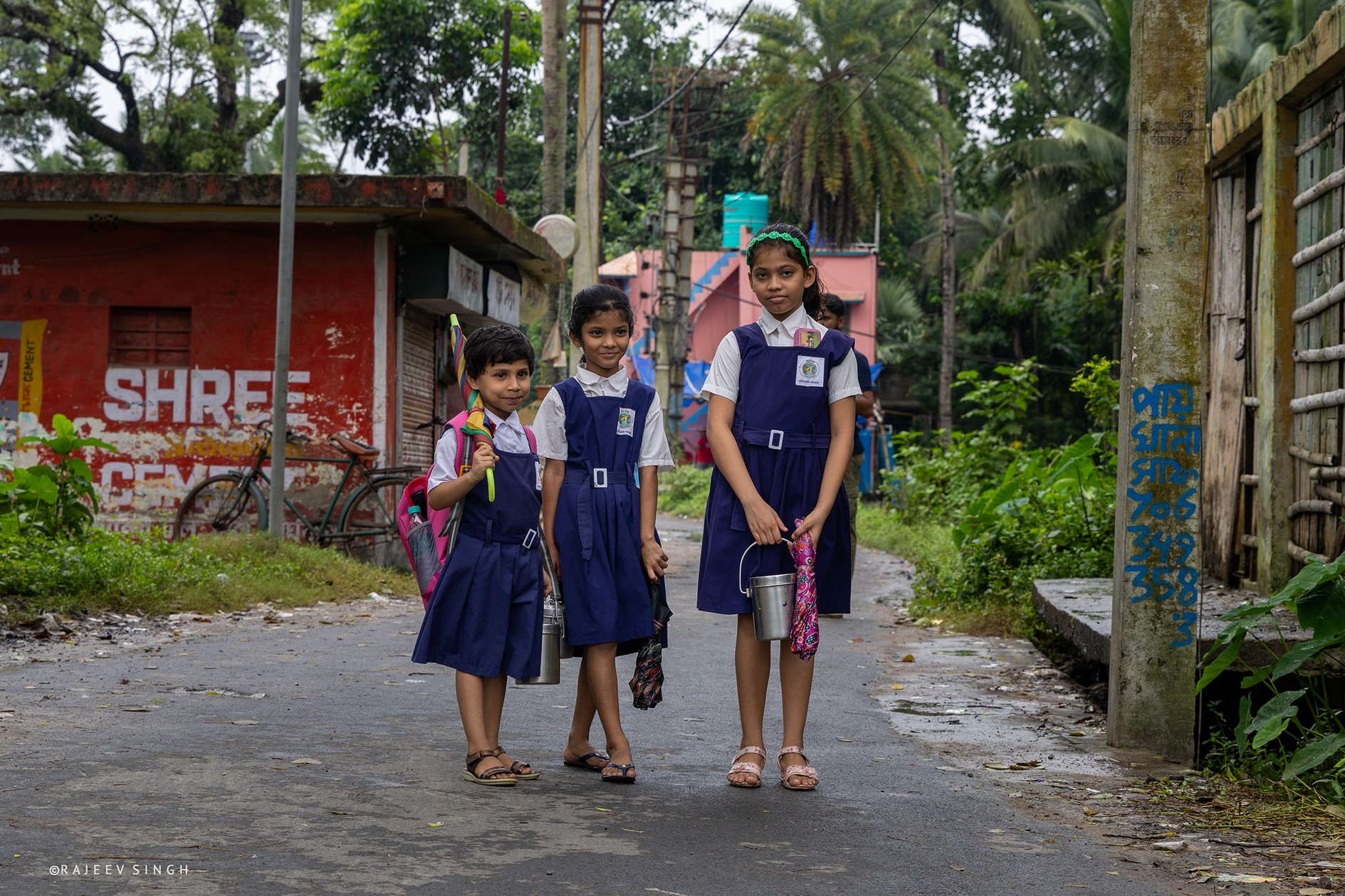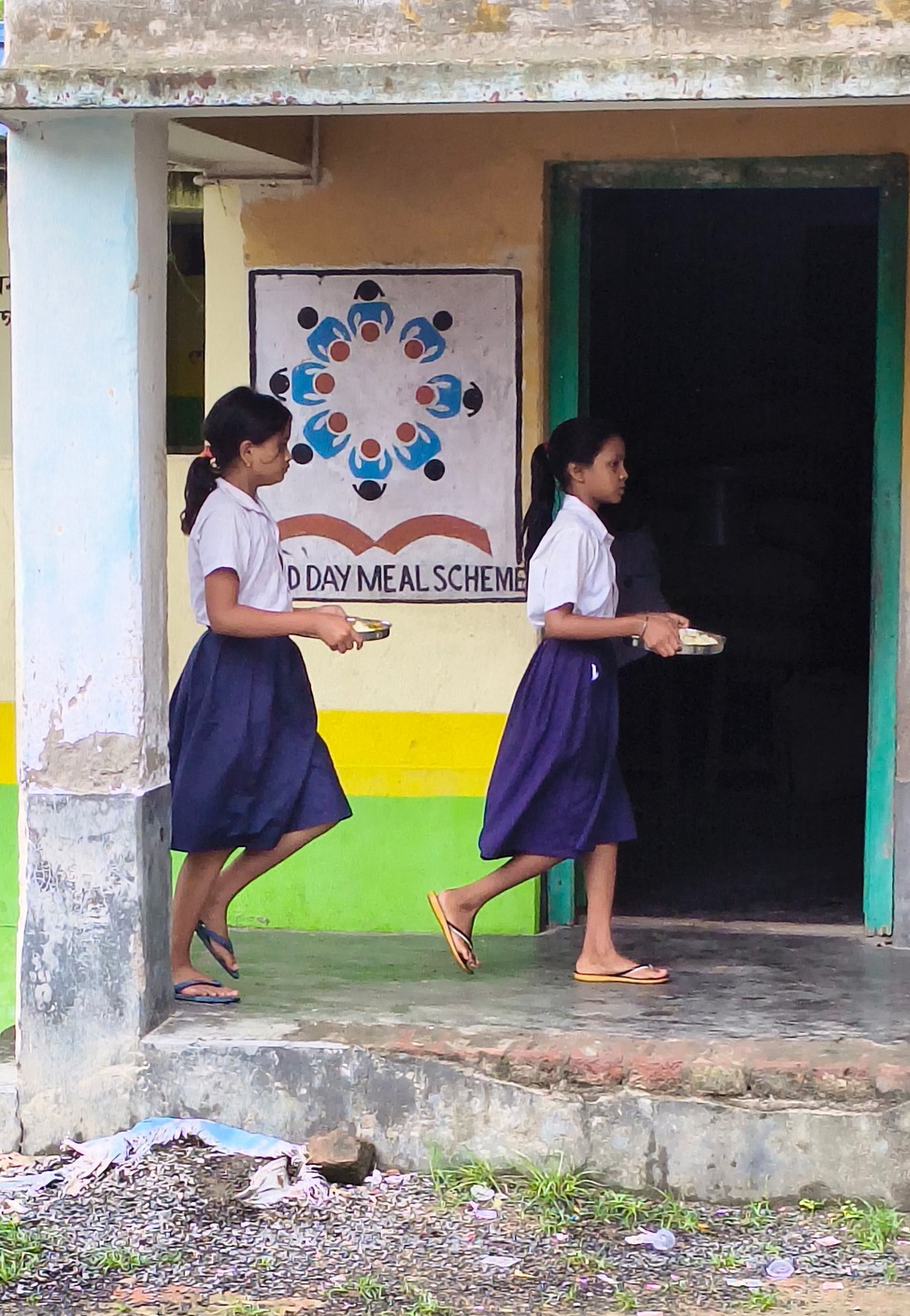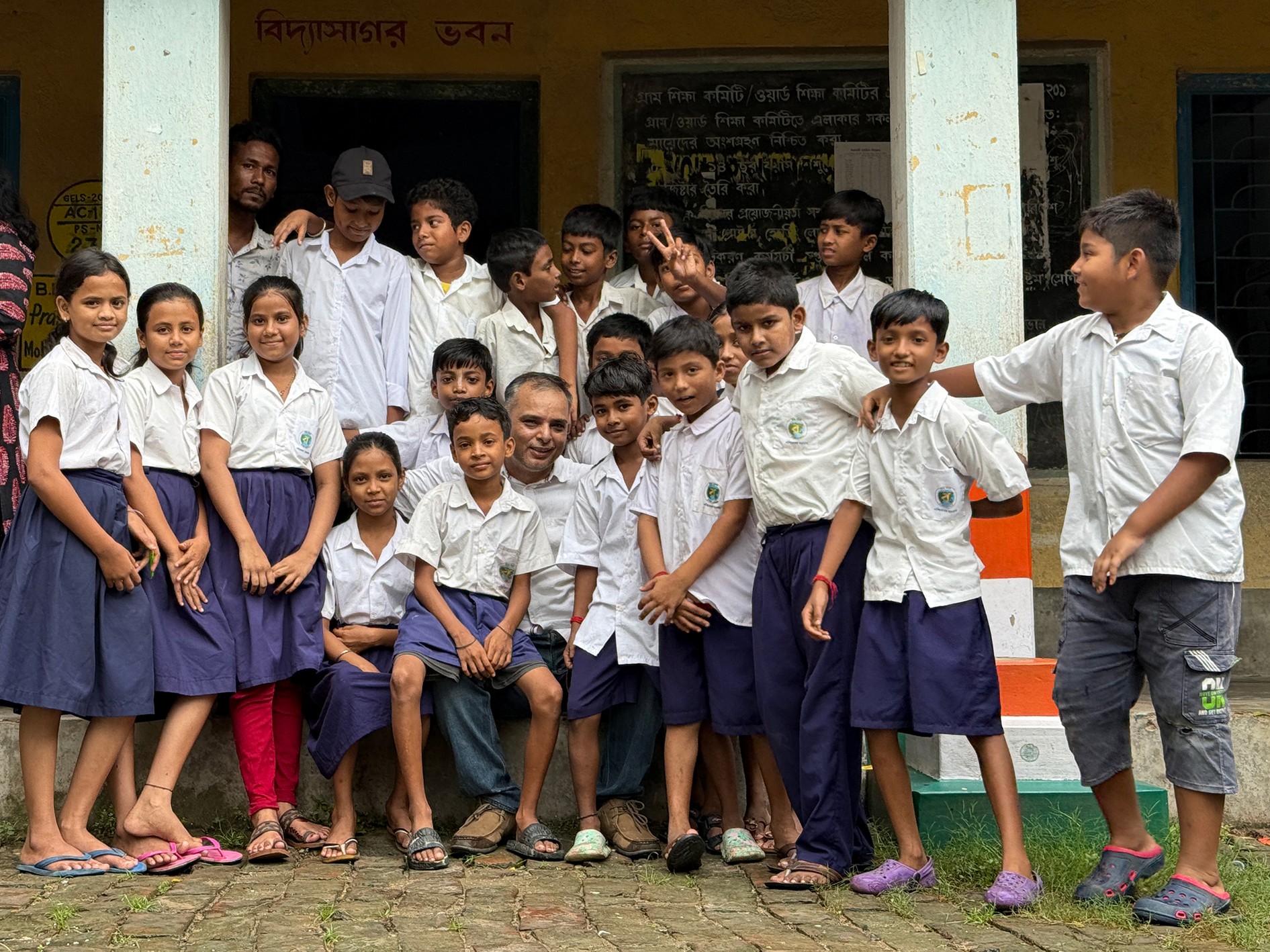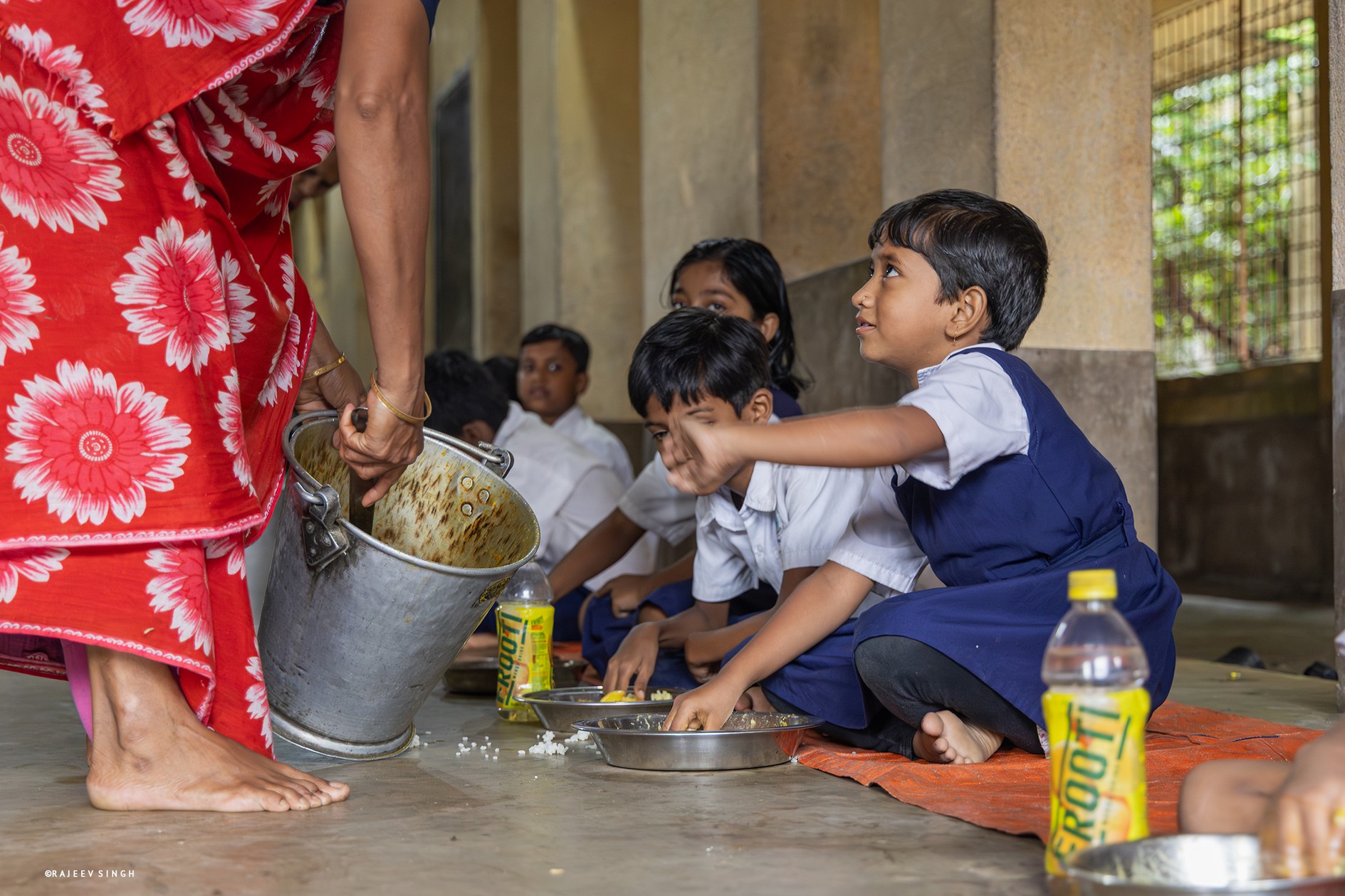


I came to these schools through a commercial assignment, not a press credential. The campaign I was part of ran across five hundred schools in West Bengal over three months — July through November, 2025. I was in and out of school halls, courtyards, kitchen sheds and corridors for most of that period.
These photographs are from those schools I personally visited and being part of there day . But the program this story is about is not a Bengal story, or a story about these schools only . PM Poshan Yojana runs in 1.2 million schools across India, in nearly every state, in geographies that look nothing like each other. What I saw in those three courtyards is what happens every morning, everywhere.
I am a photographer. I look for the moment when something true becomes visible. These and the vibes of these schools gave me that.
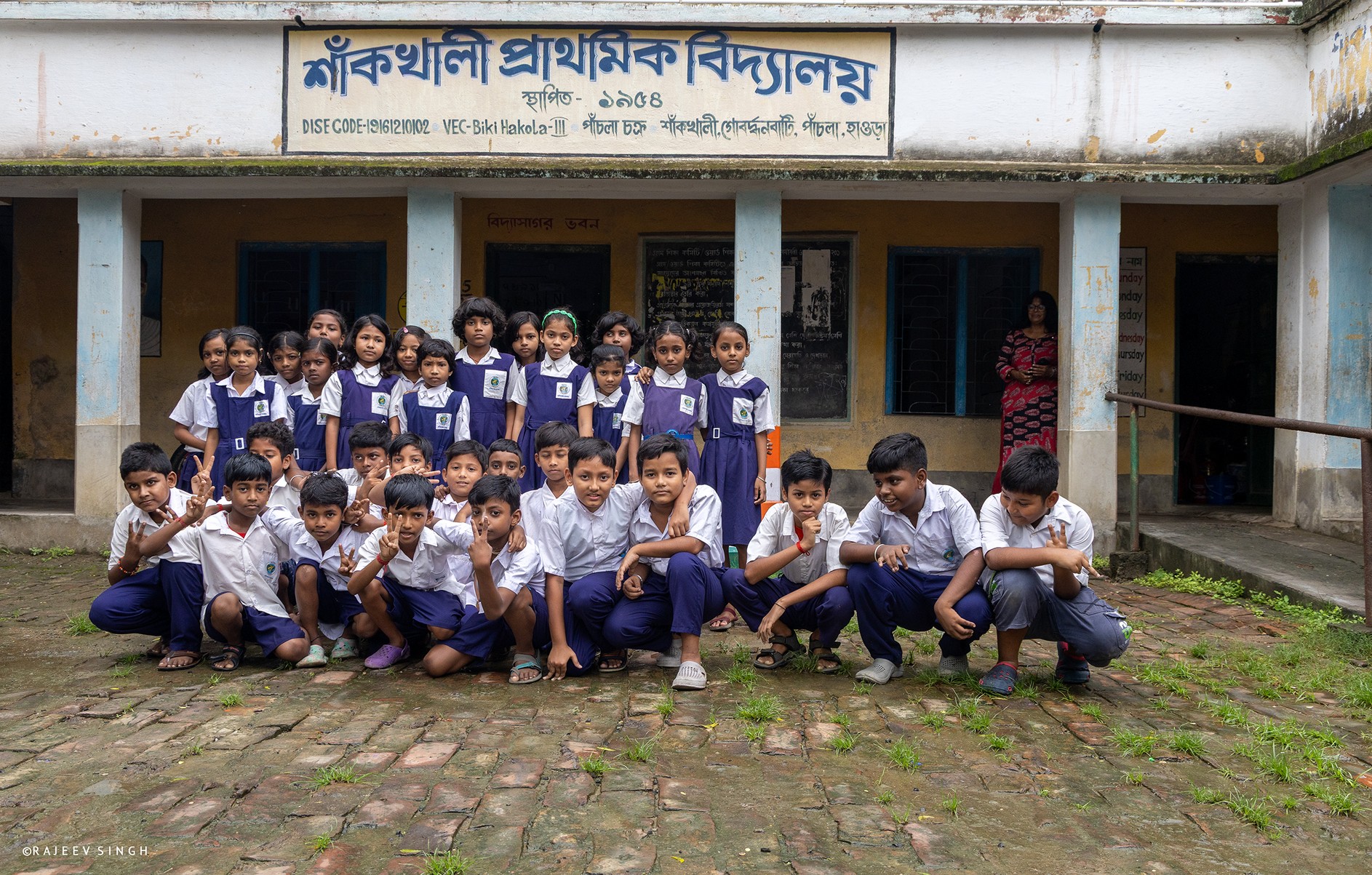
The gate of the first school was an ordinary iron gate, half-open. A man was sweeping the corridor with a short broom, bent at the waist, moving unhurriedly. The painted walls — pale blue in one building, faded ochre in another — had rolled attendance charts pinned at angles that told you they had been there a while. Nothing about any of the these schools announced itself as important.
But importance, in rural India, rarely announces itself.
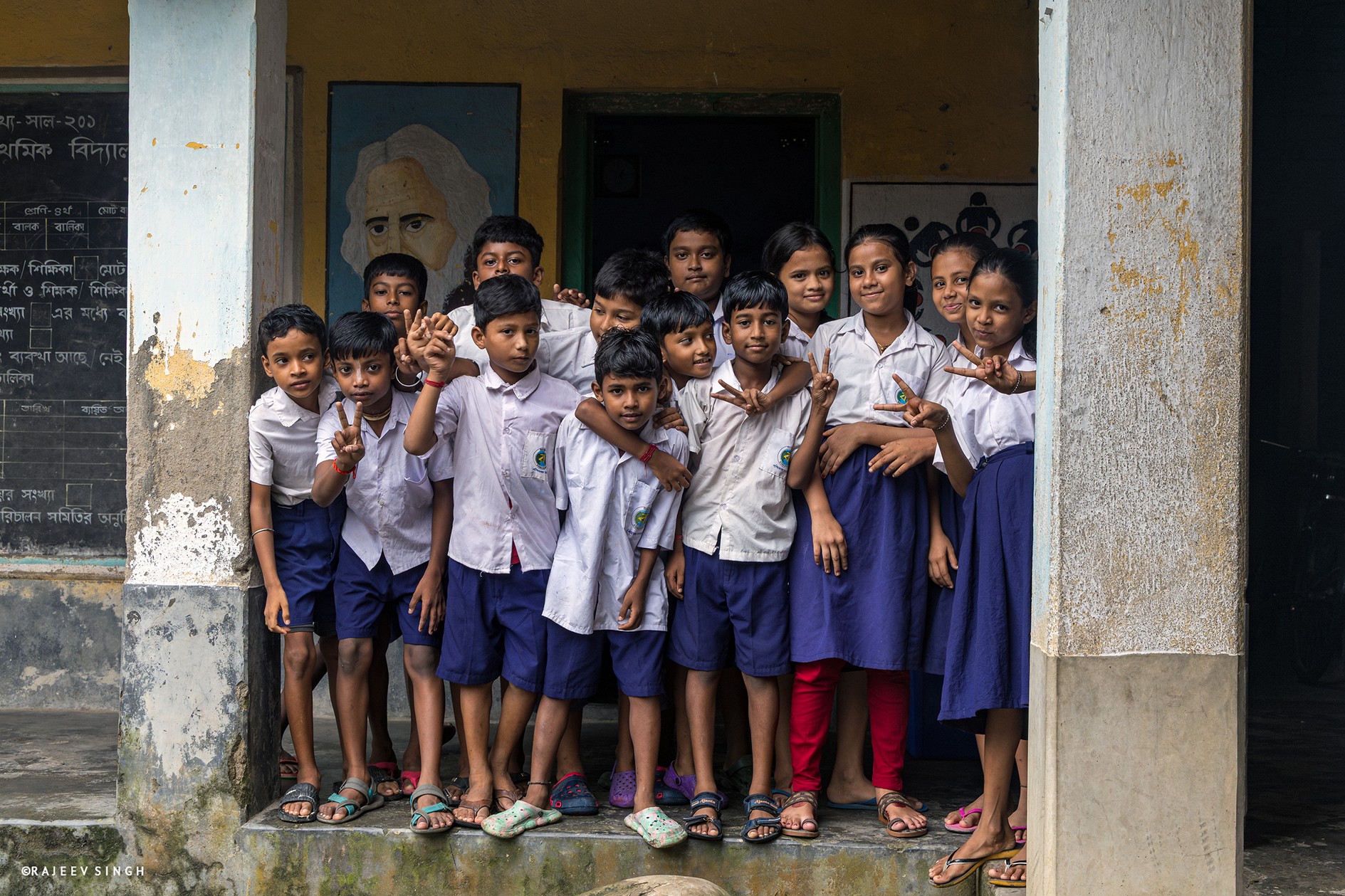
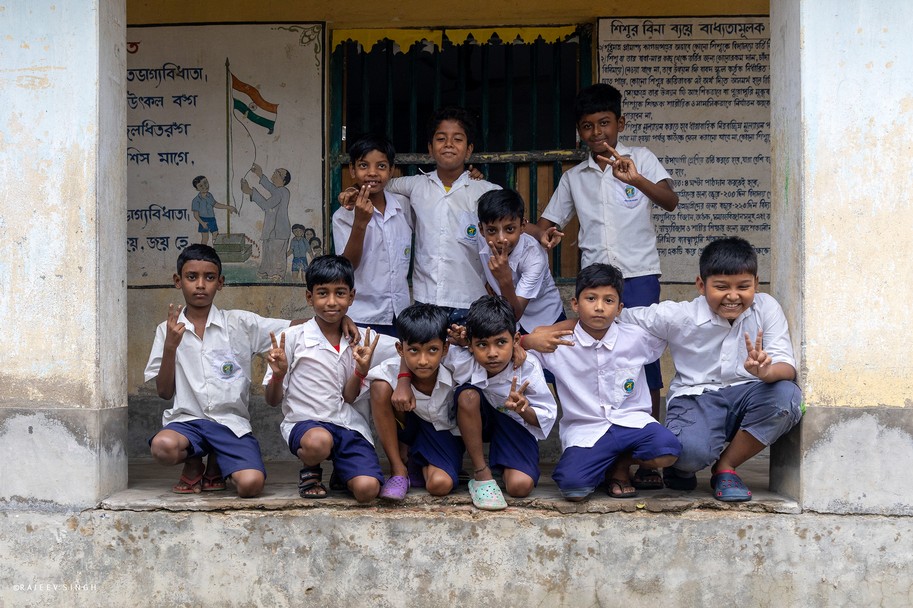
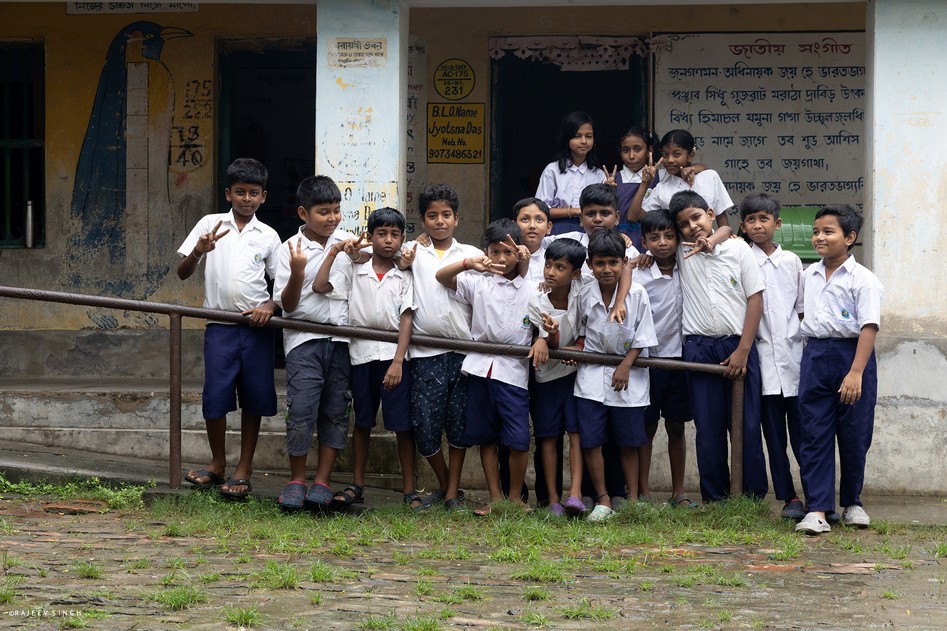
The children who filled these classrooms came from families for whom the morning decision to send a child to school involves a calculation that most people never have to make. The distance. The weather. The field that also needs attention. The meal — or absence of one — before the walk.
These children arrived anyway. They arrived carrying steel plates.
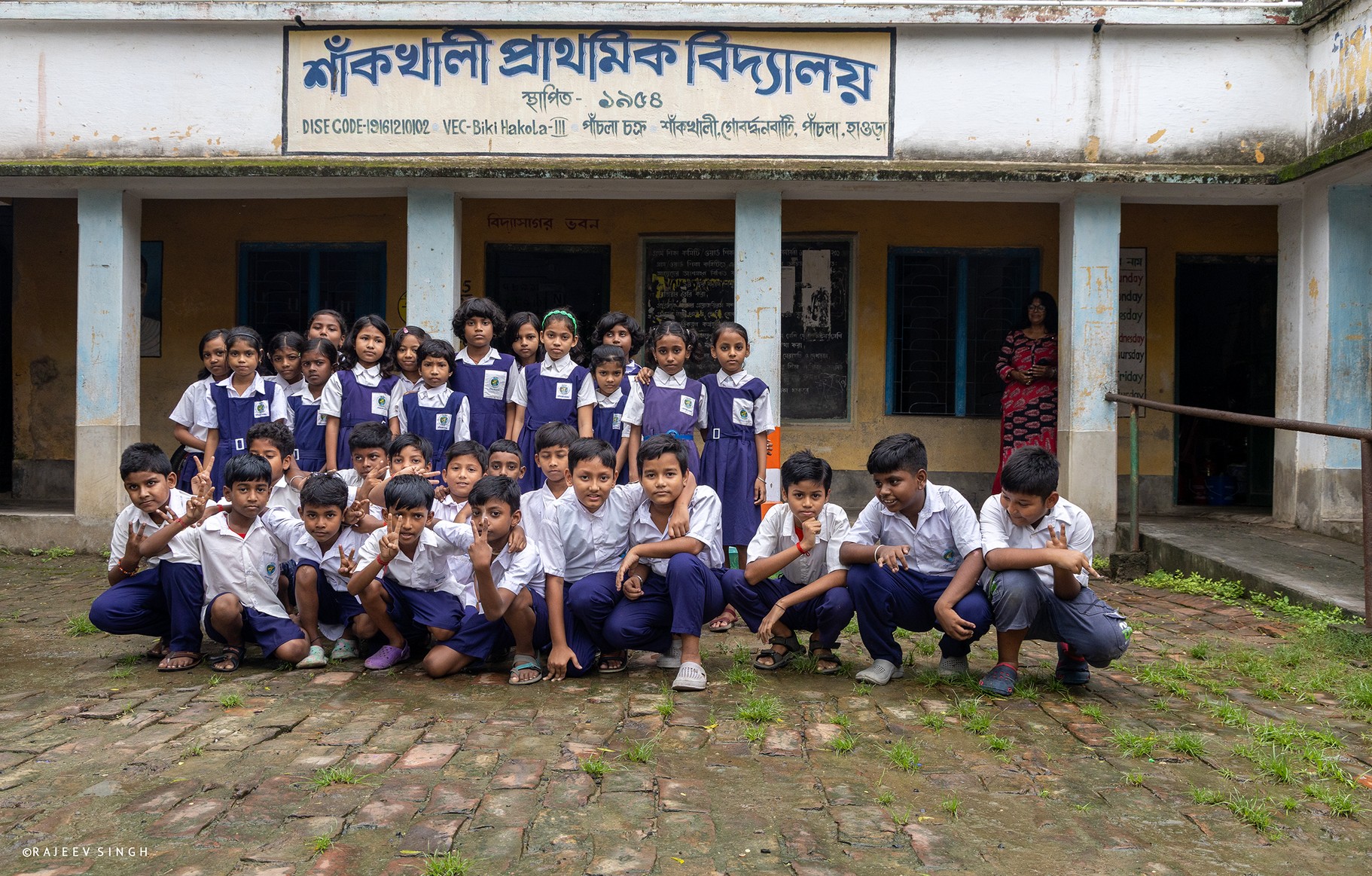
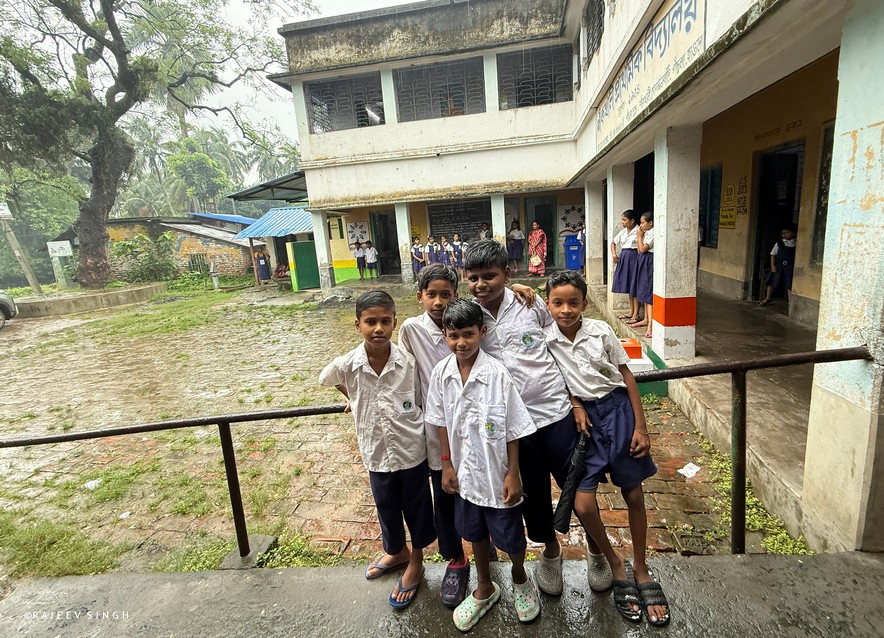
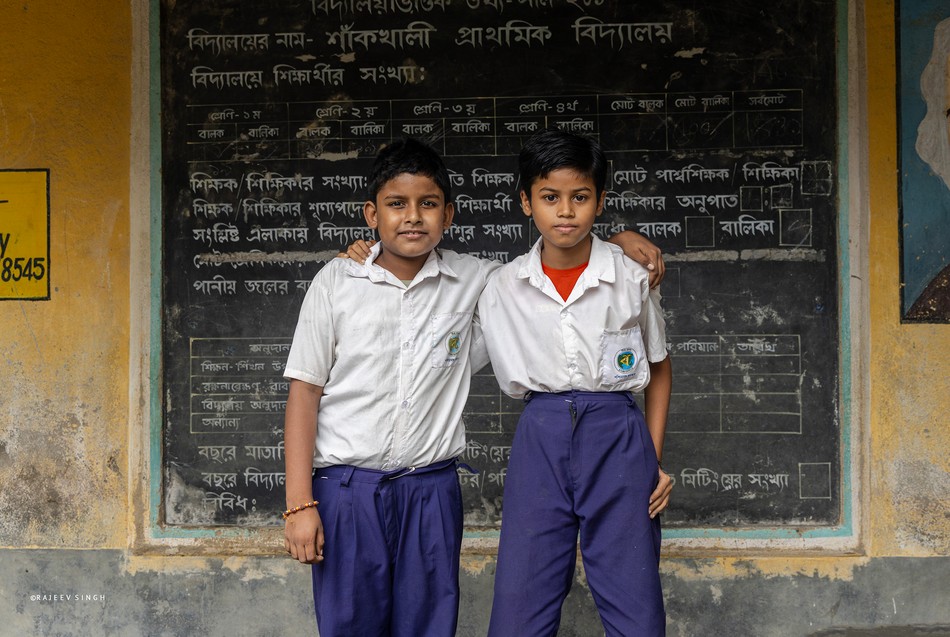
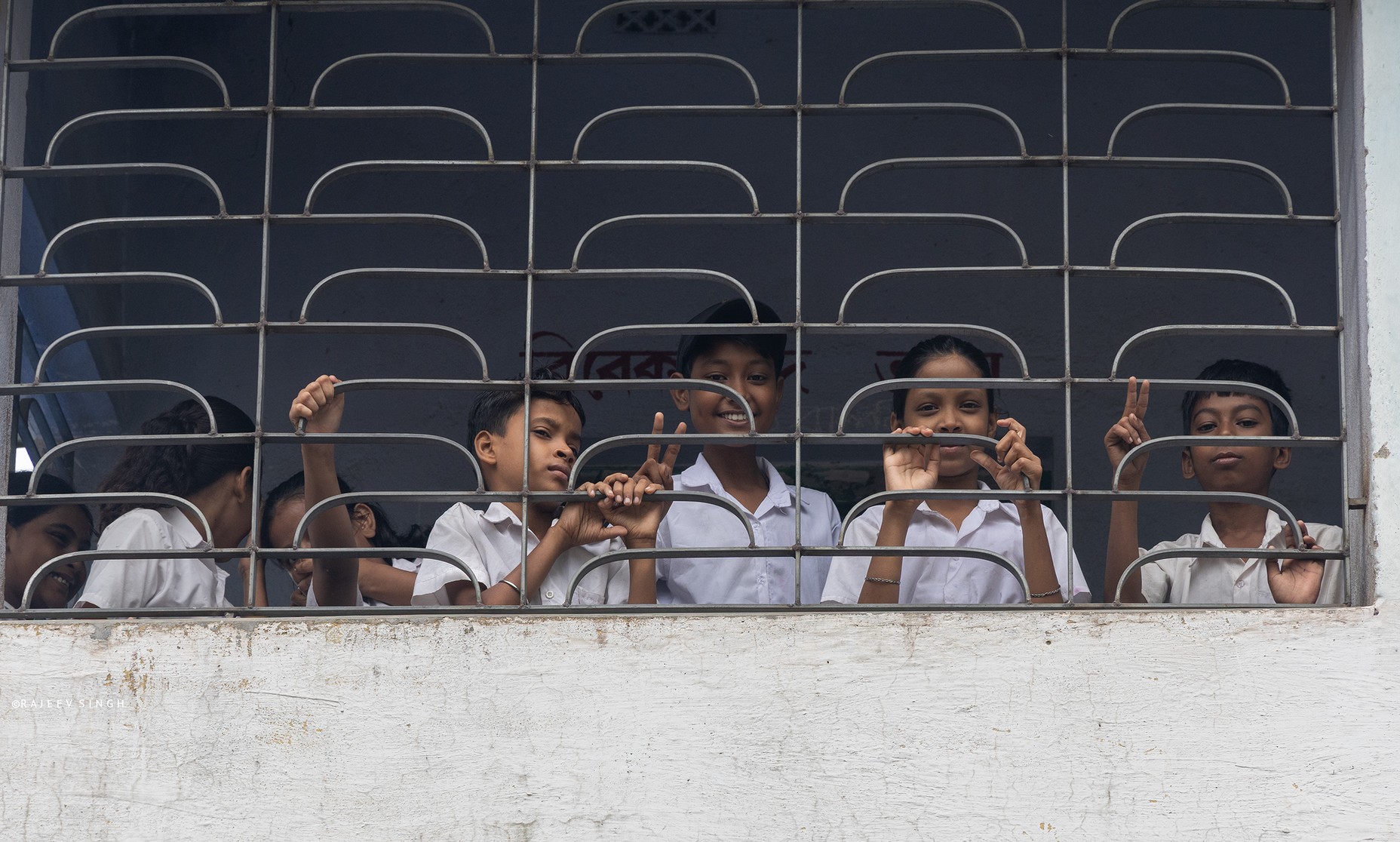
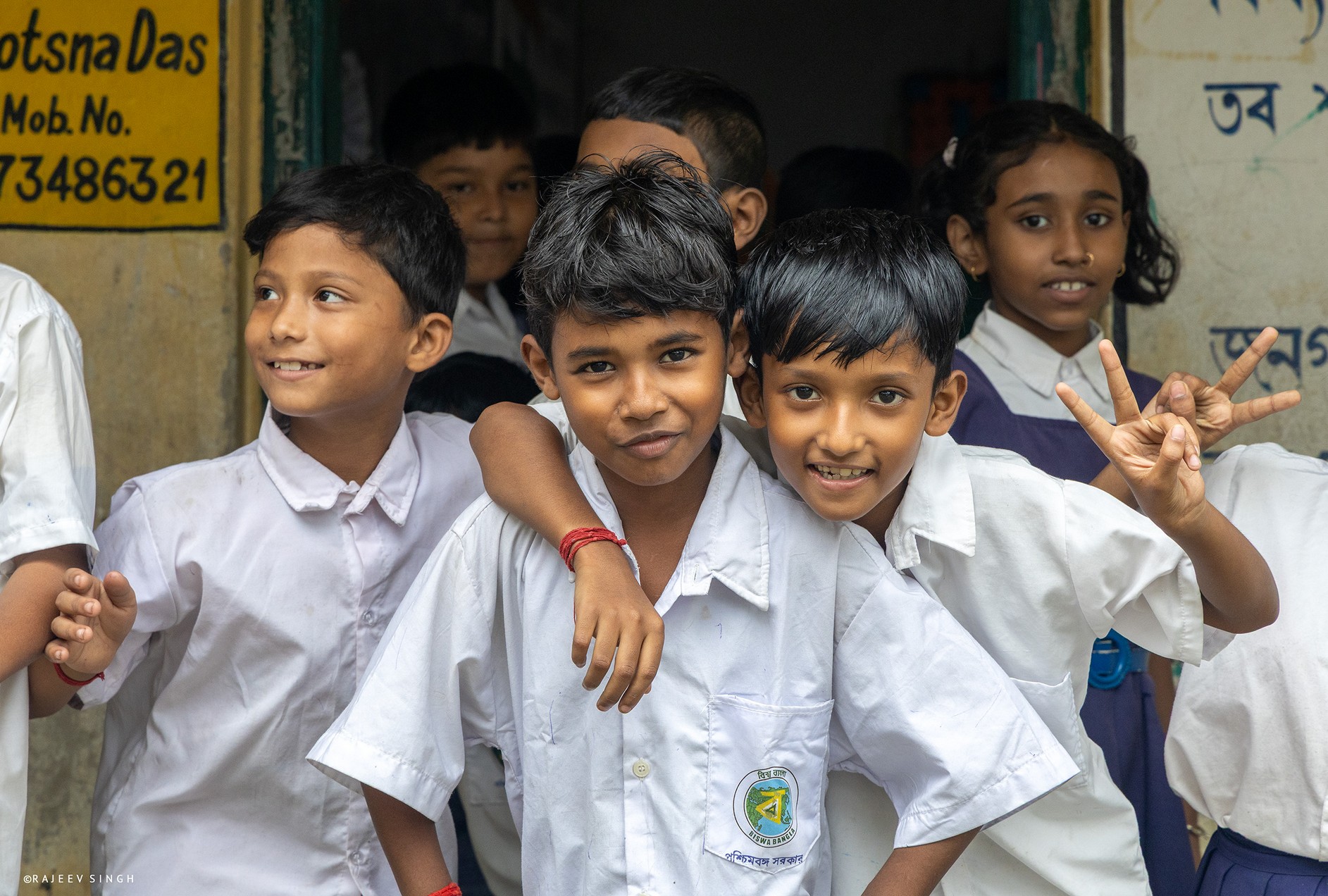
CURIOSITY
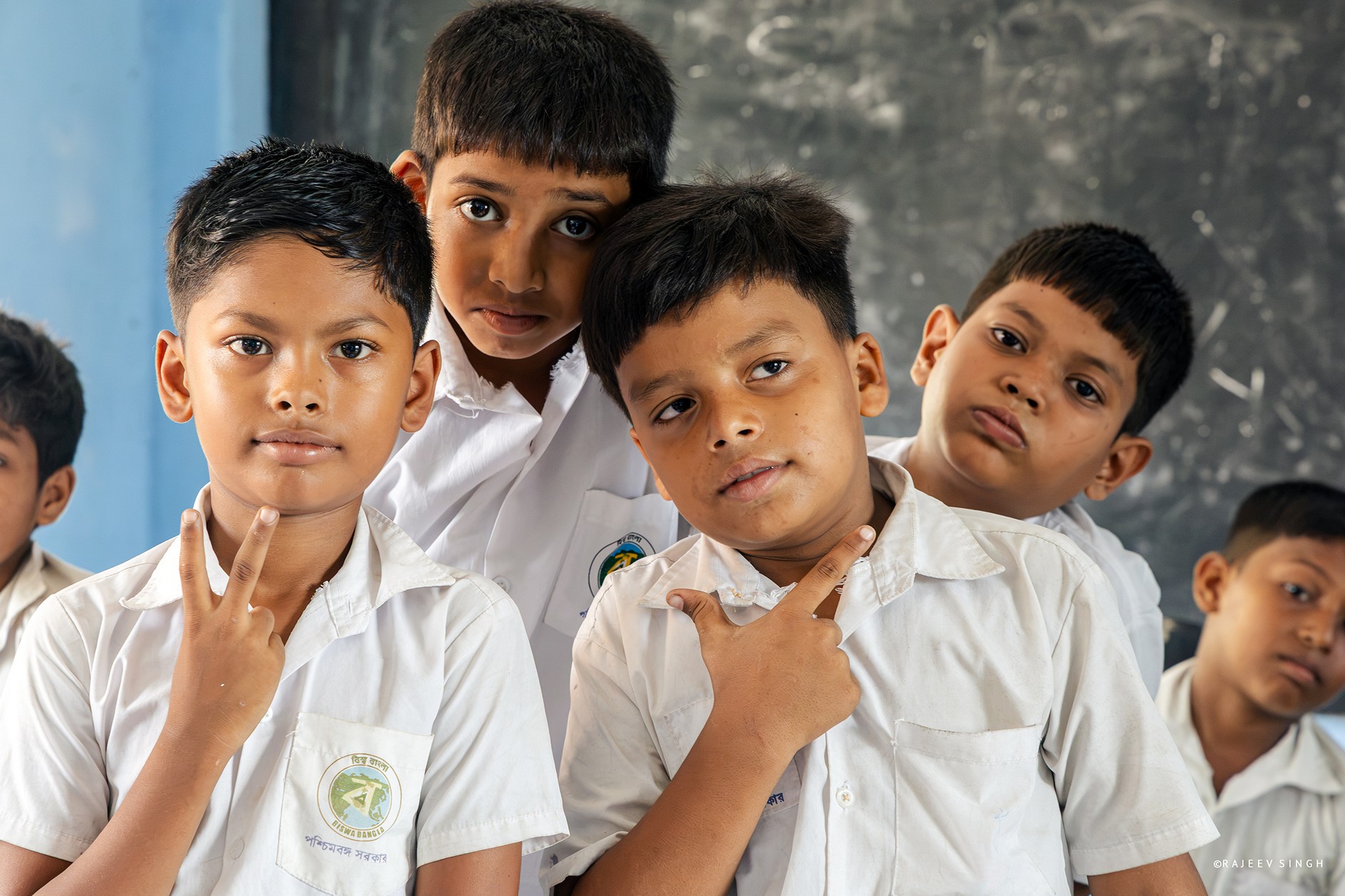
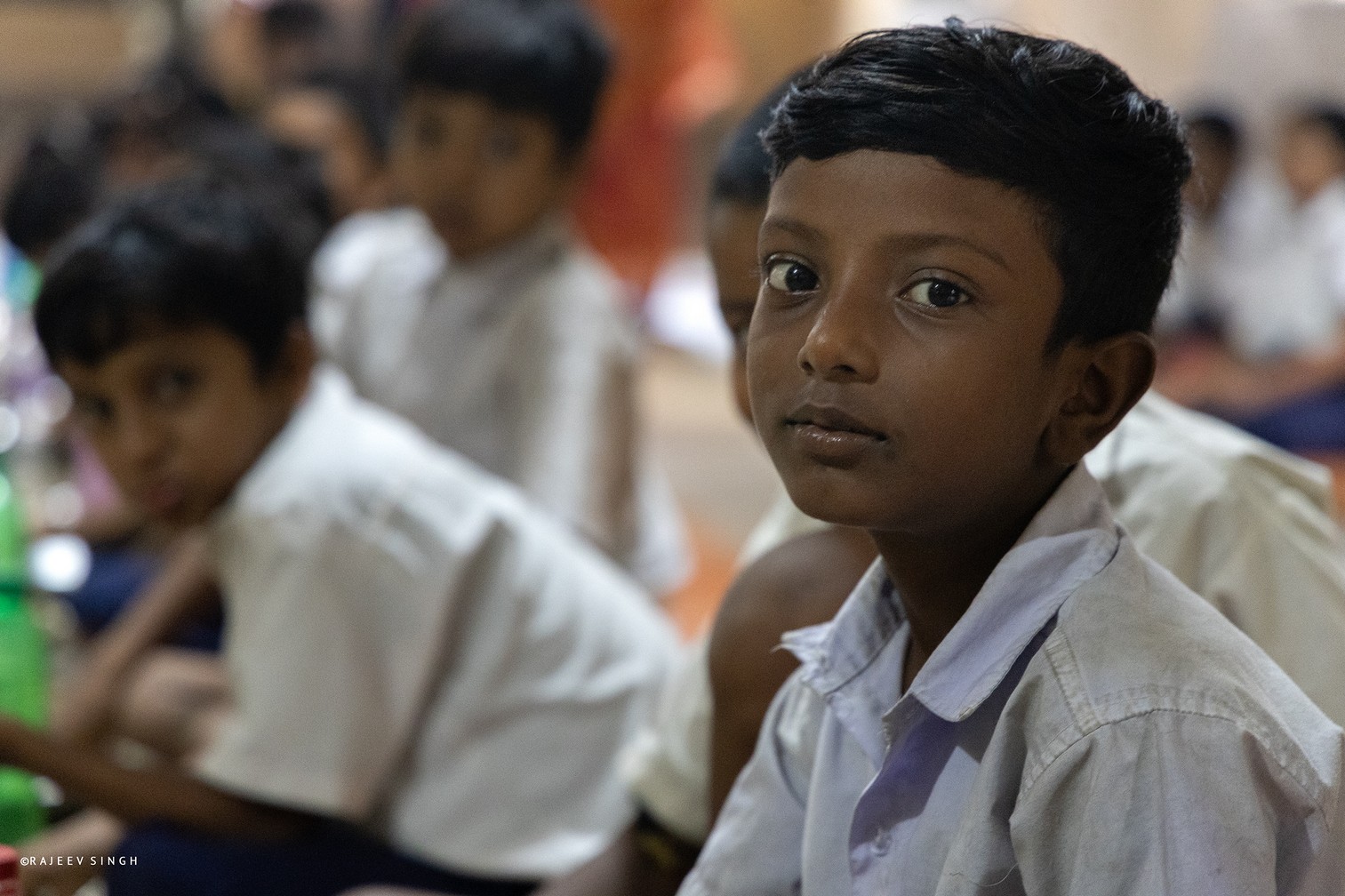
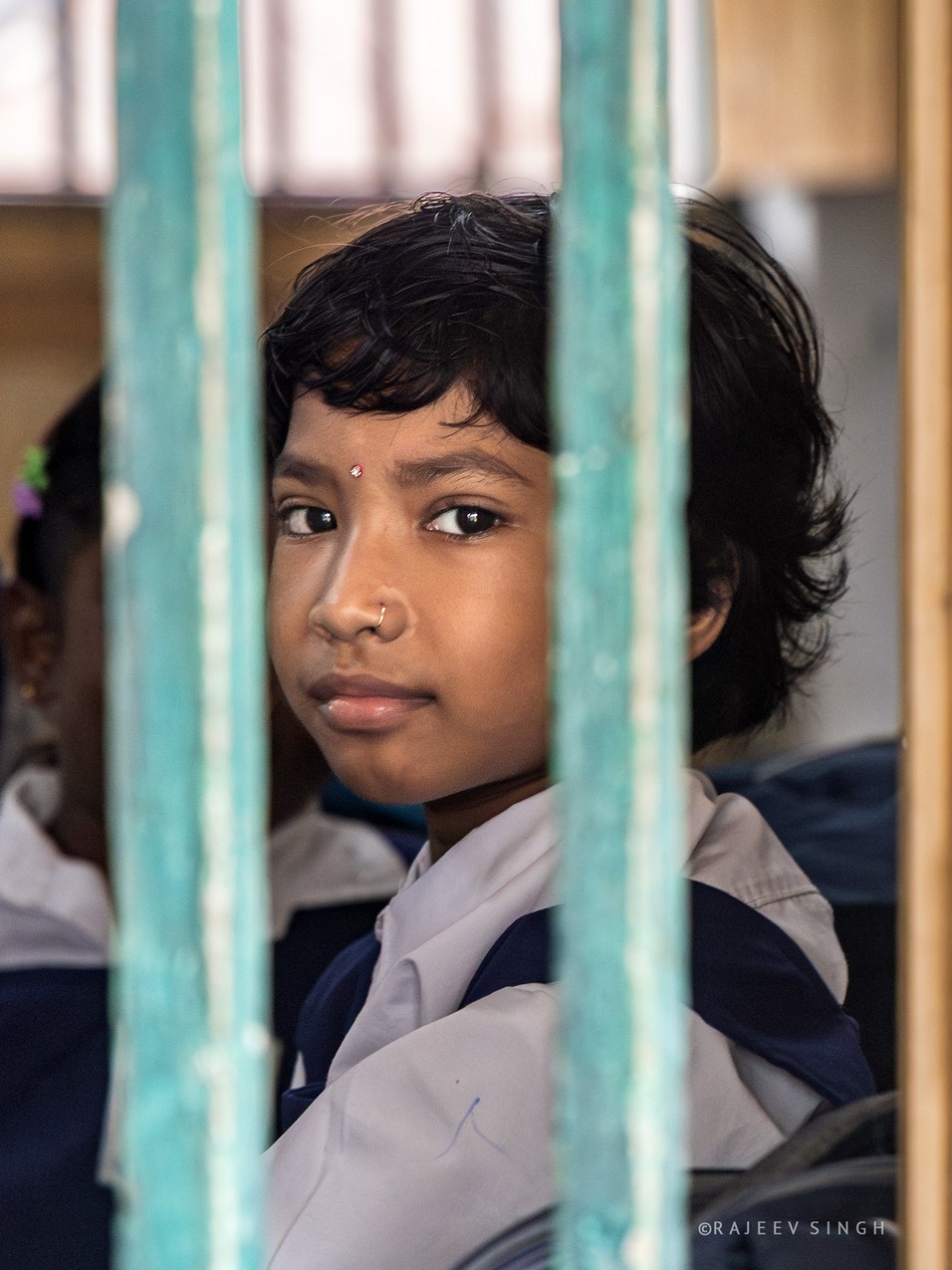
There is something in the way a child looks at a camera before they know what to do with it. Head slightly tilted. Trying to figure out what you are doing. Not yet decided whether you are interesting or not. You have maybe thirty seconds of that, if you are lucky.
THE PEOPLE WHO MAKE IT WORK
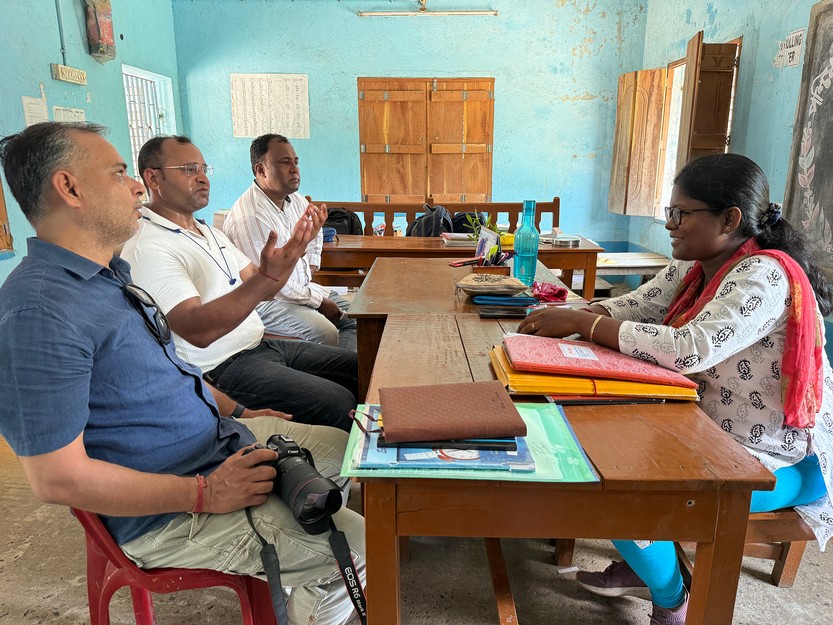
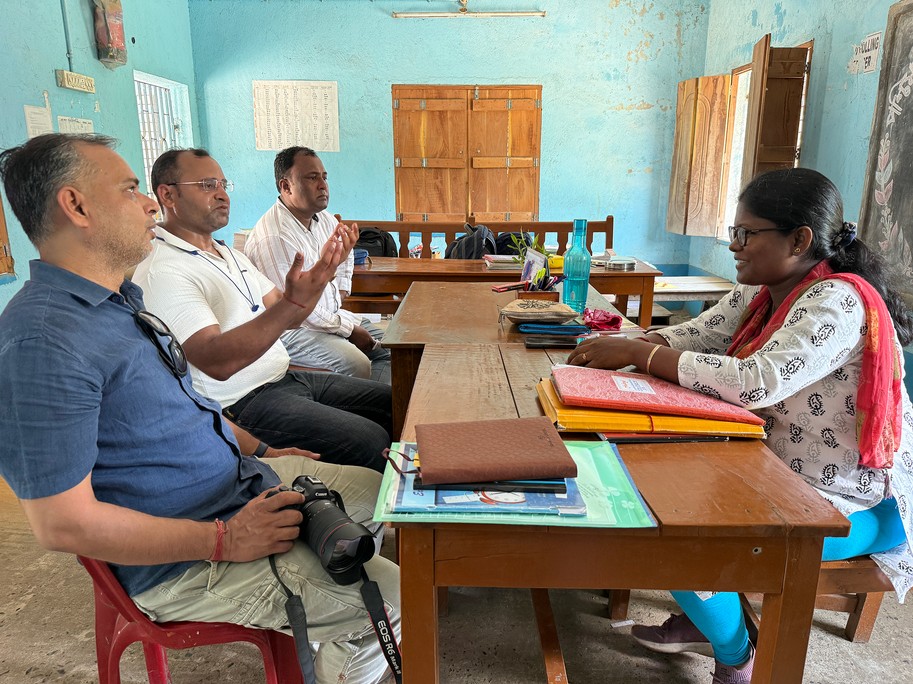
The headmistress of one of the schools — calm, precise, clearly accustomed to visitors who arrived with questions and left with the answers they expected — spoke without being prompted about enrolment. It had been rising. Daughters, she said specifically, were being enrolled earlier. The reason, she said without sentimentality, was the meal.
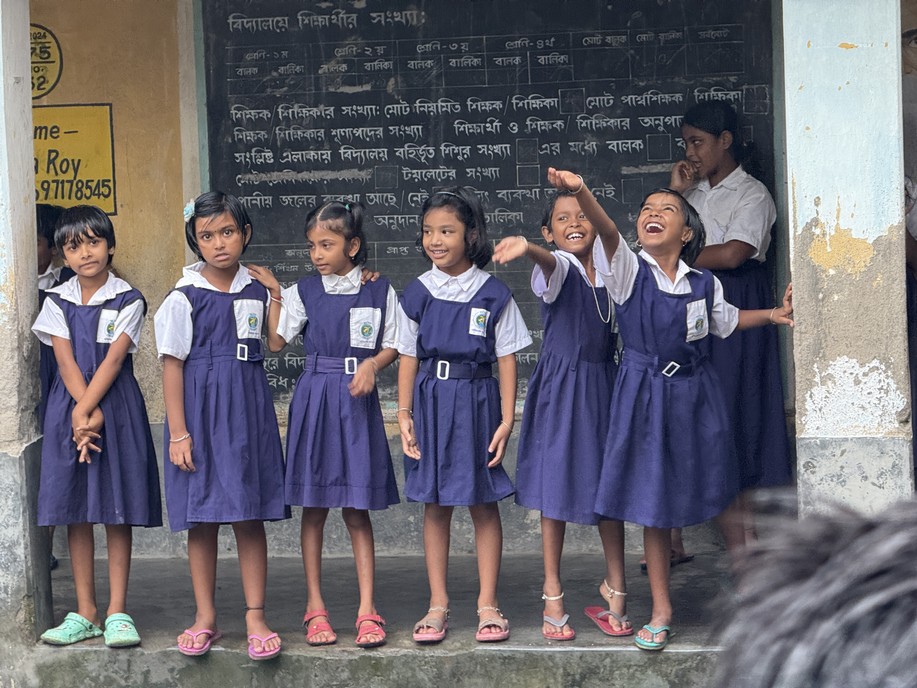
If the child goes to school, the child is fed. If the child is fed at school, the family’s food calculation changes. If the family’s food calculation changes, the resistance to early enrolment — particularly for girls — begins to dissolve. Not everywhere. Not instantly. But measurably, in places where the scheme is functioning.
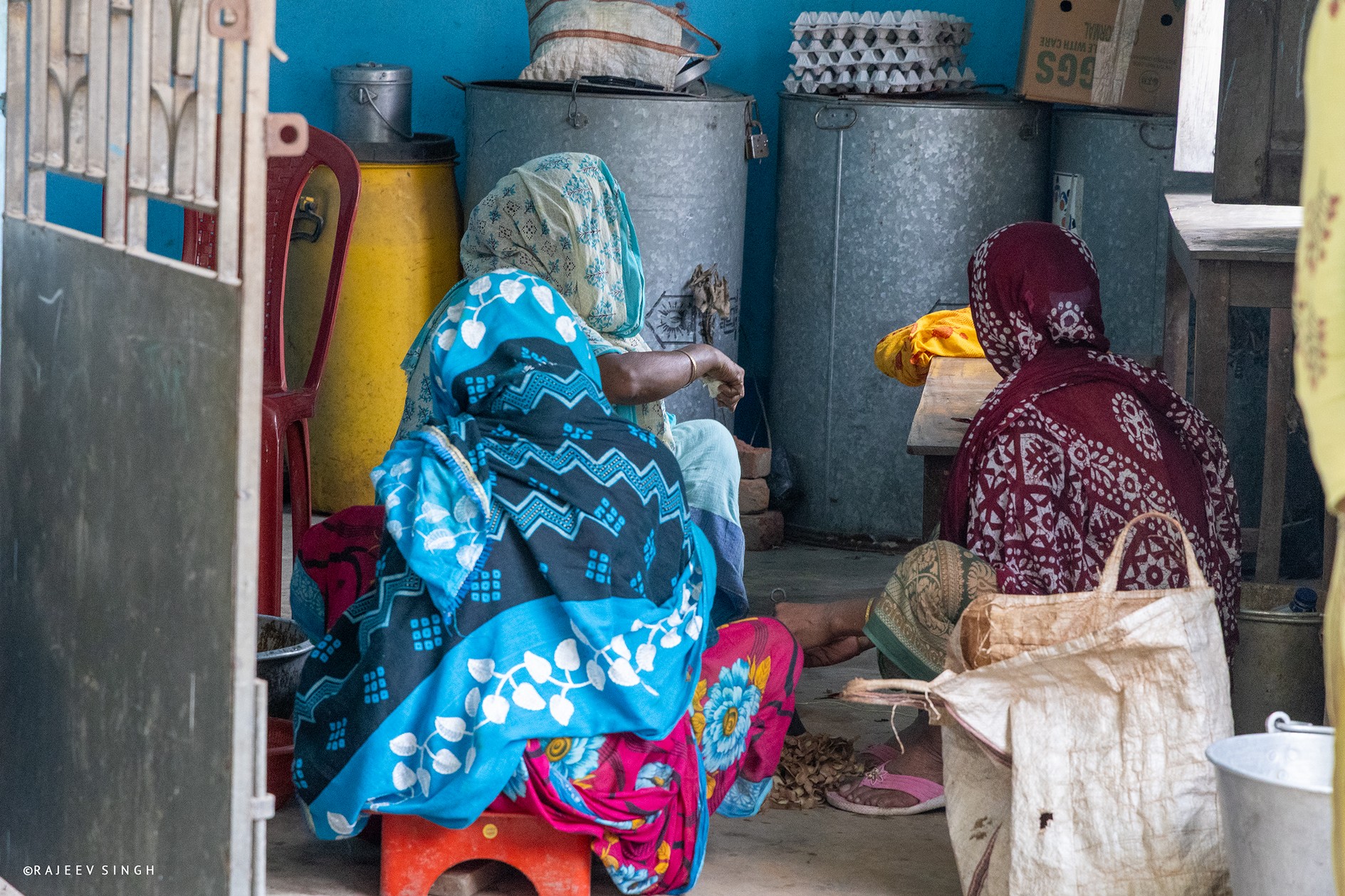
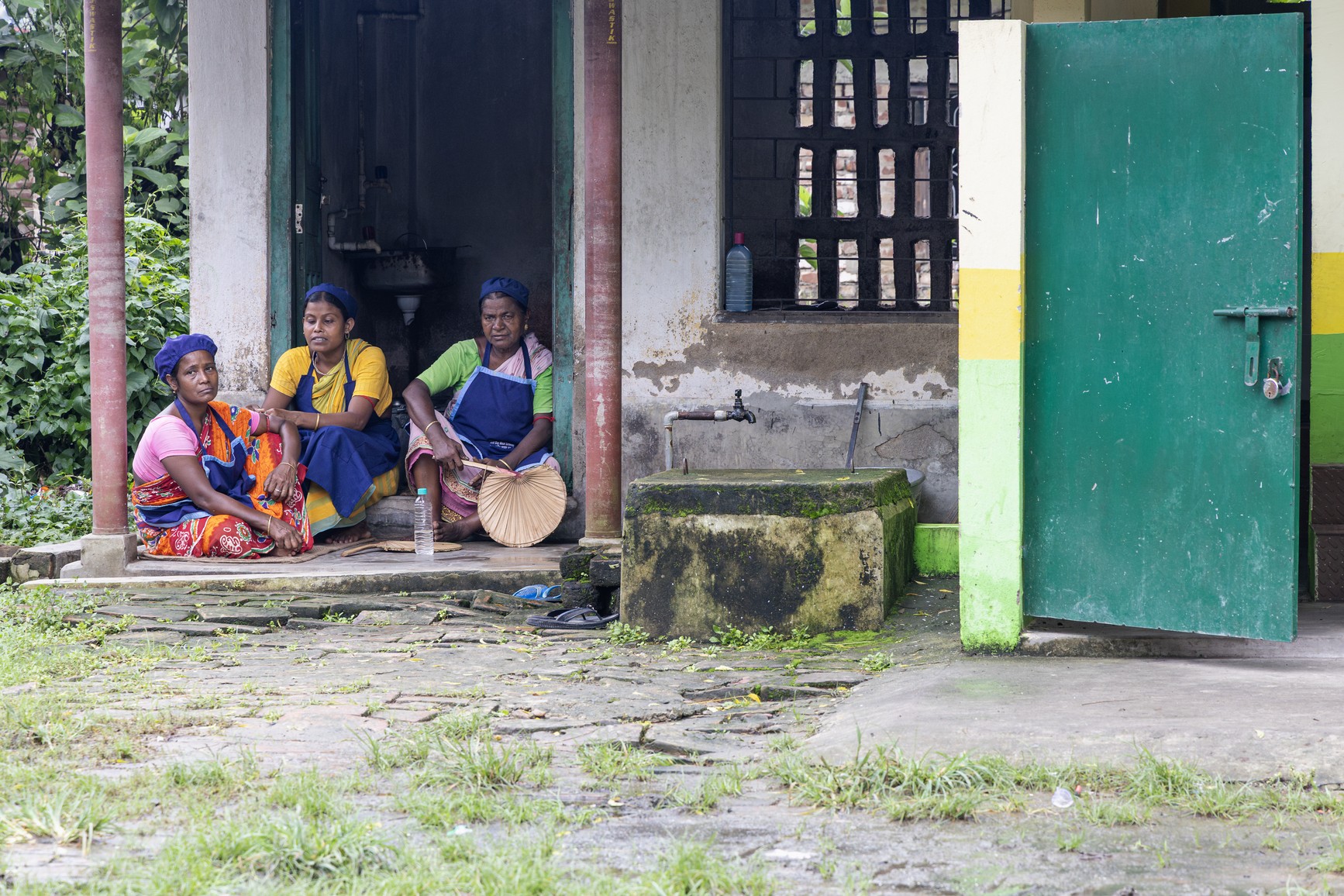
The kitchen was behind the main building. Three women were already at work — five in the morning is not unusual if the noon meal is to be ready on time. Vessels large enough to require two arms. Rice in quantities measured by the hundredweight. Vegetables bought at the morning market, washed, cut, seasoned, cooked by ten-thirty so they would be ready when the bell rang at noon.
“If I am not here by seven, the children won’t eat on time. So I come.”
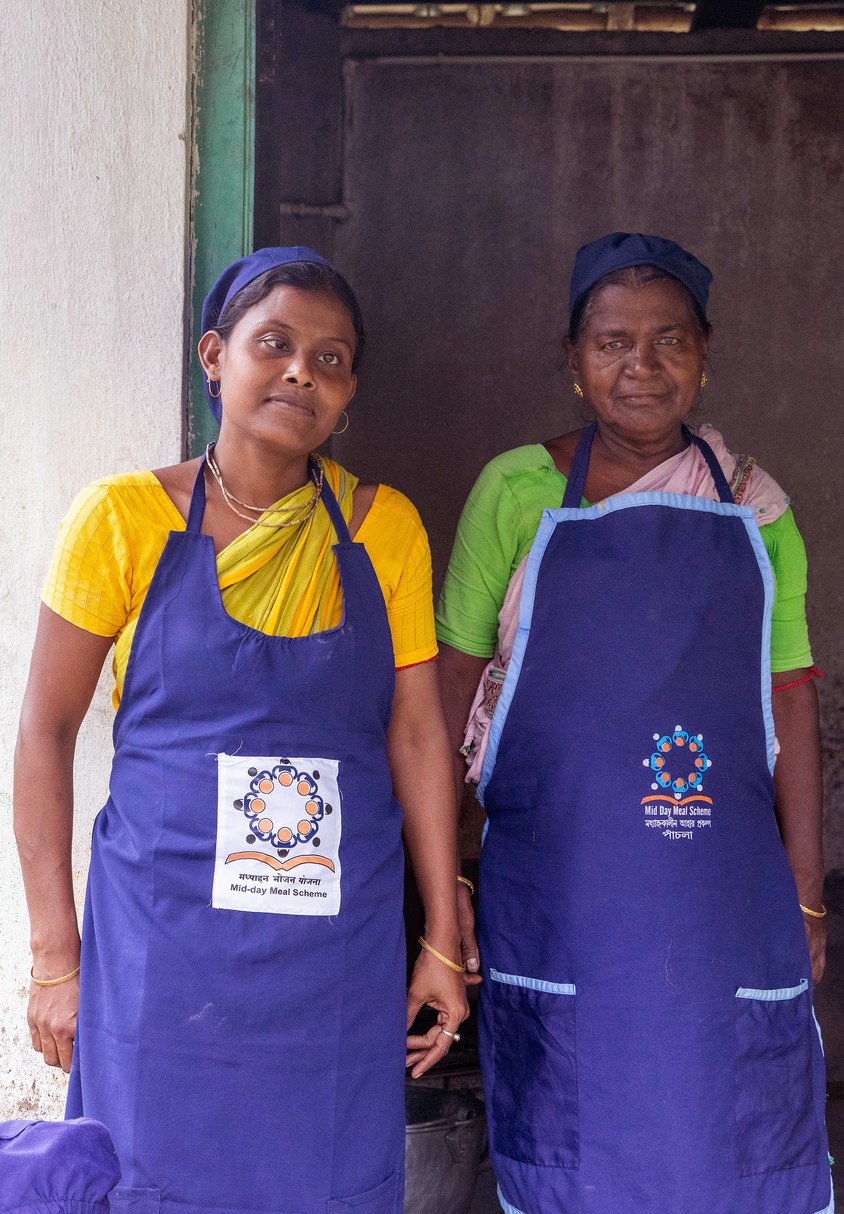
One of them — Sunita( name changed ) , who had been cooking at this school for nine years — said something I wrote down because it was the clearest summary of the whole programme I had heard. ‘If I am not here by seven, the children won’t eat on time,’ she said. ‘So I come.’
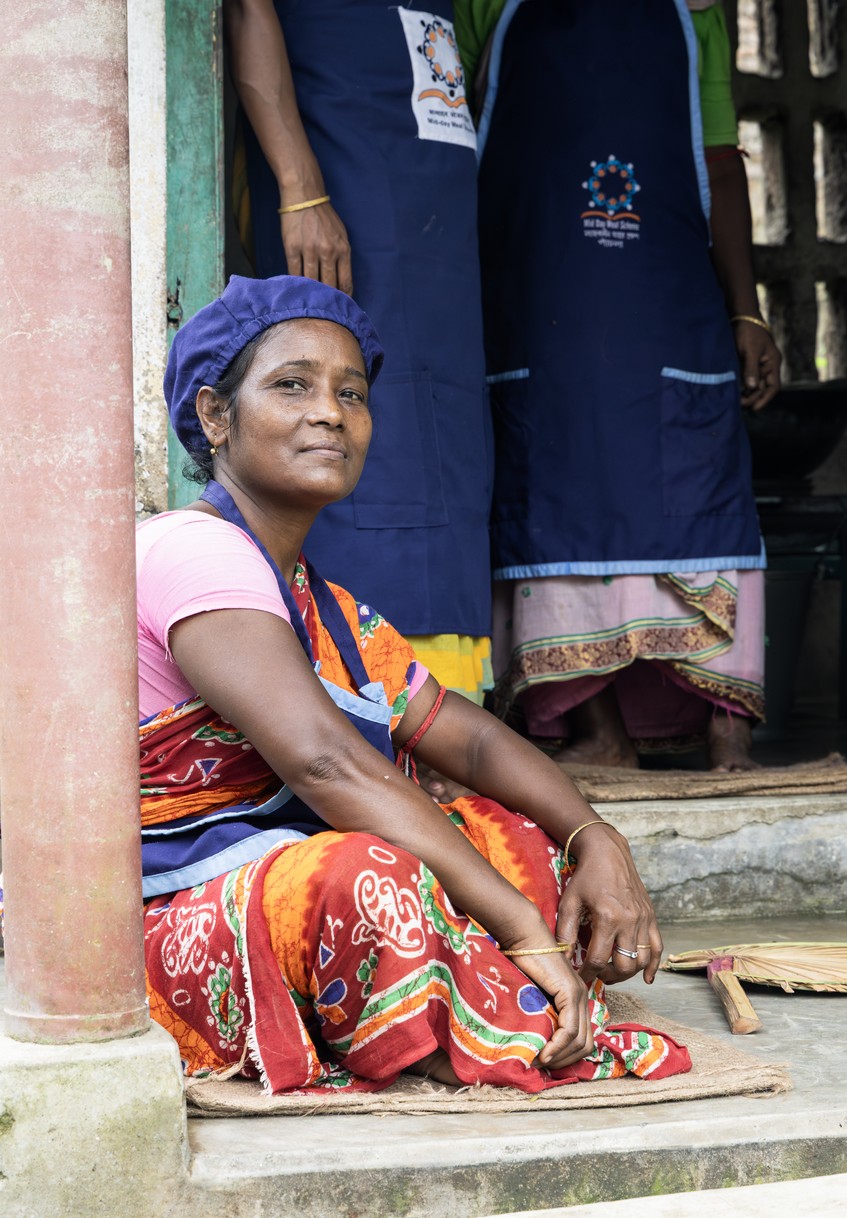
“Etai amar rojgar , This is my employment.”
another one said — Malti ( name changed ) , who had been cooking at that school for four years.
INSIDE THE CLASSROOM
The classrooms were louder than I expected and quieter than they should have been. Loud because forty children in a room is loud. Quiet because the teacher had their attention — which is its own kind of miracle at nine in the morning.
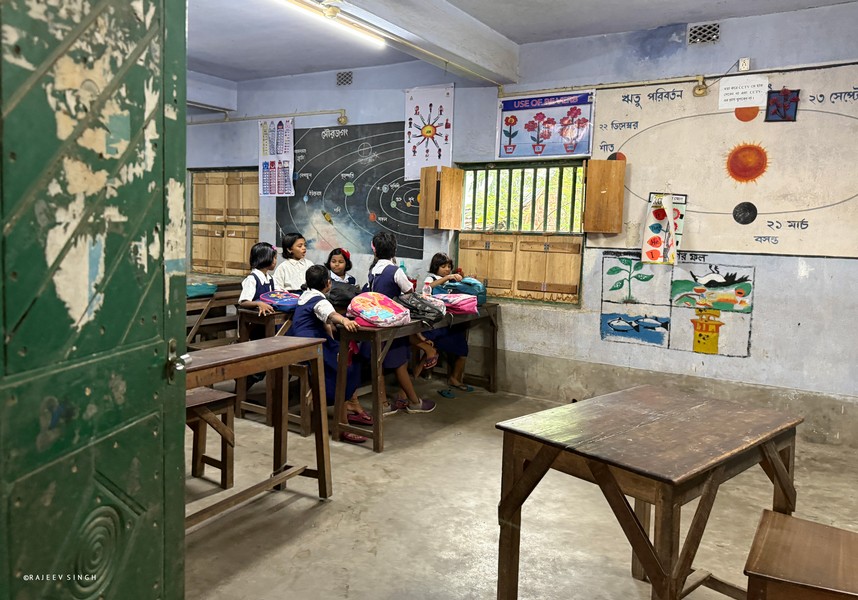
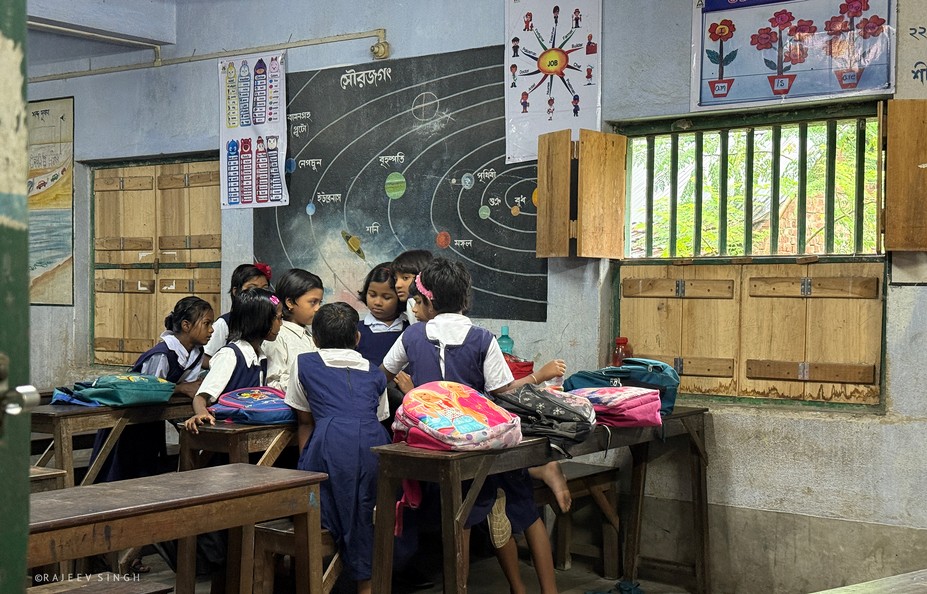

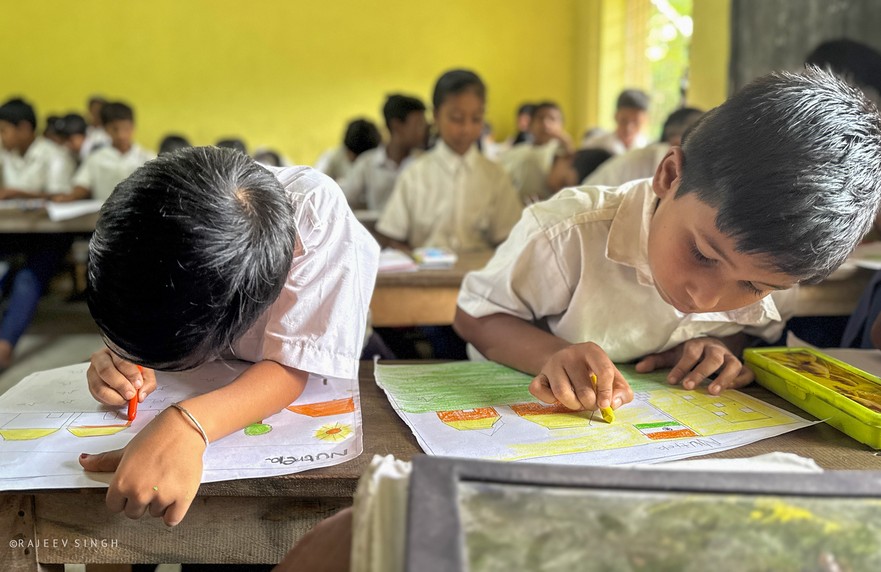
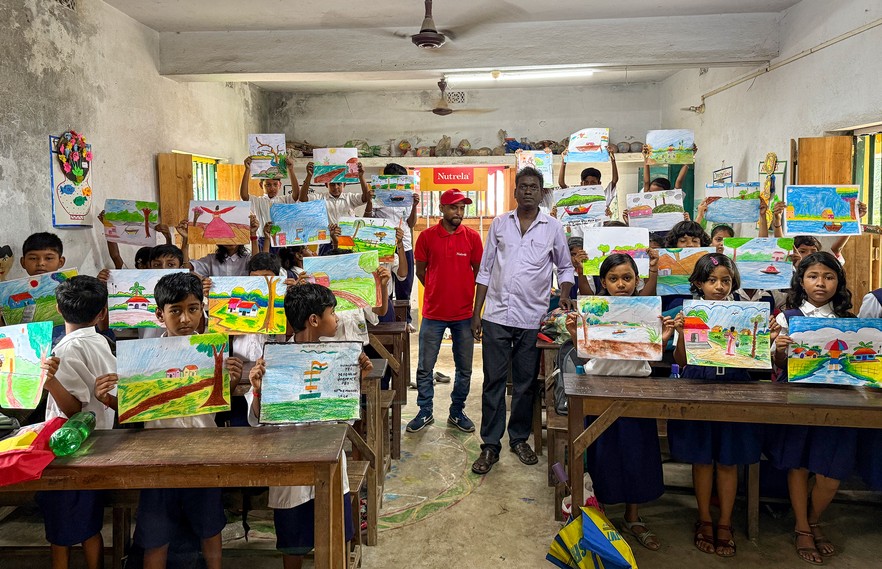
I sat at the back and watched. A girl in the third row was writing something carefully, very carefully, the kind of care children bring to things when they are trying to get it right. A boy near the window was distracted by something outside, then pulled himself back.

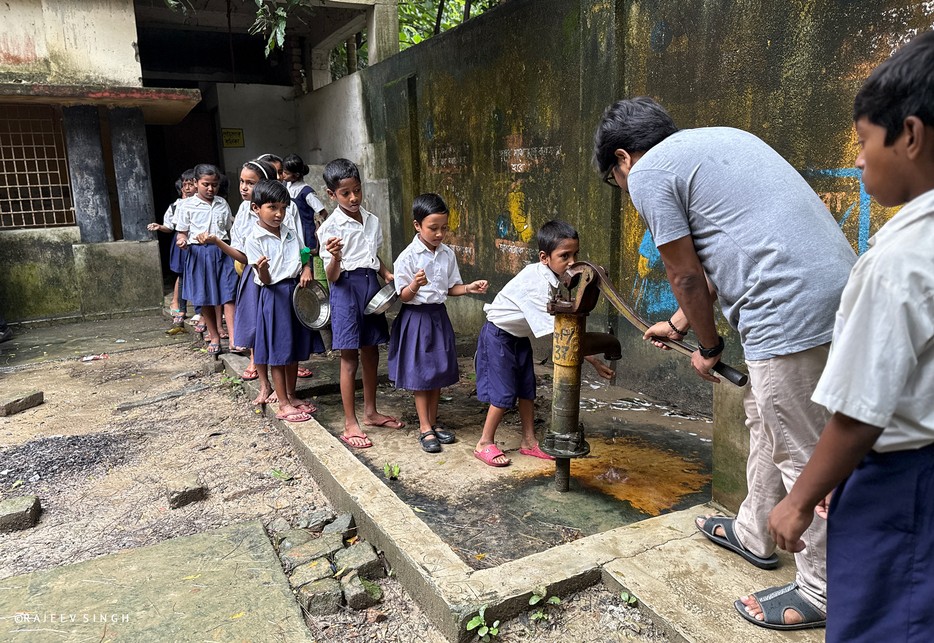
The lunch bell rang at noon. What happened next was not chaos. The children stood, formed a line, and walked — not because anyone shouted, but because the practice had made it instinctive. They went to the hand pump in the courtyard: old iron, the kind sunk into the ground in the seventies or eighties. One child pumped while the others held out their palms. The water was cold. The line was patient.
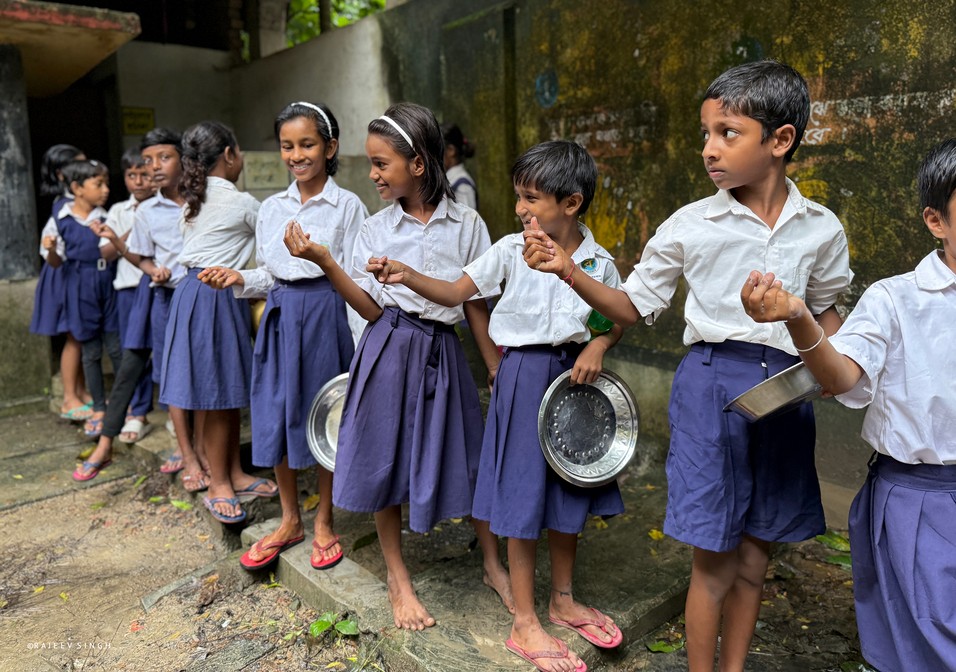
“Patience, at that age, in those circumstances, is not a natural state. It is learned.”
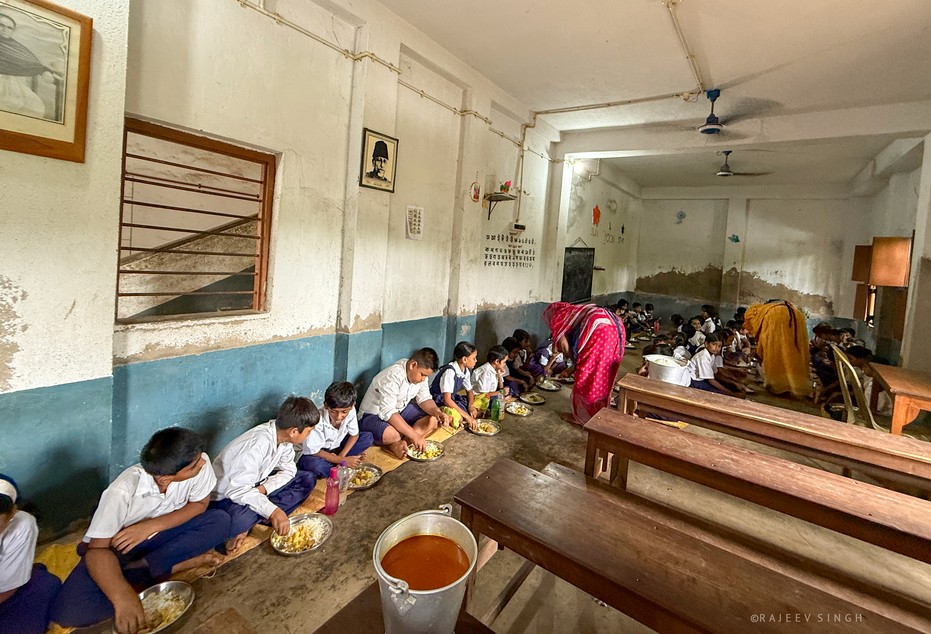
Then they lined up again in the long corridor — along the brick wall, plates held against their bodies — and they waited. A girl in a yellow dress stood in the middle of all those white uniforms, the only colour in the row. A boy near the front had his chin up, watching something in the middle distance with the focused patience of someone who has learned that waiting here produces results.


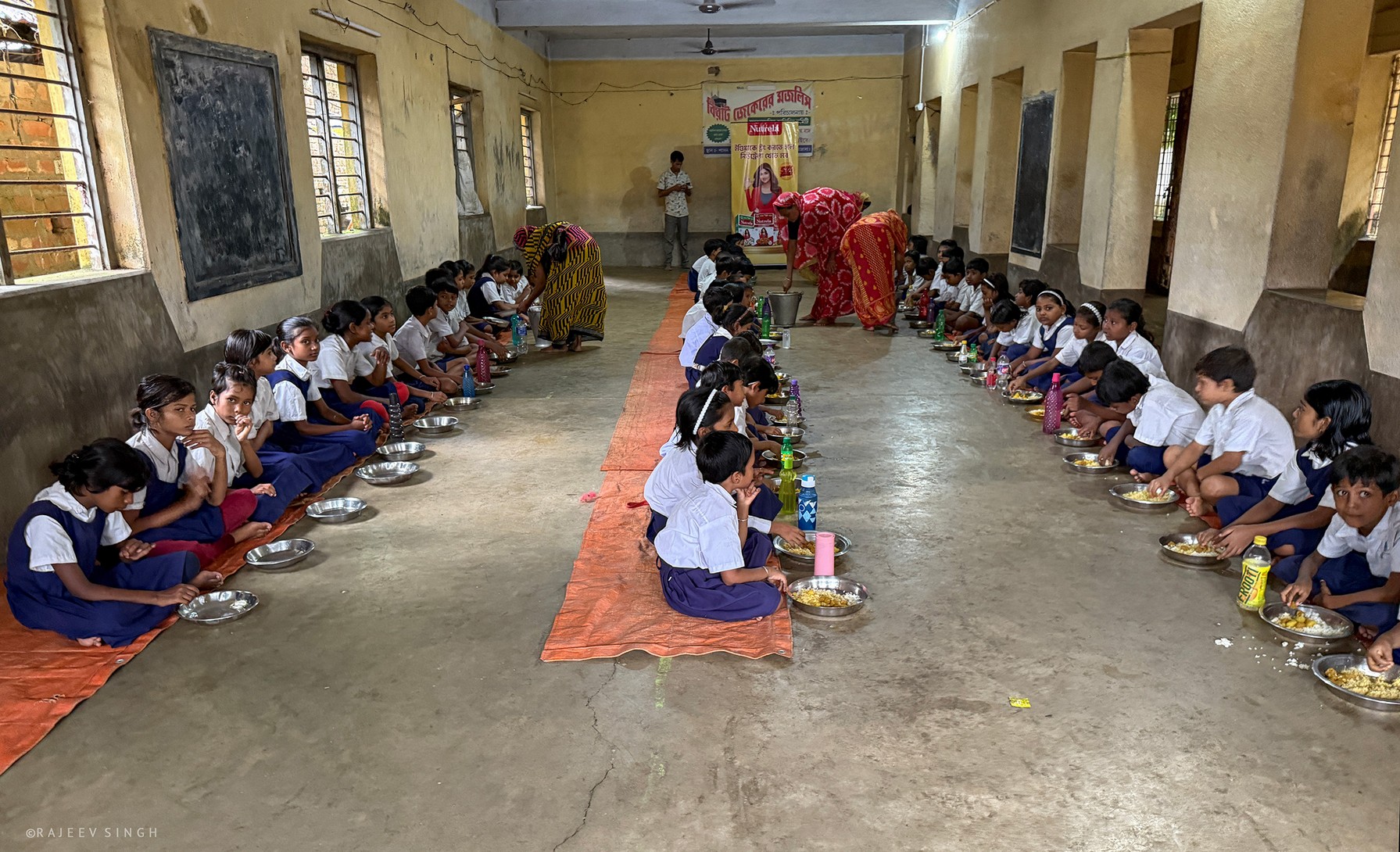
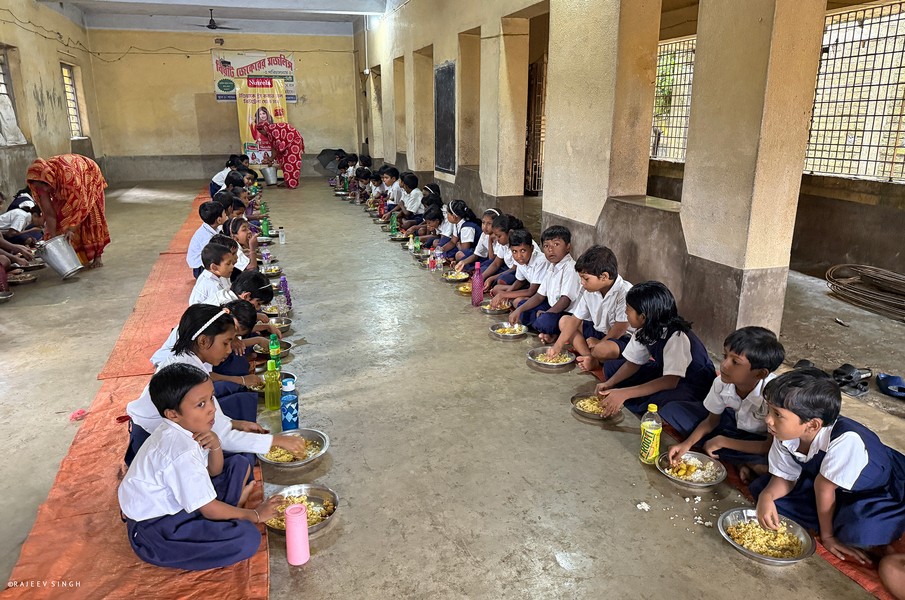
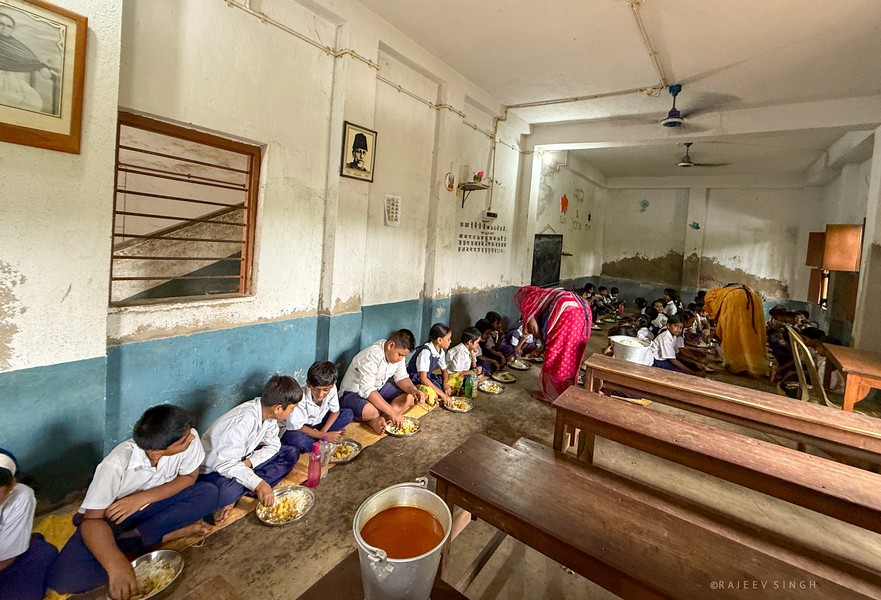
Then the serving began — the children cross-legged on the hall floor, in rows they had arranged by instinct, the women moving between them with ladles and buckets — the room took on a quality I have observed in places where things are functioning as they should. Not the forced cheerfulness of a programme being filmed for a report. Something quieter. The sound of an ordinary system doing its ordinary work.
At some point during the serving, a woman came to a girl with the ladle raised. The girl put her hand over her plate. She shook her head. No. She had had enough. She was full.
I kept returning to that gesture on the drive back. A child in a government primary school, in a family that woke before dawn to calculate whether today was a school day, turning down food — not from indifference, not from waste, but from sufficiency.
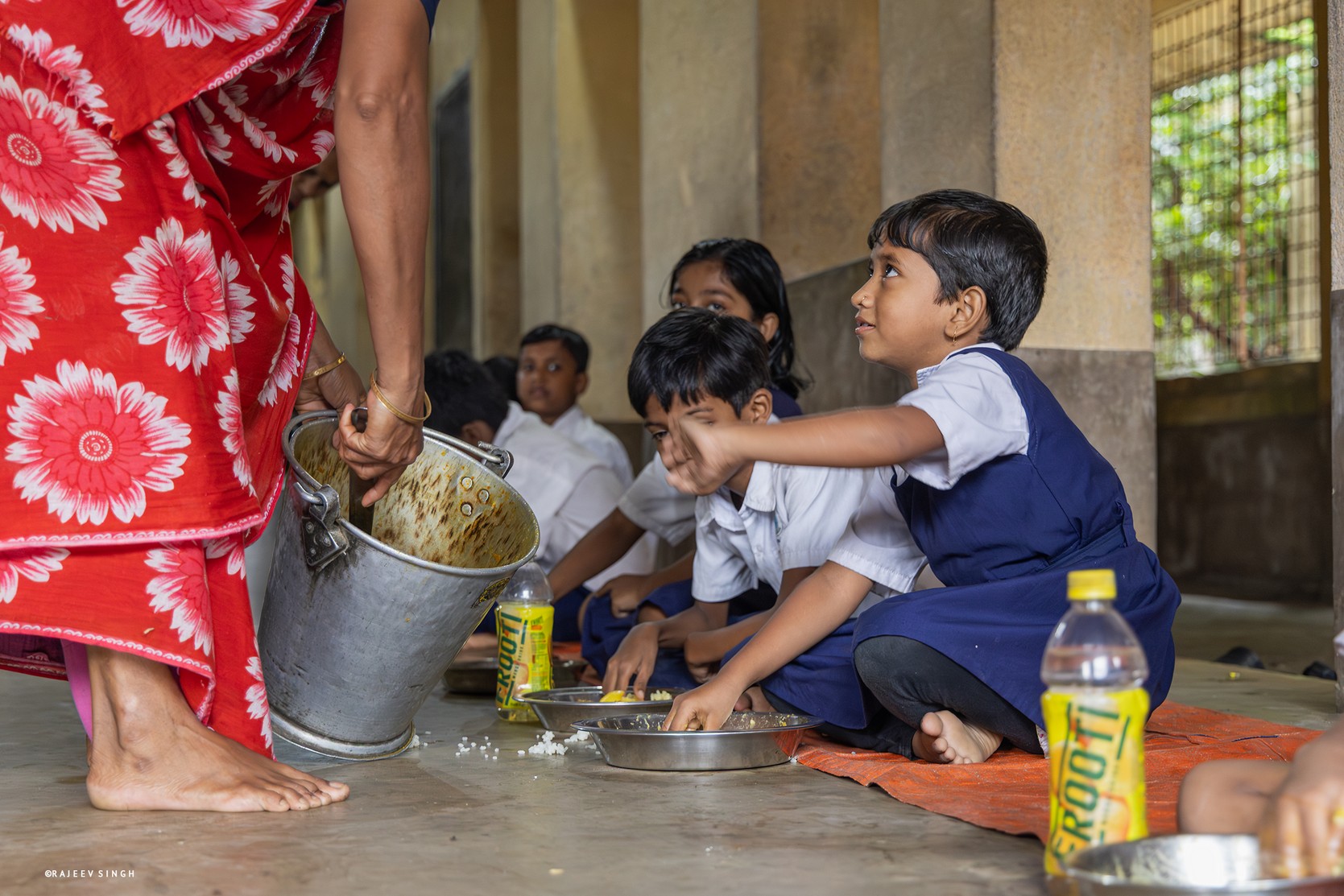
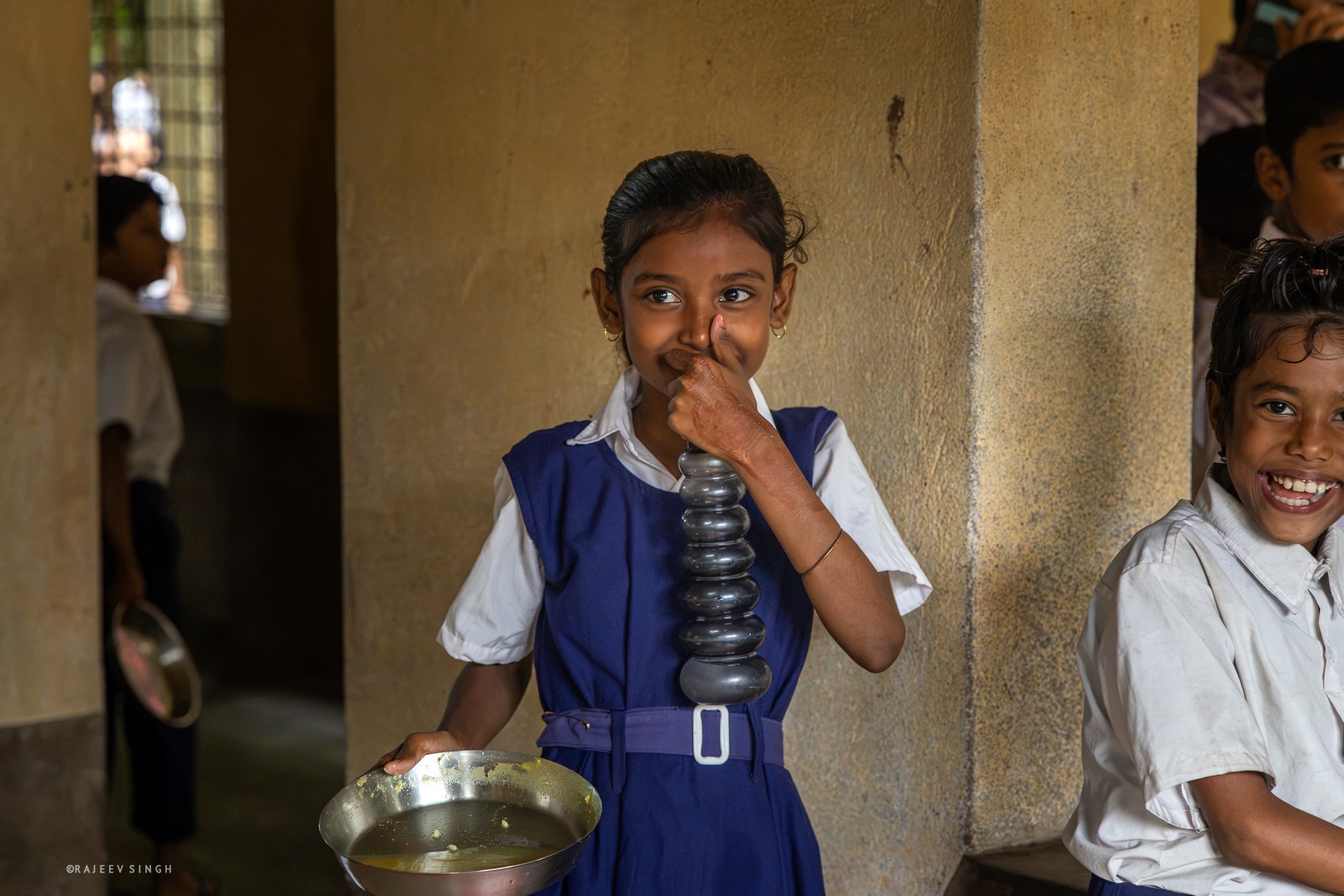
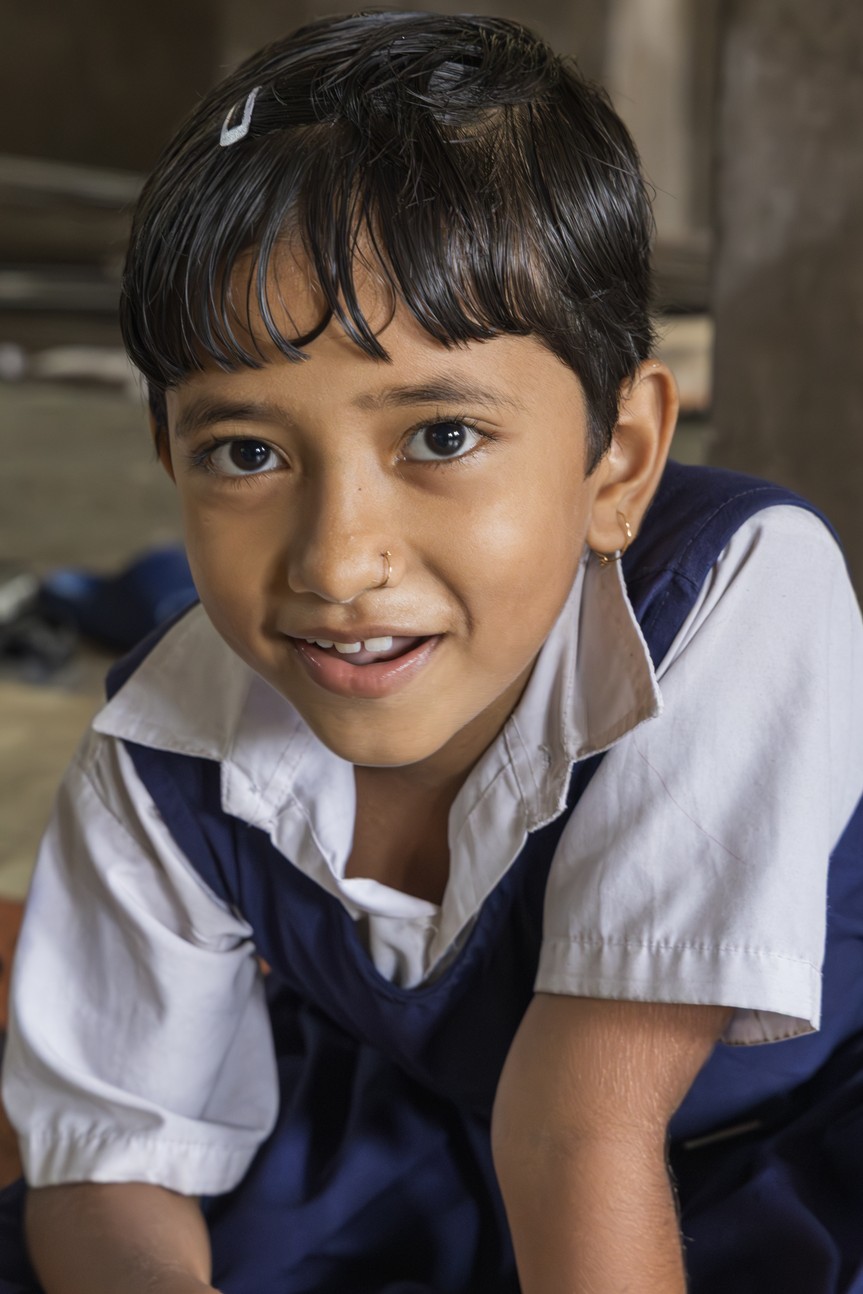
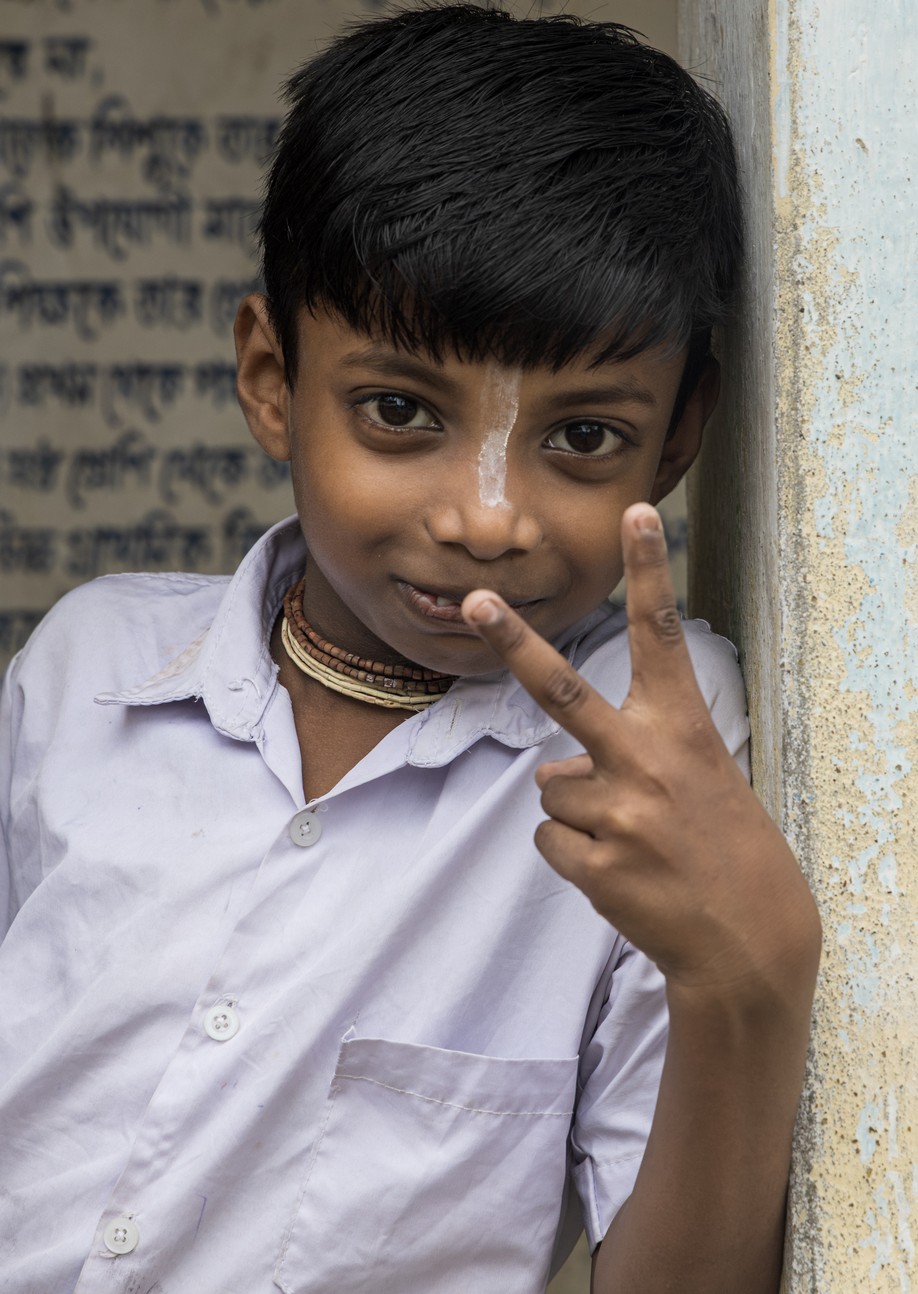


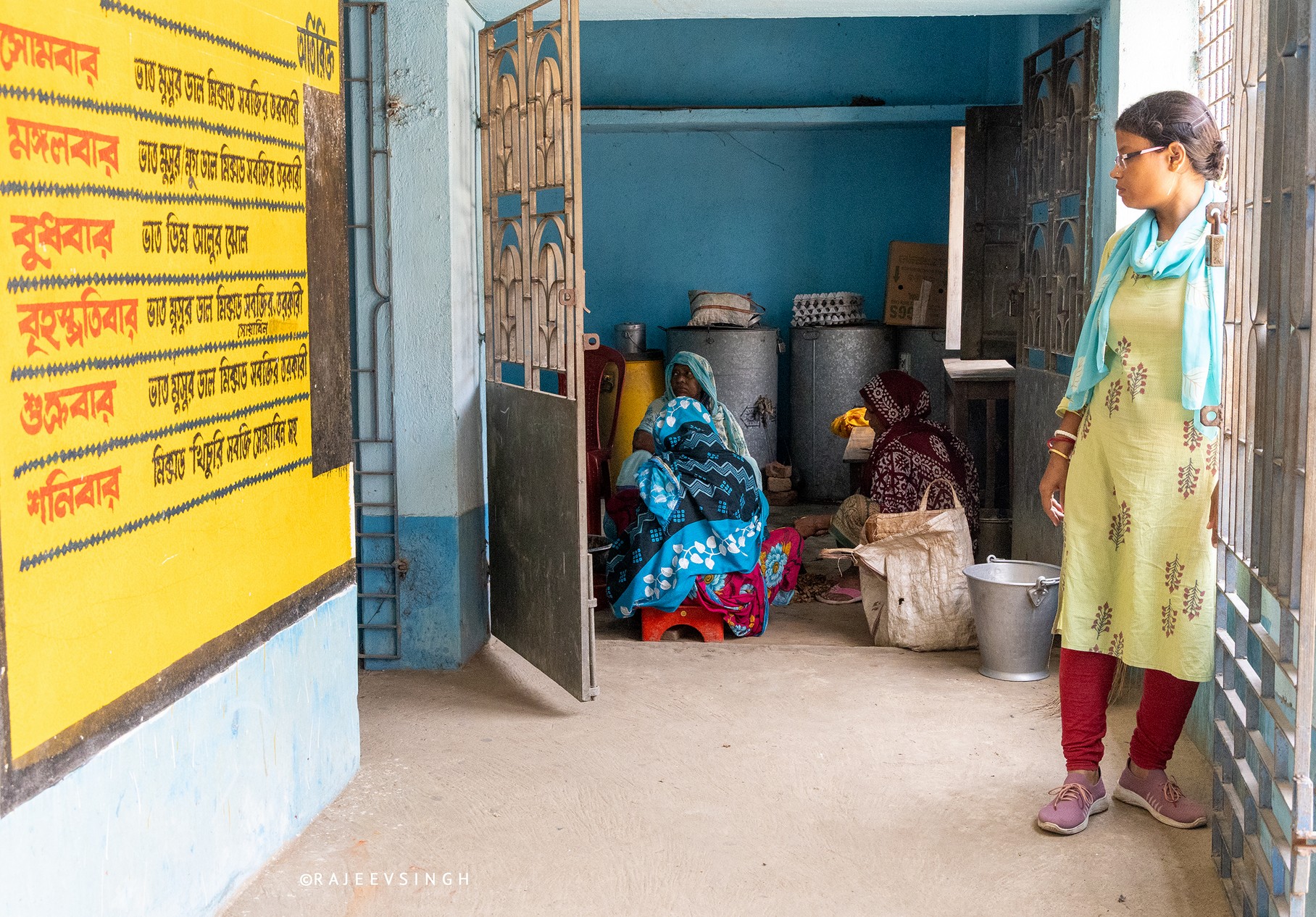
Nationally, approximately 2.6 million women are employed as cook-cum-helpers under PM Poshan Yojana — women from the same villages whose children they feed, whose families they live beside. The scheme has created one of the largest formal employment networks for rural women in independent India, inside the communities where these women already live.
The boy with his chin up in the queue. The girl saying I am full now . The child at the hand pump, holding out both palms. These are not images of rescue. They are images of a country making good, quietly and without applause, on a promise it made to its children and their parents against a commitment of them to be sent to schools .
India, sometimes, keeps its promises.
I drove back through the same roads I had come in on. I thought about Sunita. I had asked her, as I was leaving, what time she got home. She had considered this briefly, the way you consider a question no one has thought to ask before. ‘After the vessels are clean,’ she said. ‘Two o’clock. Sometimes three.’
The children, by then, would be back in their classrooms. She would be back the next morning at seven. The vessels would need washing again tomorrow. This is what it looks like when a programme works — not a moment, not a ceremony, but a cook who comes back.
PM POSHAN YOJANA — KEY FACTS
Launched 1995 as the National Programme of Nutritional Support to Primary Education. Mandated as cooked meals by Supreme Court order, 2001. Renamed PM Poshan Yojana, 2021. Covers Class 1–8 in government and government-aided schools. Beneficiaries: 118 million children. Schools covered: approximately 1.2 million. Cook-cum-helpers nationally: approximately 2.6 million women.