

Photographer’s Note: Purani Dilli—Old Delhi—feels like an unbroken rhythm, a place where life moves in a continuous cycle of moments that touch and overlap without ever truly stopping. At dawn, the streets awaken not with haste, but with a familiar choreography repeated day after day. Florists lift their shutters before sunrise, arranging marigolds and jasmine so devotees can carry fresh offerings to nearby temples. Rickshaw pullers roll into the lanes early, ready to ferry office goers to bus stops and metro lines, while sanitation workers wash the roads, rinsing away the day before so the city can begin anew. Fruit sellers stack their morning harvest, hoping for the first earnings of the day; labourers unload heavy bundles under the soft light—work only possible before the crush of the 9 a.m. to 9 p.m. crowds. People step out of their homes and weave through narrow streets where cars cannot enter. Even the sounds—the hawkers’ calls, the clatter of carts, the hum of distant traffic—merge into a daily refrain. Together they form a living heartbeat, steady and continuous, that makes Purani Dilli feel less like a place and more like a rhythm that never breaks. Despite the chaos, these rhythms are predictable. People adapt to one another’s pace, forming an unwritten coordination that keeps the city moving. Its rhythm never truly stops—not the trade, not the conversations, not the movement of bodies through narrow lanes. Here we peep into the morning lives of Purani Dilli.
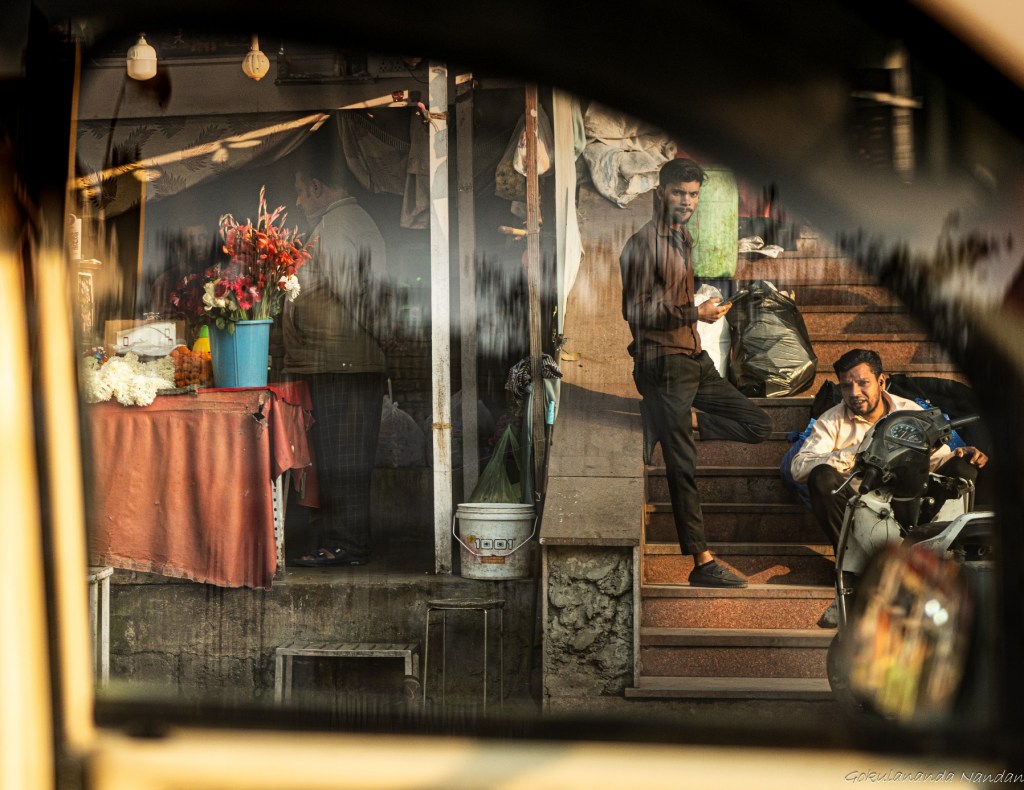
At the start of the day, two men pause while a florist readies his trade—an ordinary rhythm of Purani Dilli. This moment captures the quiet pause between tasks in Old Delhi’s relentless tempo. A flower seller arranges his blooms in the dim interior of his stall, while two men lean and sit on the steps outside—one scrolling through his phone, the other resting beside his scooter. The light falls softly, hinting at early morning fatigue and the day’s work ahead.
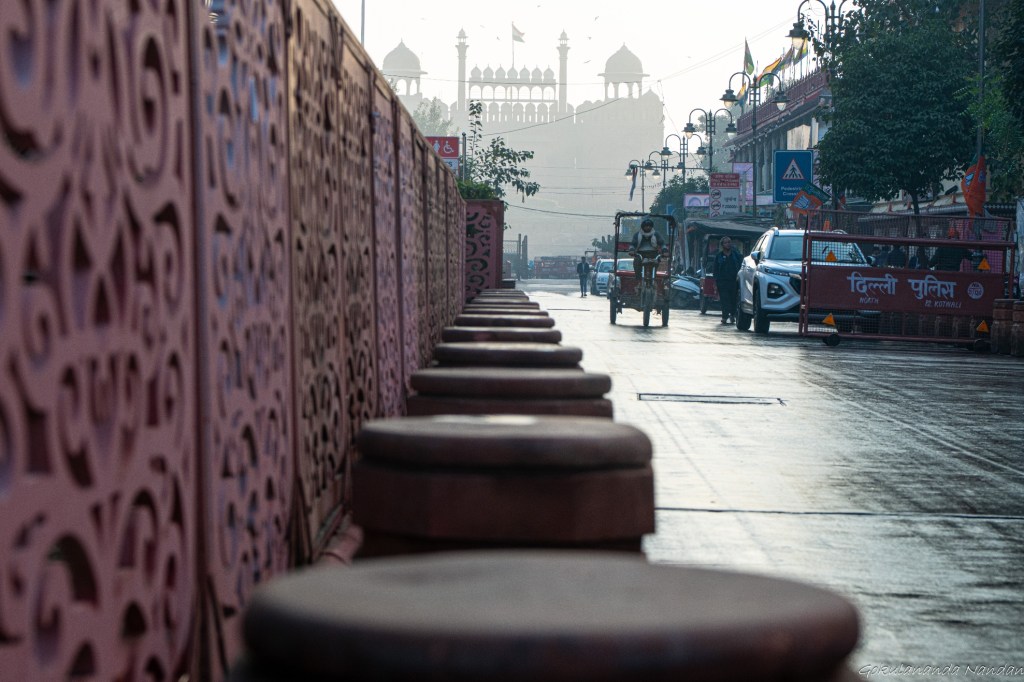
Dawn light brushes the Red Fort as the city stretches awake, one rickshaw at a time. The wide avenue leading toward the Red Fort sits washed in cold morning light. A cycle-rickshaw moves slowly through the nearly empty street, a rare moment of calm before the daily surge of shoppers and commuters.
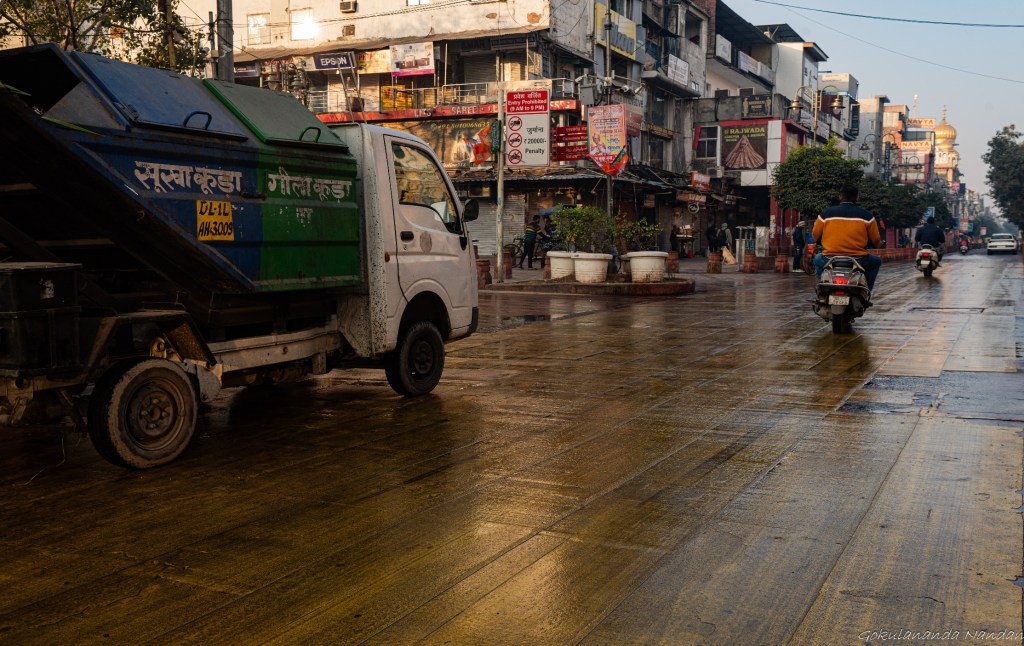
Before commerce begins, the city is cleaned, crossed, and claimed by its earliest workers.
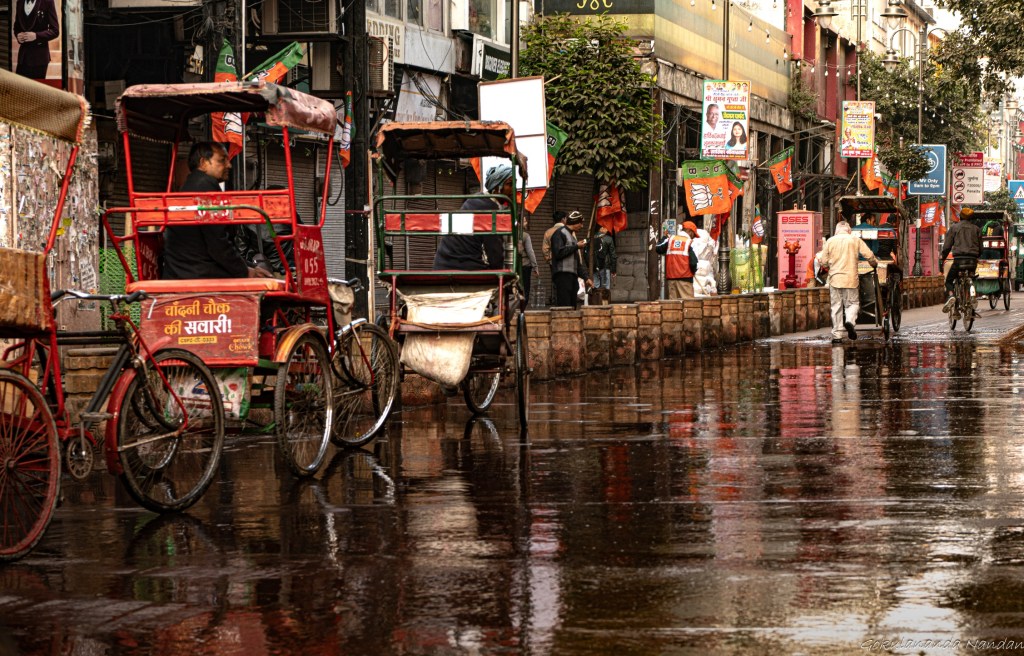
After a recent wash by sanitation workers, rickshaws wait in the glistening street—colour, patience, and the promise of the day’s first fare.
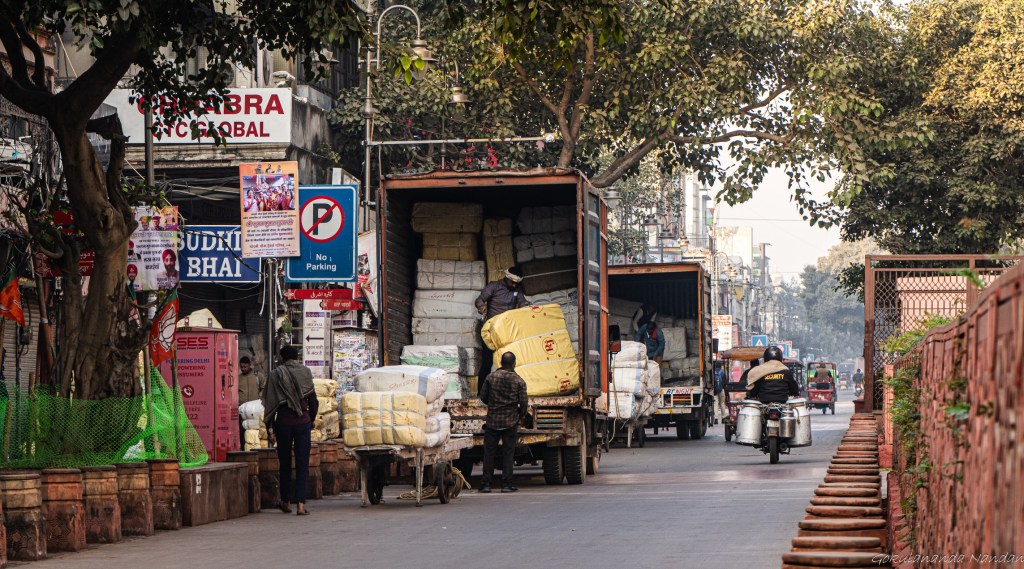
Morning labour in Purani Dilli: heavy bundles, narrow lanes, and the muscle behind the markets. In a narrow commercial stretch, workers unload massive bundles from open trucks.The labour is physical and repetitive, forming the backbone of the city’s trade economy.
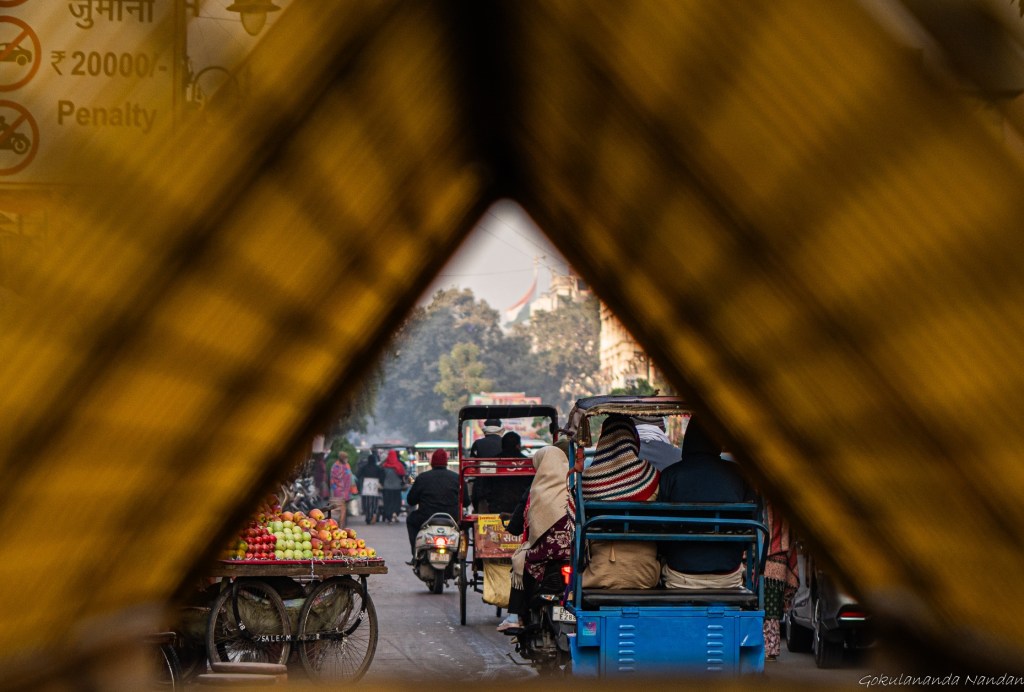
A glimpse through Purani Delhi’s constant flow of vendors, riders, and routine. It looks into the city’s bloodstream, where movement and negotiation never cease.
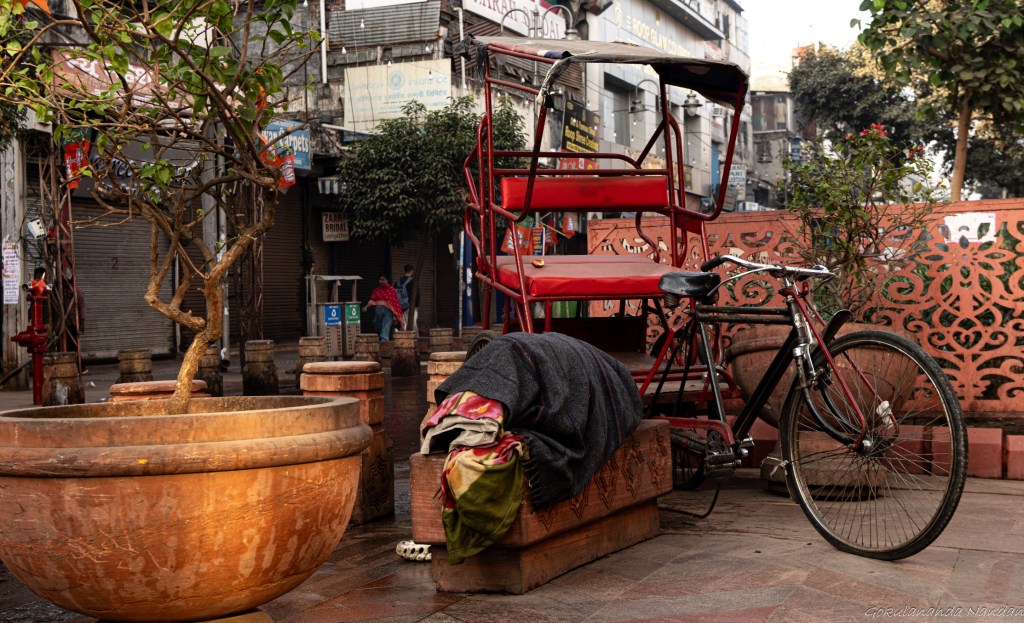
Before the city demands movement, some find a brief rest where they can. The contrast between mobility of the rickshaw and vulnerability of its puller highlights the intertwined realities of work and survival in Old Delhi.
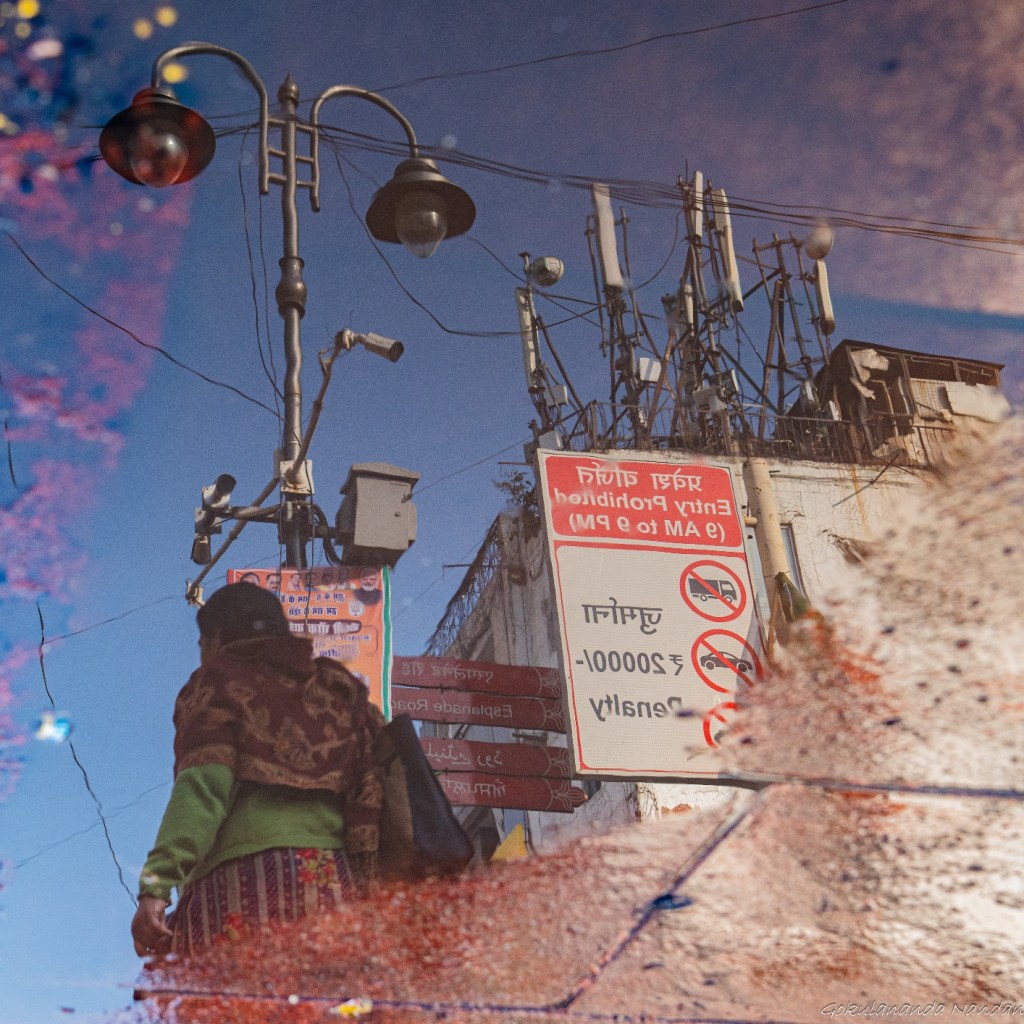
A puddle turns the street into a mirror, blending Delhi’s walkers, signs, and sky into one frame. It shows Purani Dilli as a layered world—its infrastructure, its people, and its imperfections folded together in a single moment.
 DoubleSpeak