

In a world built on constant connectivity—where every moment is accompanied by a notification, a message bubble, or an alert demanding our attention—one might assume that loneliness is a relic of the past. Yet the opposite has quietly become our reality. We live in an age of hyper-communication, and yet also in an age where genuine connection is increasingly rare. 404: Meaning Not Found is a visual exploration of this paradox—an attempt to decode why, despite being endlessly linked to one another through screens and devices, we often feel profoundly disconnected from ourselves, from others, and from meaning itself. This narrative does not seek to dismiss technology or romanticise a pre-digital world. Instead, it holds up a mirror to the subtle emotional shifts that occur as our lives intertwine with digital systems. Each photograph functions like a psychological checkpoint, capturing small, quiet moments that reveal a much larger cultural condition: we are overwhelmed with signals, yet starved of significance. What were once deliberate conversations have transformed into idle “typing dots”. Emotional presence is replaced by unread messages. Rest has become synonymous with the dim glow of a screen at 2 a.m. The tools that were invented to bring people closer have, in many ways, fragmented the very essence of human closeness. The project examines this fragmentation through intimate visual metaphors. The tangled router, the blinking battery icon, the frozen glitch on a screen—these everyday objects become symbols of modern emotional strain. They echo the fatigue of minds running on low charge, the confusion of identities caught between physical and digital selves, and the ache of anticipation haunted by silence. Through subjects placed in empty rooms, cables reaching towards nothing, and screens offering everything except comfort, the narrative exposes the quiet suffering hidden beneath our daily digital rituals. At its core, this photo essay is not about technology at all—it is about the human condition. It asks a simple but urgent question: if we are connected to everything, why do we still feel so disconnected? The work encourages viewers to confront their own relationship with digital life, not with guilt, but with awareness. It invites reflection on the moments we lose while chasing signals, the emotions we mute for convenience, and the identity we slowly surrender to glowing rectangles. 404: Meaning Not Found seeks to create not just recognition, but resonance. It aims for the viewer to feel seen—to recognise the familiar emptiness in dimly lit screens, the exhaustion in the battery symbol, and the longing embedded in the illusion of connection. Ultimately, this body of work hopes to restore a sense of human presence within an environment designed for perpetual distraction, reminding us that meaning is not found in the signals we search for, but in the connections we choose to nurture.
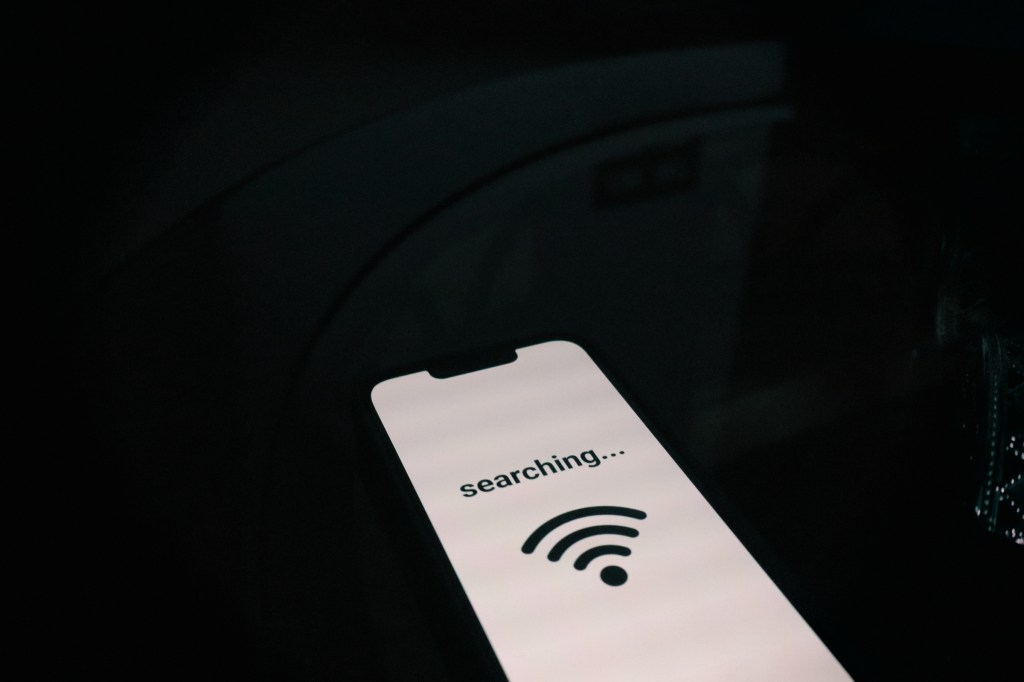
SEARCHING…..
In this opening image, the illuminated phone screen becomes the only visible anchor in an otherwise engulfing darkness. The device displays the word “searching…” — a simple system notification that takes on emotional weight when isolated so starkly. The absence of surrounding detail and the reflective black surface transform the phone into a metaphor for the self: bright, restless, and suspended in uncertainty. This photograph sets the narrative foundation for the entire series, marking the beginning of a journey defined by longing and incompleteness. Before any human figure appears, this image establishes the emotional void that the project seeks to explore: a constant quest for connection that yields only more searching.
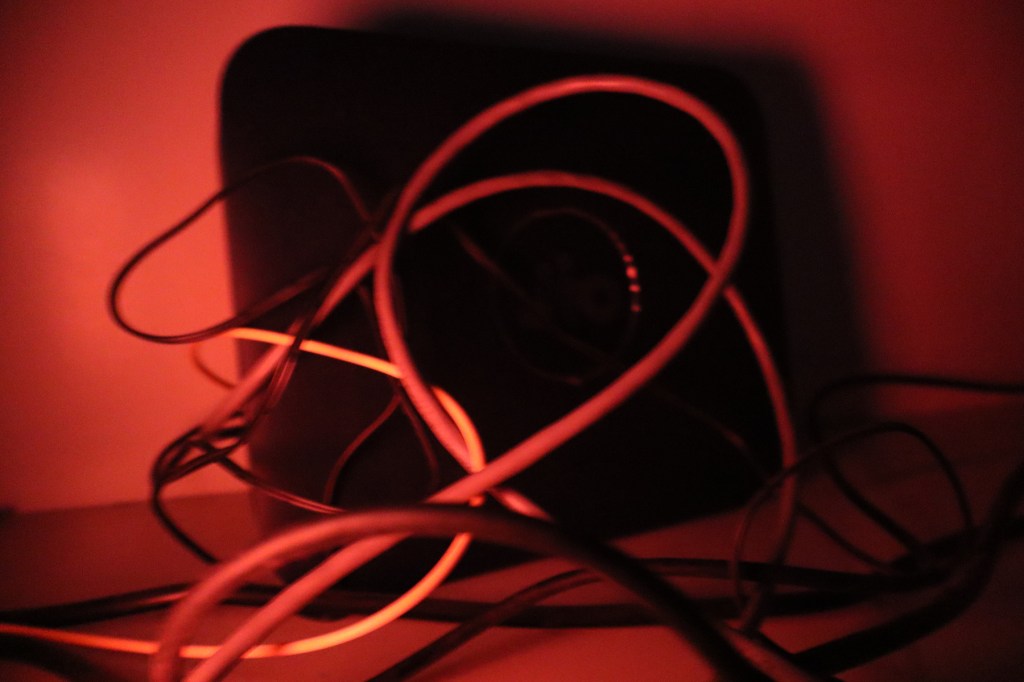
NETWORK NOT FOUND
The tangle of cables surrounding the router transforms a simple technological malfunction into a metaphor for inner overwhelm. The wires visually mimic the knots of anxiety, confusion, and emotional clutter that build within us when efforts to connect repeatedly fail. The red glow intensifies the sense of suffocation, suggesting rising frustration and emotional heat. In the narrative, this image deepens the conflict introduced earlier: the systems we rely on — both digital and personal — cannot always support the connections we desperately seek.
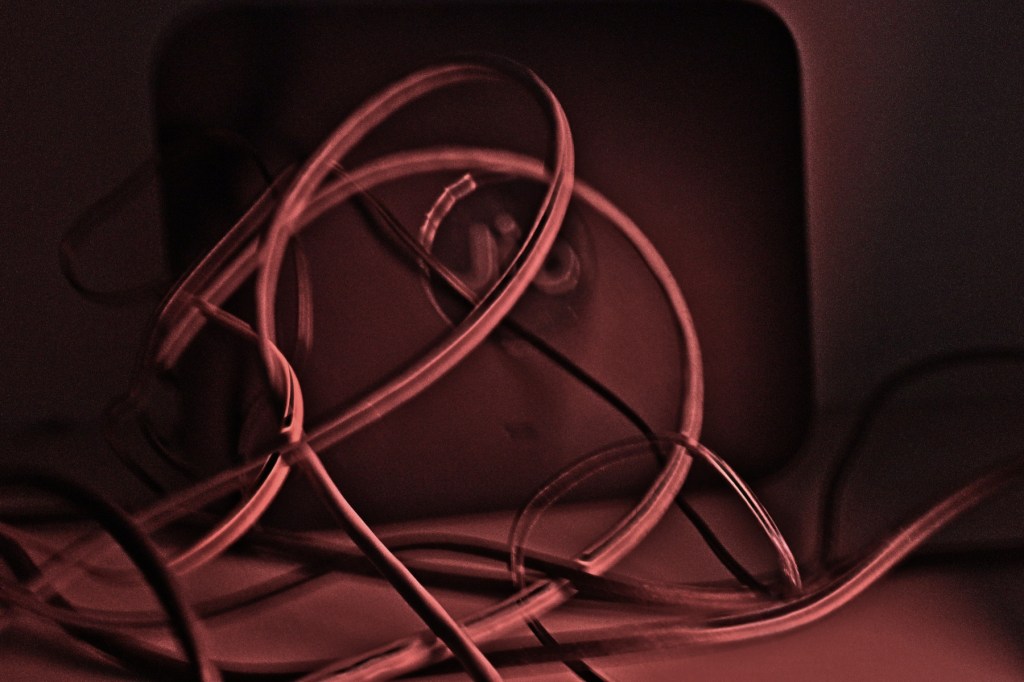
NETWORK NOT FOUND
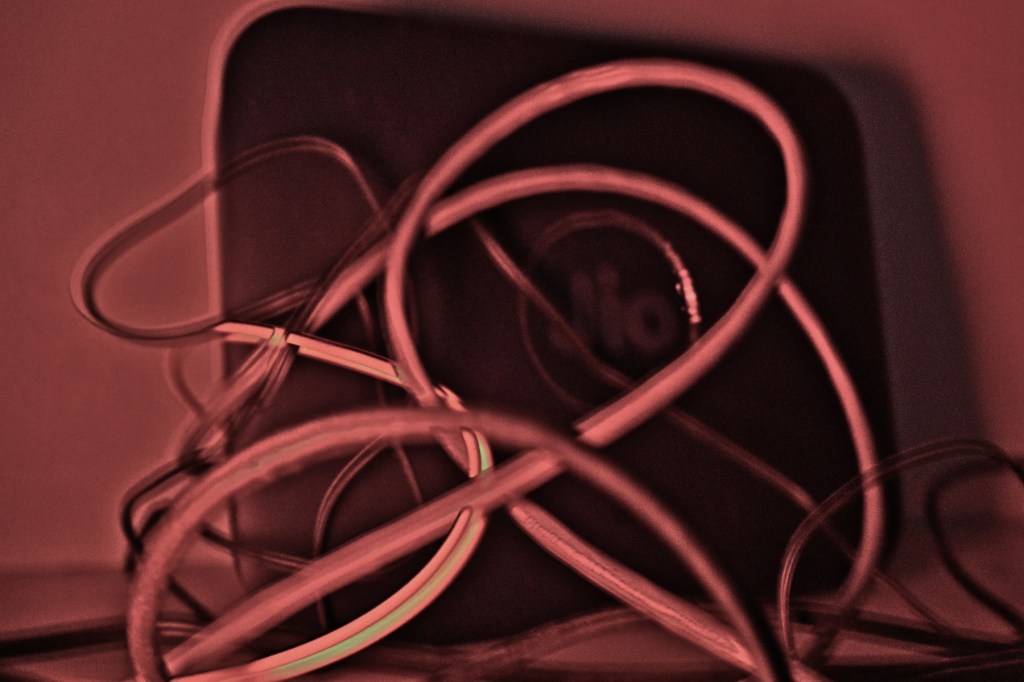
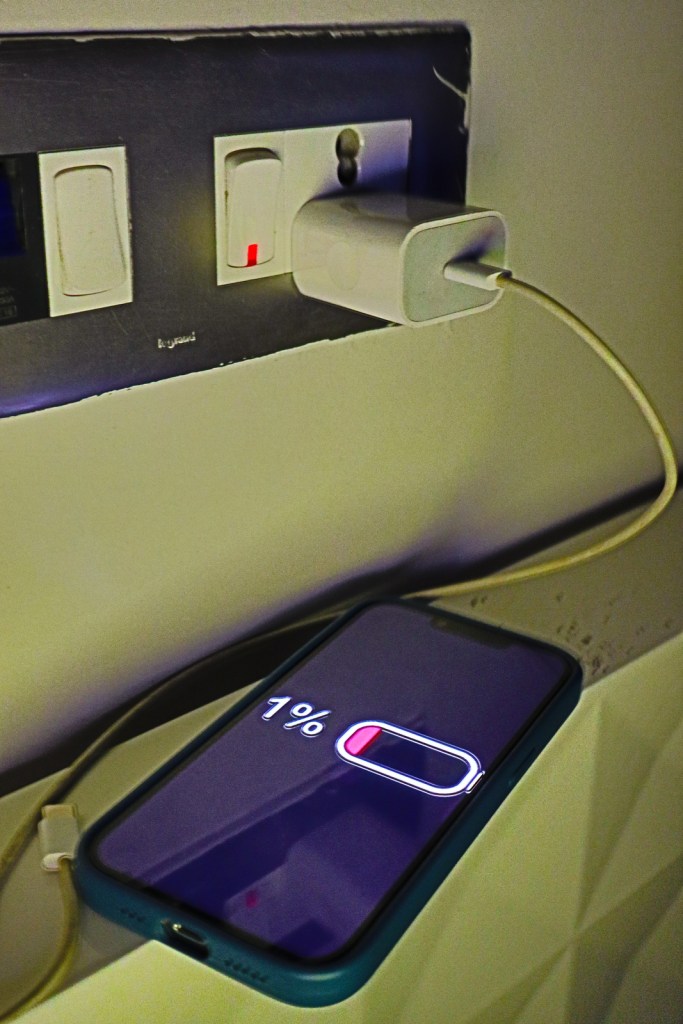
BATTERY LOW (1%)
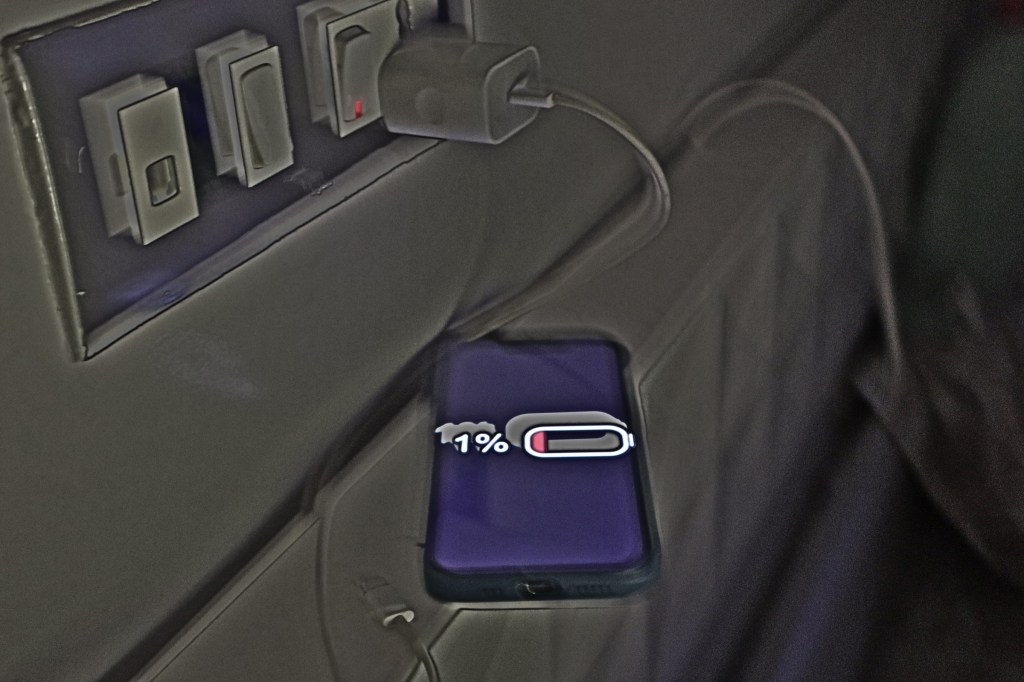
The near-empty battery becomes a mirror for emotional depletion. Although the charger is physically present, energy remains out of reach — a telling illustration of how closeness does not always translate into nourishment. This moment marks the transition from external failure (signals, networks) to internal collapse. The image stands in the narrative as a quiet admission: that the cost of constant availability, constant responsiveness, is a slow draining of the self. The device is tired, but so is the person holding it.
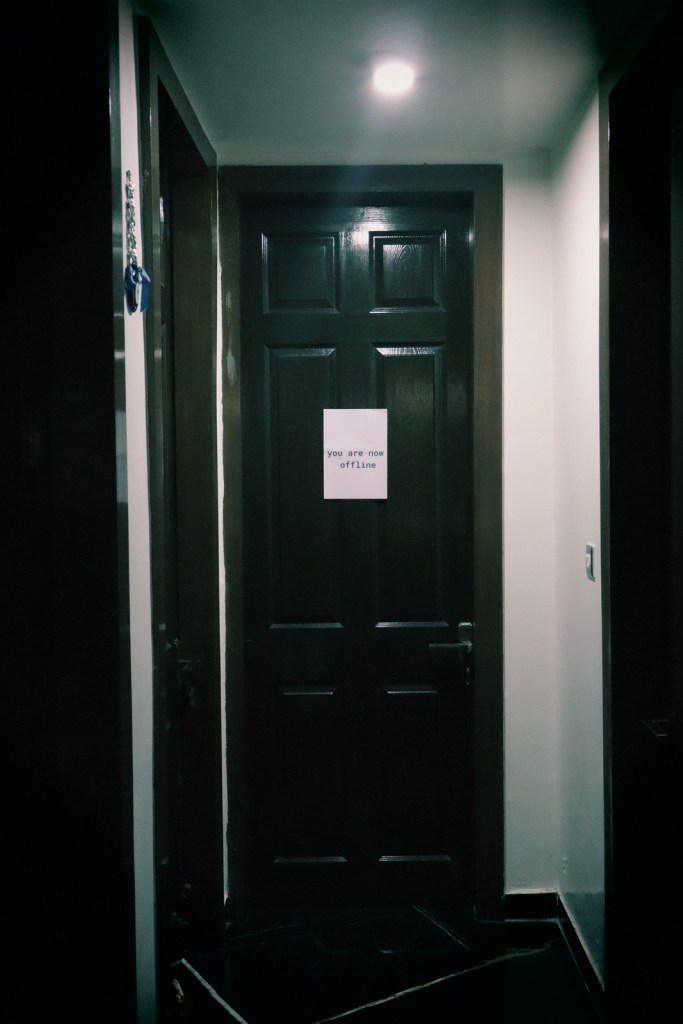
The Offline Door
This image introduces a threshold — the possibility of stepping away from digital pressures. Yet the corridor’s dimness and the stark message, “you are now offline,” make the moment feel uncertain rather than freeing. The door does not reveal what lies beyond; it only highlights how unfamiliar and uncomfortable disconnection has become. Within the narrative, this image represents an emotional pause: a moment where the protagonist attempts to escape the overwhelm but instead finds that “offline” no longer guarantees peace or clarity.
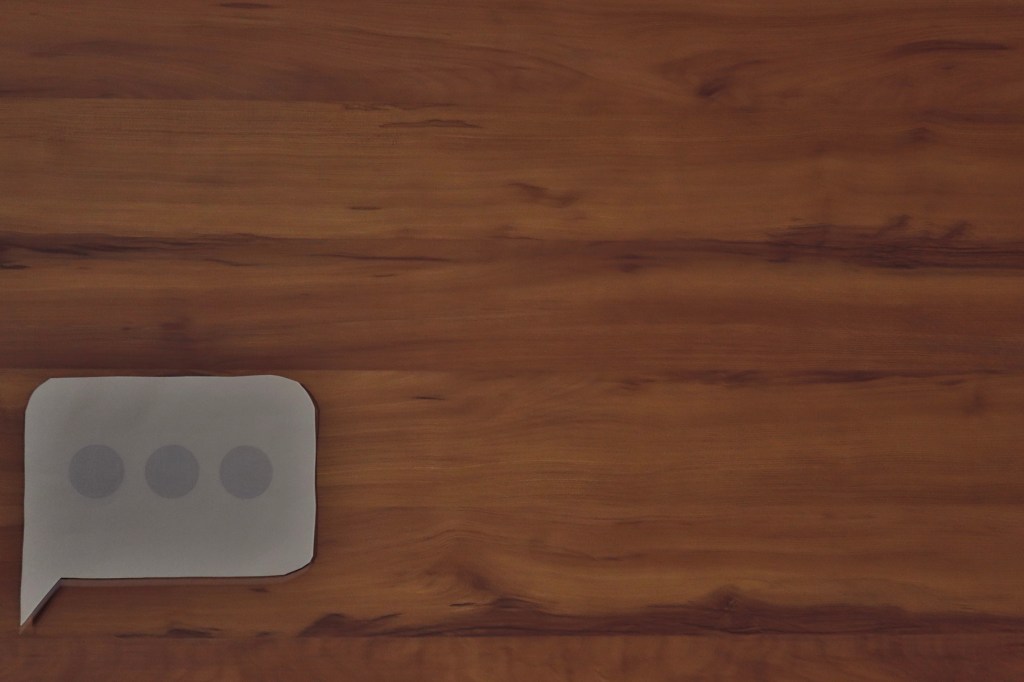
Typing Dots
The static typing symbol becomes a frozen moment of anticipation — the promise of a message that never arrives. The stillness is unsettling, revealing the emotional limbo created by digital communication. It is a symbol of conversations stuck halfway, of relationships suspended in unspoken words. This image emerges in the narrative right as the emotional stakes intensify: the protagonist is not simply missing connection; they are actively waiting for it, caught in a space between presence and absence.
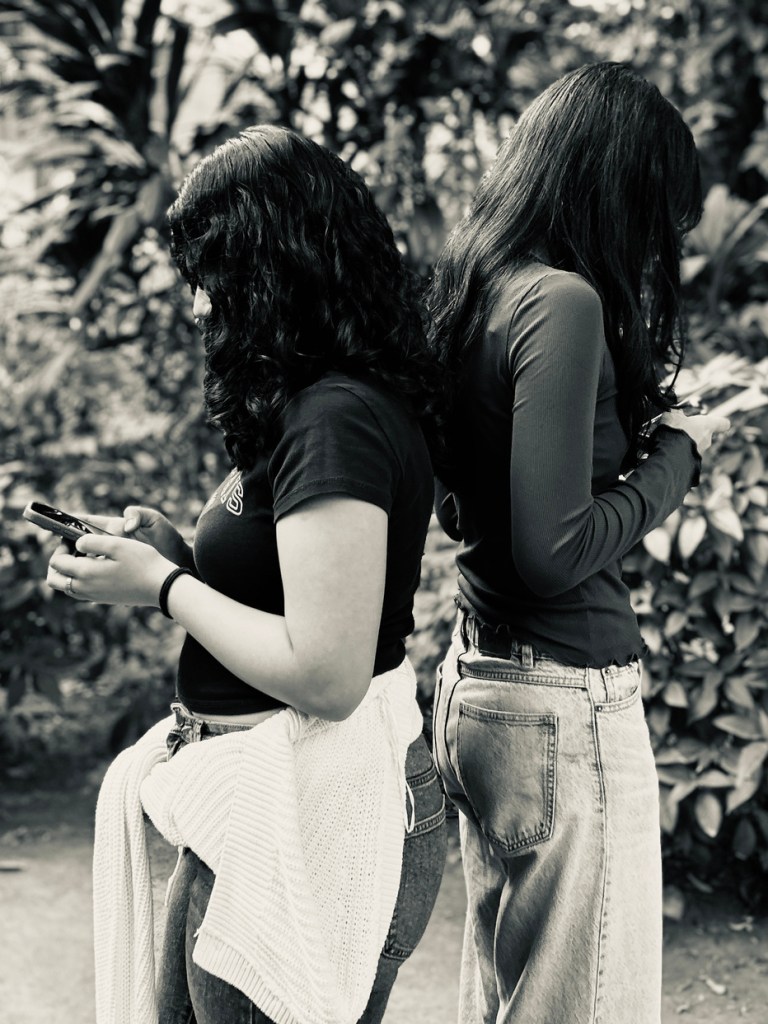
Invisible Conversations
Two individuals stand back-to-back, close enough to touch yet worlds apart. Their bodies face away from one another while their attention dives into their screens. This image gives the narrative its first direct encounter with human characters, revealing that disconnection is not limited to technology but permeates real relationships. It exposes a silent tragedy of modern communication: that constant exposure to others does not prevent isolation. In the story, this moment widens the emotional lens from personal disconnection to collective distance.

Disconnected at 2AM
A figure curled into themselves in the soft darkness of night, paired with a phone displaying “no new messages,” captures a private loneliness that digital spaces often amplify. Nighttime strips away distraction, leaving only the weight of unmet expectations and unshared thoughts. This image holds the emotional center of the narrative — the quiet hour when the truth of disconnection is hardest to avoid. It acknowledges the vulnerable human beneath the habit of checking screens for comfort.
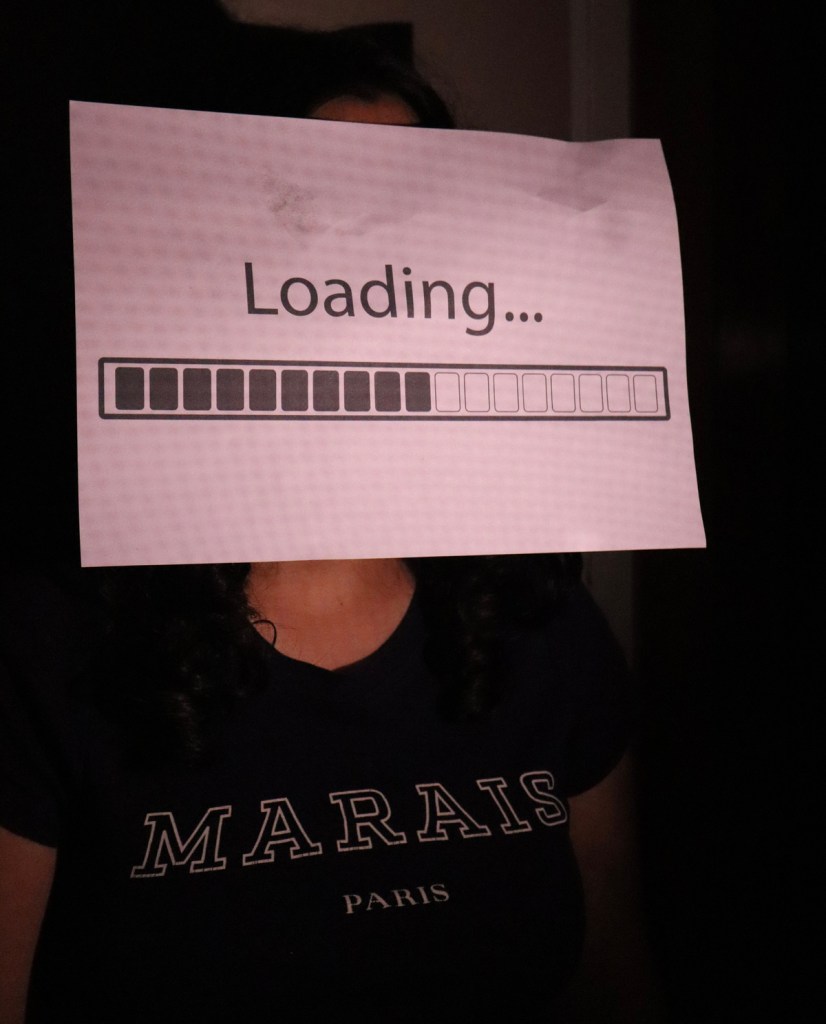
Human Buffering
With the loading bar covering the face, the subject becomes an unfinished process, a person stuck mid-transition with no clarity about when they will “arrive.” The image visualizes emotional stagnation — not quite here, not quite gone. In the broader narrative, this moment speaks to the internal consequence of prolonged disconnection: a growing sense of incomplete identity. It expresses how easily we begin to internalize digital metaphors, seeing ourselves through the language of systems rather than emotions.
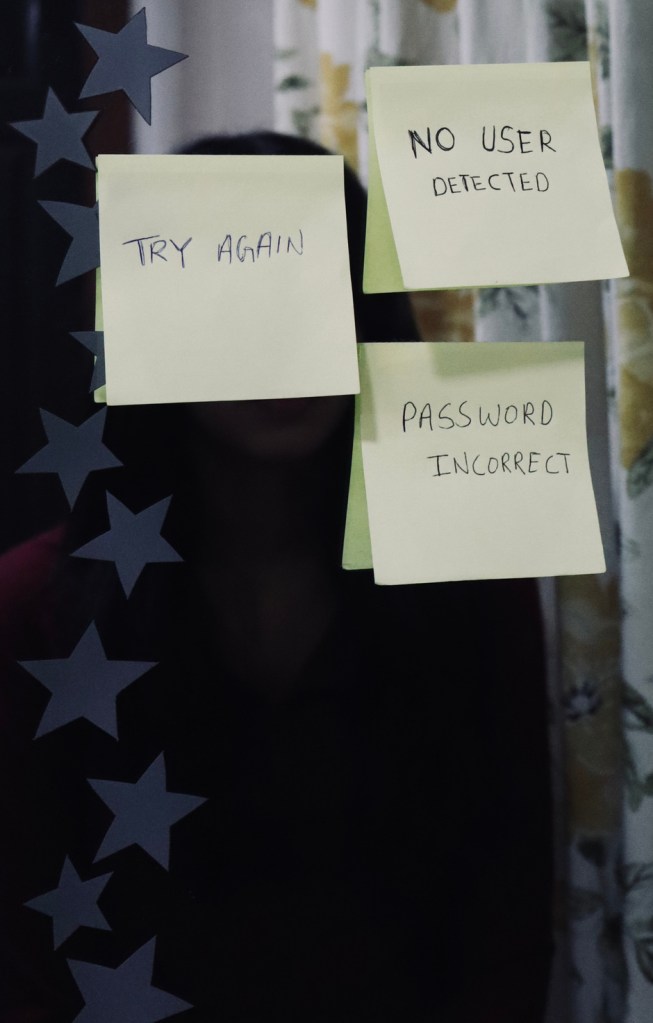
Identity Not Found
Here, the mirror — a space meant for self-recognition — becomes obscured by error messages: “No user detected,” “Try again,” “Password incorrect.” The faint shadow of the person behind these notes reflects a self slipping out of visibility. This image intensifies the internal crisis hinted at earlier, revealing a profound loss of personal coherence. The narrative arrives here at a moment of confrontation: the protagonist faces a self fragmented by constant comparison, login cycles, and digital representations.

Searching for Meaning IRL
Digital search bars placed within a living room environment bring the conceptual conflict into everyday life. The printed questions — “What is love?” “Why don’t I recognize myself?” “How do I feel less alone?” — expose the emotional dependence formed on technology, where personal and existential dilemmas are outsourced to algorithms. Positioned late in the narrative, this image highlights the collapse between inner life and digital dependency. It suggests that the protagonist is no longer searching online, but searching for something much deeper: a sense of grounding and identity.
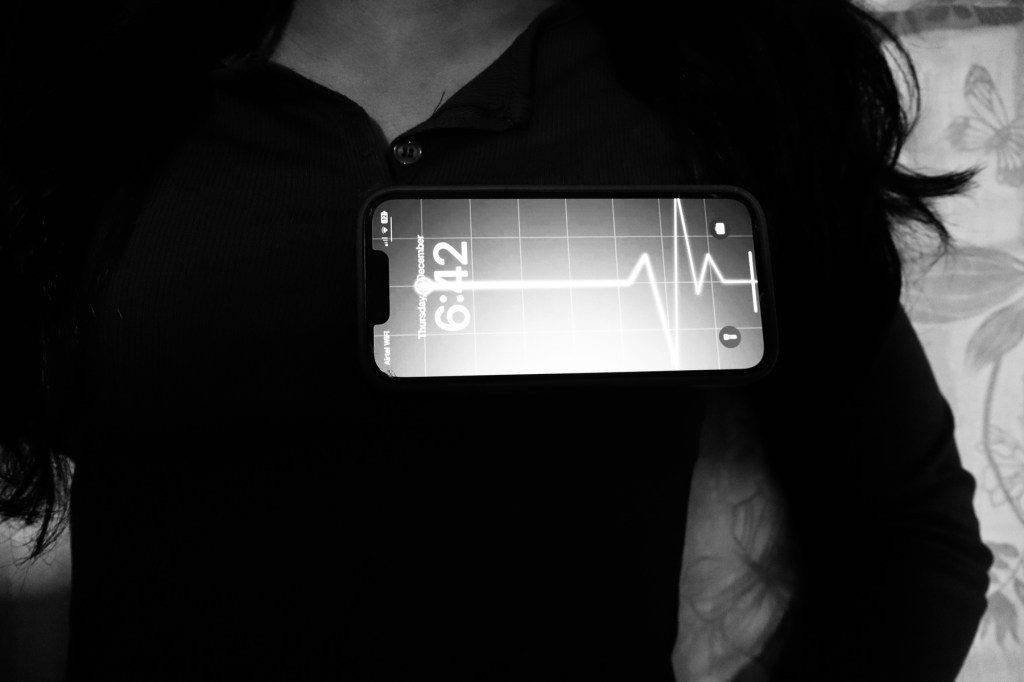
The Disconnected Heartbeat
The flatline displayed on the phone placed on the chest merges the human body with the lifeless aesthetics of a machine. The contrast between a living person and a dead signal symbolizes emotional numbness — a heart still beating, but a connection long gone. This image serves as the emotional climax of the narrative: the moment where disconnection has moved from inconvenience to deeply felt psychic weight. It is the visual embodiment of exhaustion, silence, and the quiet ache of feeling unseen.

Ctrl + Z (Undo Me)
The final image gathers the emotional residues of all the previous moments. The subject’s posture — head buried in hands, the phrase “Ctrl + Z” written on the arm — expresses a longing that technology has taught us to desire: the ability to undo. But unlike digital mistakes, emotional experiences cannot be reversed. In the story’s arc, this image offers a raw, vulnerable acknowledgment of human limitation. It closes the narrative with honesty rather than resolution, holding space for the grief, fatigue, and yearning that modern disconnection leaves behind.

Lost in the Tabs
As the concluding image of the series, this photograph turns the narrative inward—to a space where disconnection is no longer defined by a lack of signal or the silence of others, but by the quiet collapse occurring within the self. The layers of printed browser tabs obscuring the face transform the human subject into a living archive of digital overwhelm. These tabs, usually concealed behind glass screens and seamless interfaces, spill into the physical world and become tangible, revealing what our inner lives might resemble if laid bare. Placed as the final chapter, this image serves as a poignant culmination of the emotional journey traced throughout the series. Earlier photographs hinted at fragmentation—low batteries, unanswered messages, frozen typing dots, buffering identities. Here, however, fragmentation becomes total. The person beneath the layers is still present, still breathing, still trying—yet almost unrecognisable beneath the accumulation of tasks, expectations, questions, and relentless digital noise. This final image suggests that the deepest form of disconnection is not technological, but psychological: the gradual erosion of one’s sense of self under the weight of constant digital input. The hidden face invites viewers to confront their own relationship with overwhelm—the ways in which we bury ourselves beneath tabs, tasks, and data until our inner voice becomes faint. Ending the series with this image shifts the conversation from external failure to internal reckoning. It quietly asks: what remains of us when we are no longer able to close the tabs in our minds? When every open window becomes another version of ourselves we struggle to recognise?
In this way, the final photograph does not merely conclude the narrative—it deepens it. It reveals that the search for meaning cannot be resolved through technology, nor undone by shortcuts. It must be reclaimed from beneath the layers of noise we have grown accustomed to carrying. Taken together, the images trace a journey from signal loss to self-loss, from searching outward to confronting inward silence. The series offers no easy solutions, because disconnection is not a simple problem—it is a lived experience shaped by longing, exhaustion, and the quiet burdens we rarely articulate. In the end, the work invites reflection rather than resolution: a reminder that while technology may mirror our failures of connection, meaning still resides within us, waiting to be noticed beneath the layers. This is not a story about devices. It is a story about being human in a world that never powers down.
 DoubleSpeak