

Alice opened the window and waited. She did not know how or when, but she sensed that he would return. Since her husband’s death, she had searched for a way to communicate with him, but until now she had failed. She had even consulted a medium who asked for no money and offered no answers. Alice knew how senseless and irrational her hope was, yet the loneliness of those days had wrapped her in a spiral of anguish. Deep down, she still harboured the illusion that his absence was temporary—that it was merely a nightmare from which she would soon awaken. Sometimes, when she opened her eyes in the morning, she instinctively turned towards the empty side of the bed, forgetting that she was alone amid a sea of cold sheets.
One day, while leafing through a family photo album, Alice remembered her Italian grandmother telling her that the dead crossed the threshold of the afterlife on the second of November to meet their loved ones, appearing as flowers, butterflies, or other forms. She and John had spent their honeymoon in Italy. Those photographs, now faded by time, were precious memories that convinced her to try again. If she failed, at least she would feel close to him in those places. And so she made her decision. It felt increasingly irrational, but she no longer cared.
“Mom, you’re seventy years old! You can’t go to Italy alone!” her daughter had protested, staring at her as though she had lost her mind.
“I slept beside him for forty years,” Alice replied. “Don’t I have the right to say goodbye in my own way?”
John had always been a man of few words. He had left quietly, without disturbing anyone, dying in his sleep from a heart attack. No goodbyes. No tears. Their marriage had not been perfect, but it had endured. They argued and shouted at times, yet John was too gentle to harbour resentment. Despite their flaws, they loved one another—as most people do.
That was why Alice booked a room at the same hotel in a small Tuscan village where they had stayed many years earlier. Although everything was more modern now, she felt strangely at ease, as though the journey itself was beginning to ease her sorrow.
That evening, she watched the traditional procession of November the second from her window. Dozens of people, carrying candles and dressed in long white robes, walked slowly through the streets towards the cemetery, honouring their deceased loved ones. Though Alice felt a deep nostalgia, her heart remained calm. Rather than stirring pain, the atmosphere soothed her. The flickering lights in the darkness seemed like the shining eyes of those who were no longer there, and the soft hymns floated upward like a mysterious call to the sky.
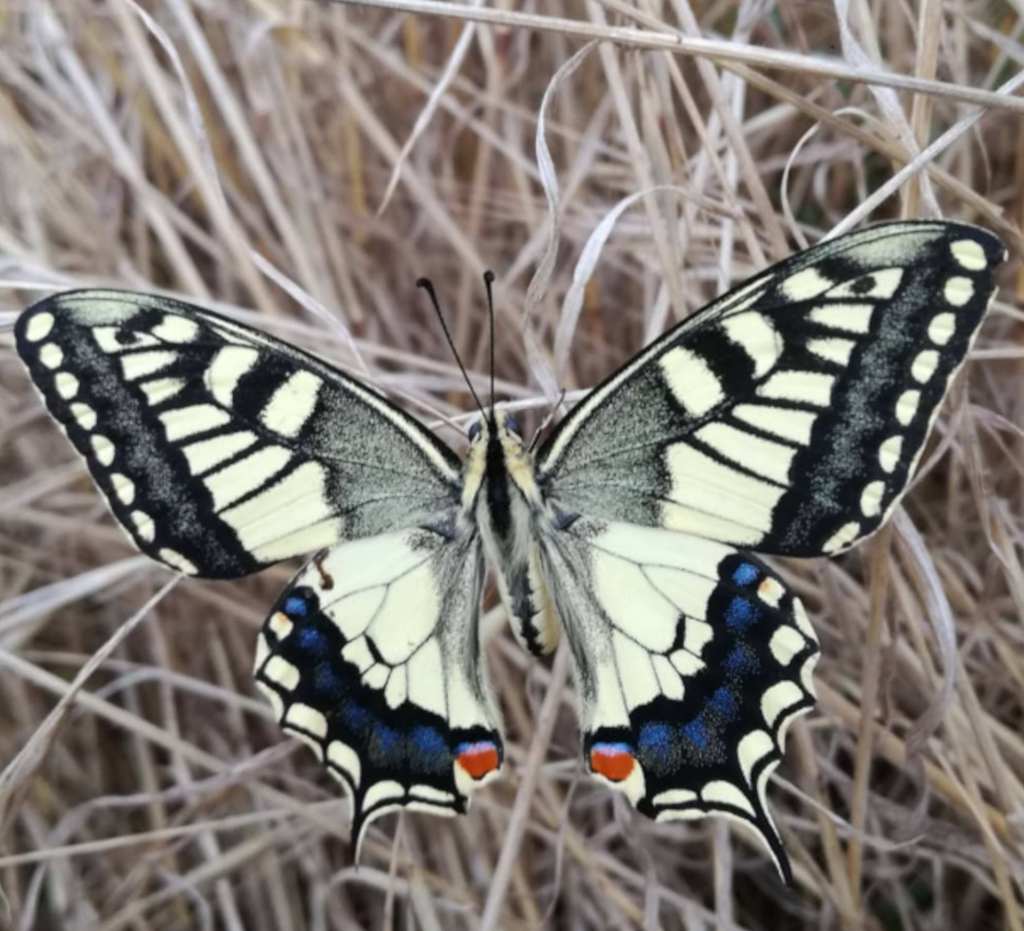
Suddenly, a small white butterfly with black-striped wings, dotted with blue and red, settled on the windowsill. Its vivid colours stood in stark contrast to the approaching night and ignited a spark of hope within her.
“Is that you, my love?” she whispered, her heart tightening.
The butterfly remained still, allowing Alice to gently cup it in her hands. It rested in her palm for several minutes. A lump formed in her throat as a tender smile—streaked with tears she had held back for far too long—spread across her face. There was something deeply comforting and magical about that fragile creature resting so peacefully against her skin.
Soon after, it fluttered around the room and came to rest on the pillow. Alice lay down and fell asleep. Throughout the night, the butterfly did not move. But when she awoke, it had vanished without a trace.
Over the next three days, Alice explored her surroundings, little by little. By the time it was finally time to pack her bags, she felt lighter. Before leaving the room, she noticed the white butterfly once more, motionless on the windowsill.
Alice understood then that she had received a farewell from the man who had been the love of her life. And yet, she knew—with quiet certainty—that it would not be the last.
 DoubleSpeak