

The final year of school is often imagined as a period defined by focus, discipline and determination, yet the lived experience of a 12th grader is far more complicated. This photo feature explores that complexity by following the small, everyday moments that shape a student’s inner world—moments of trying, pausing,drifting, and returning. Rather than representing a linear story, the images capture the emotional rhythm of someone who wants to study, knows she must study, but struggles against constant distractions, pressures, expectations and the weight of her own thoughts. Each photograph reflects a state of mind: her attempts to begin, the interruptions that follow, the desire to escape, the tension at home, and the quieter subconscious spaces where she imagines peace or imagines running away. The intention of this feature is not to judge her actions but to show the honest, layered experience of a student navigating responsibility, fear, exhaustion and hope at the same time. Together, the images reveal a journey that many students silently live—one where the future feels urgent, distractions feel comforting, and pressure becomes a companion that sits just outside every frame.
This is one of those small moments many students recognise — the quiet pause before they begin. She gathers her hair into place, a gesture that helps her settle into the mindset of studying. The fingers putting the hair into place mirror the way she tries to put herself into place, signalling the start of her effort. It is a brief ritual of order and readiness, a way of preparing for the work/study that will follow.

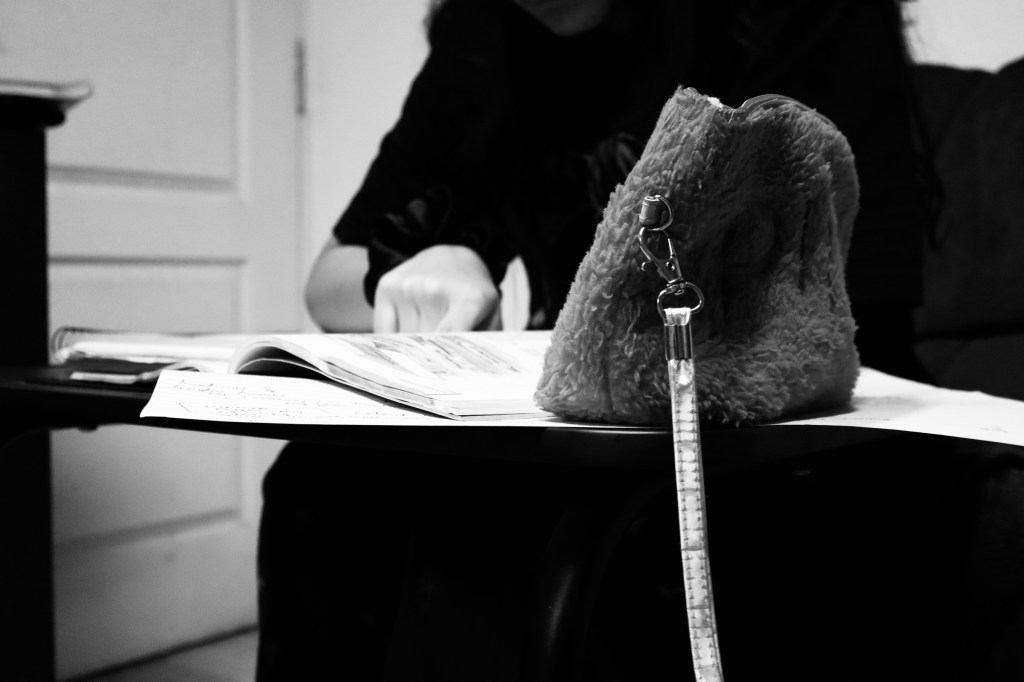
She adjusts her posture and leans into her books, trying to find a comfortable position to begin studying. The open pages in front of her show that she is finally settling into the material. Her hand moves toward the text with a sense of intention, as if she is preparing to focus. In this moment, everything is arranged for her to start, capturing the quiet beginning of her study routine.
Just as she enters the rhythm of studying, the digital world slips in. A call glows on her phone, pulling gently at her attention. The work in front of her still matters, but the possibility of distraction becomes louder. The moment captures the fragile line between intention and interruption.
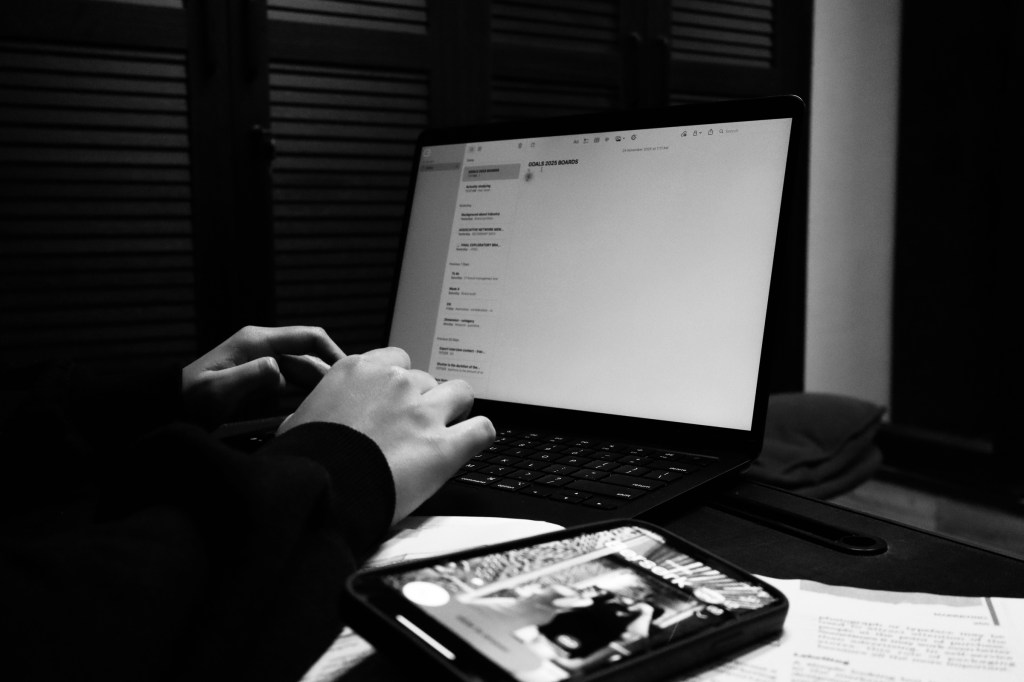
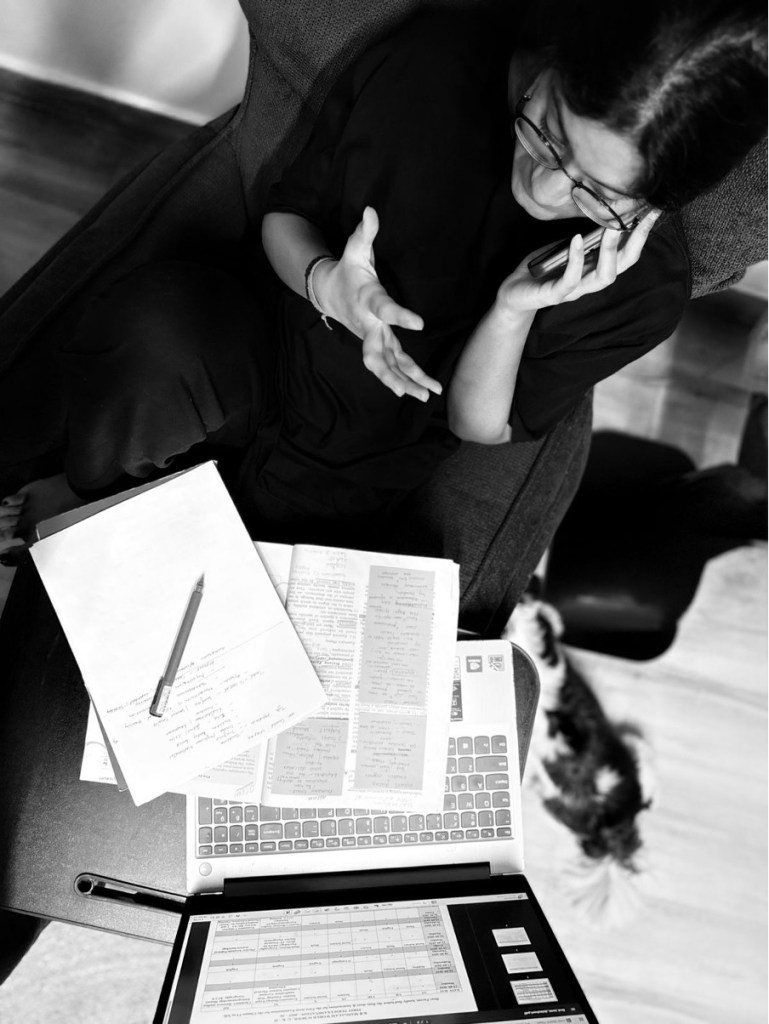
The call breaks through completely, shifting her focus away from studies. She picks up out of habit, not urgency—an instinctive response. What should have been a brief pause extends itself, pushing the books into the background. Her priorities blur.
After the phone call ends, the notifications begin—small, constant reminders of
everything happening outside her study space. Each alert pulls her attention a little further away from the page, even when she tries to stay focused. The work remains open in front of her, but the rhythm she had just found slips again. In this moment, the distraction isn’t dramatic; it’s just steady enough to redirect her mind. Just after the phone call ends, the notifications begin—each one arriving like a reminder of how easily focus can slip. What should have been a return to studying becomes another moment pulled away, another distraction that grows larger than it should- putting her studies out of focus.

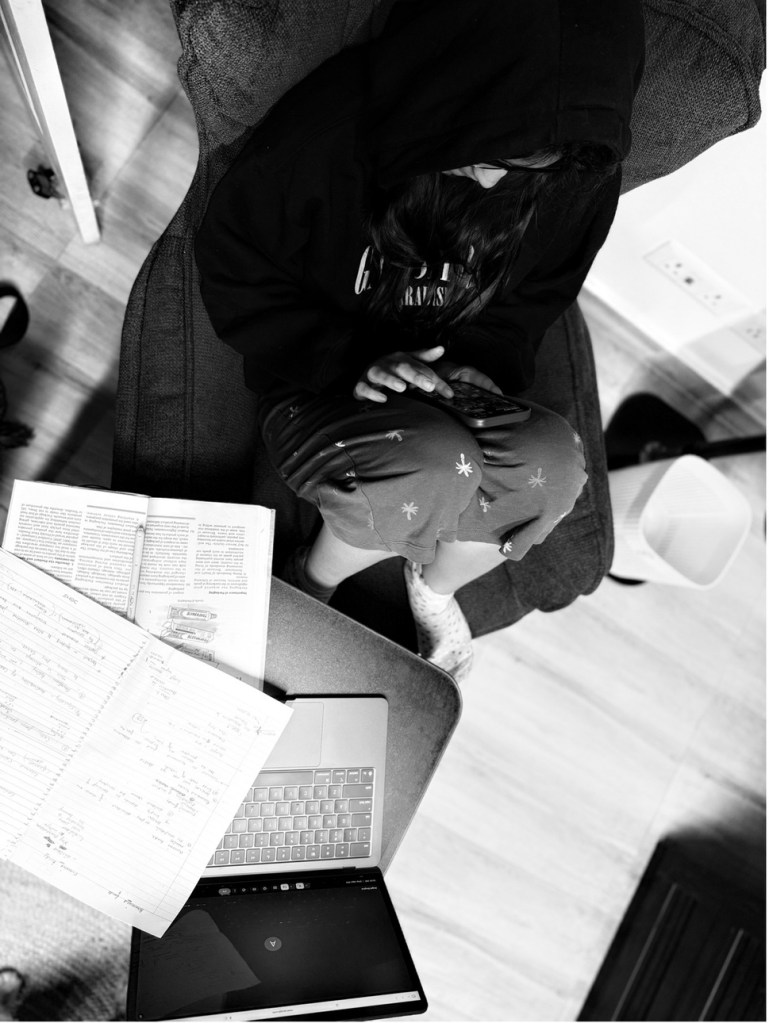
The work is still open in front of her, but the phone now decides the pace of her attention.She scrolls because it is easier, lighter, more familiar than the pressure waiting on the page. The books remain in her hands, yet her mind drifts elsewhere, showing how distraction becomes comfort when responsibility feels heavy.
The books are present, the work is waiting, yet the habit of turning toward the phone lingers in the background—almost automatic, almost unnoticed. In this moment, the divide between intention and impulse becomes subtly visible. The shadow shows where her attention leans before her body does, hinting at how easily focus can shift. Even without movement, the pull of the screen is already shaping the moment.

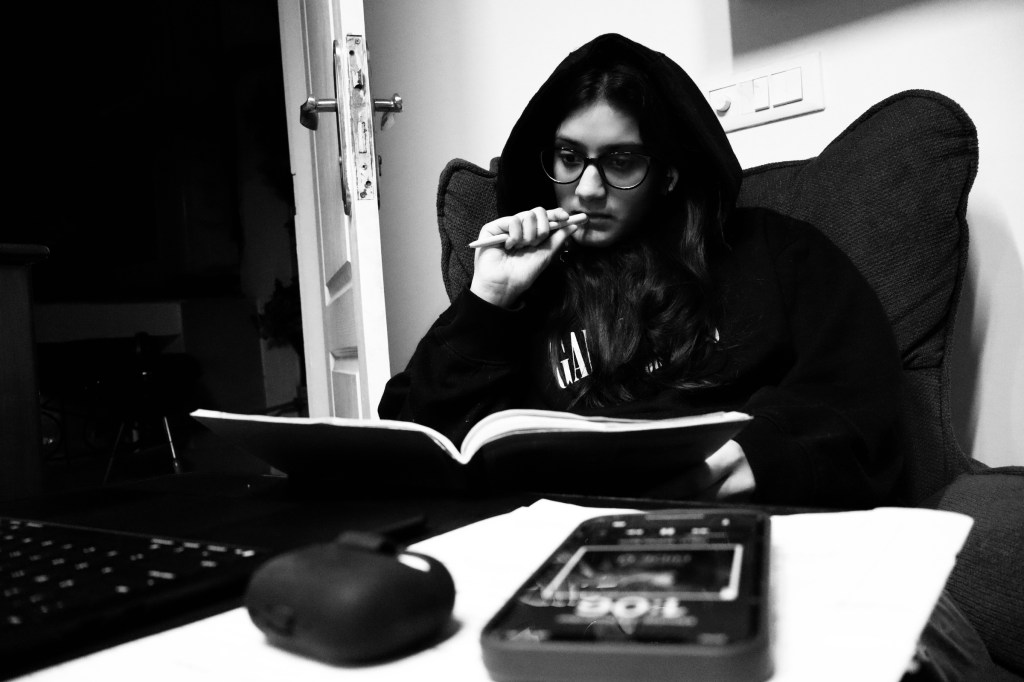
Music fills the space around her, creating a bubble she slowly slips into. The AirPods, the open laptop, and the books resting on her lap signal that she is meant to be studying, yet her expression shows she has drifted somewhere else entirely. It becomes a quiet pause in the middle of her effort—a moment where her mind wanders even though the work remains right in front of her. The tools for studying are all present, but her focus has softened, pulled by the comfort of tuning out for just a little while. This stillness reveals how easily concentration fades when the mind grows tired or otherwise engaged.
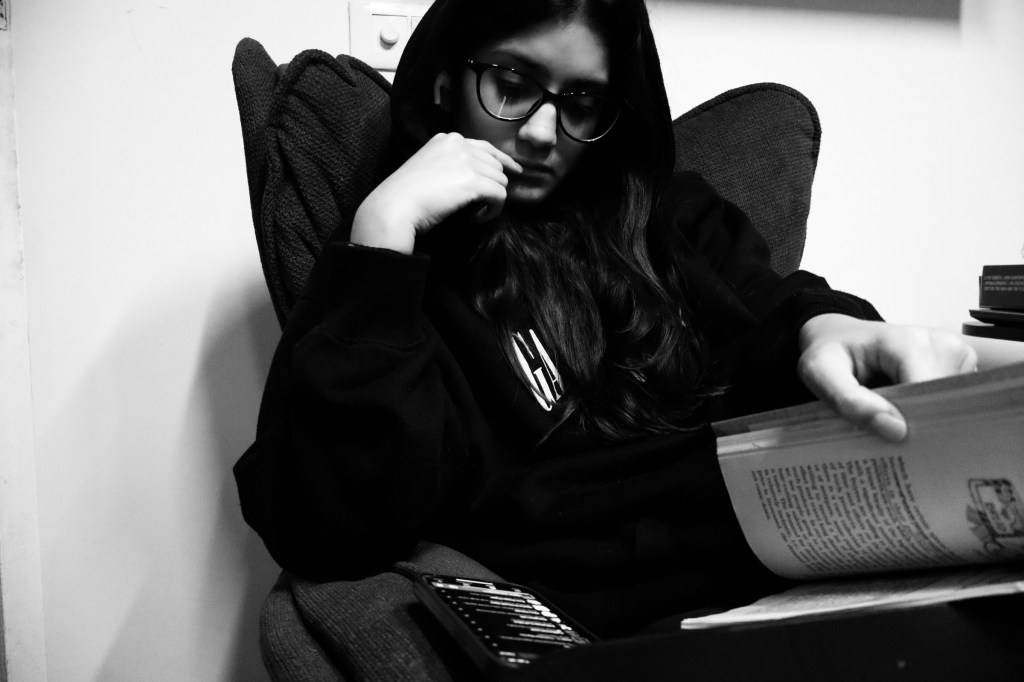
Her fingers press the book shut, not out of completion but fatigue and distractions . She tries to continue, but her concentration has already unraveled. The gesture reveals how quickly focus can slip after being pulled in too many directions. It is the quiet moment where effort softens, where the mind asks for a pause even when the pages still call for attention. In this small movement, the weight of trying—and failing—to stay on track becomes quietly visible. Her mind elsewhere, while her purpse is being closed/shut off by her-herself.

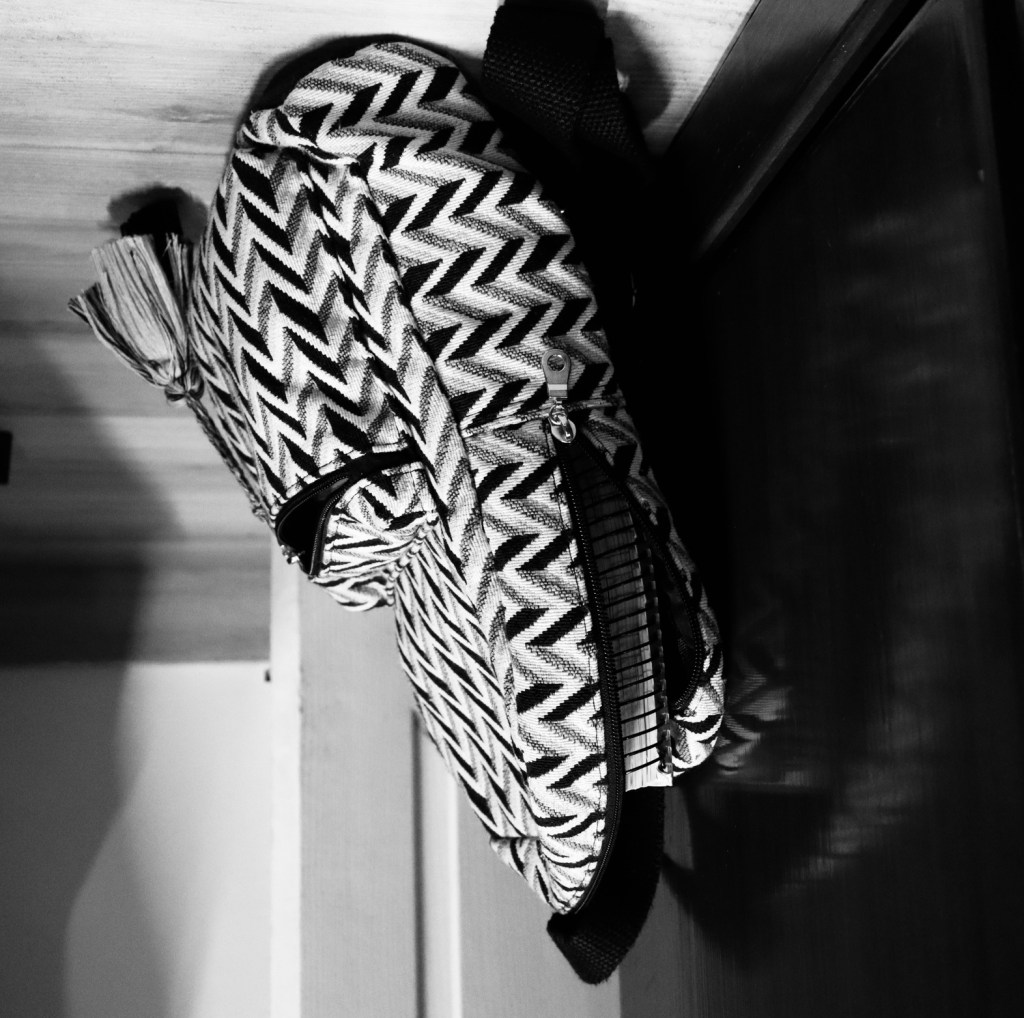
Her bag sits open, revealing the books she had meant to return to. Everything she needs is right there—organised, accessible, quietly waiting. But the openness of the bag feels less like readiness and more like a reminder of what remains undone. It shows the pause between intention and action, the moment when studying is postponed not by chaos, but by a simple lack of will to continue. In this stillness, the gap between what she carries and what she can bring herself to do becomes quietly visible.
The overturned bag spills its contents onto the floor, mirroring the disorder inside her mind. Pens, notes, and books fall out of place, as if refusing to stay contained. This image symbolises the moment where pressure becomes visible—not through expression, but through the quiet chaos of everything she carries.
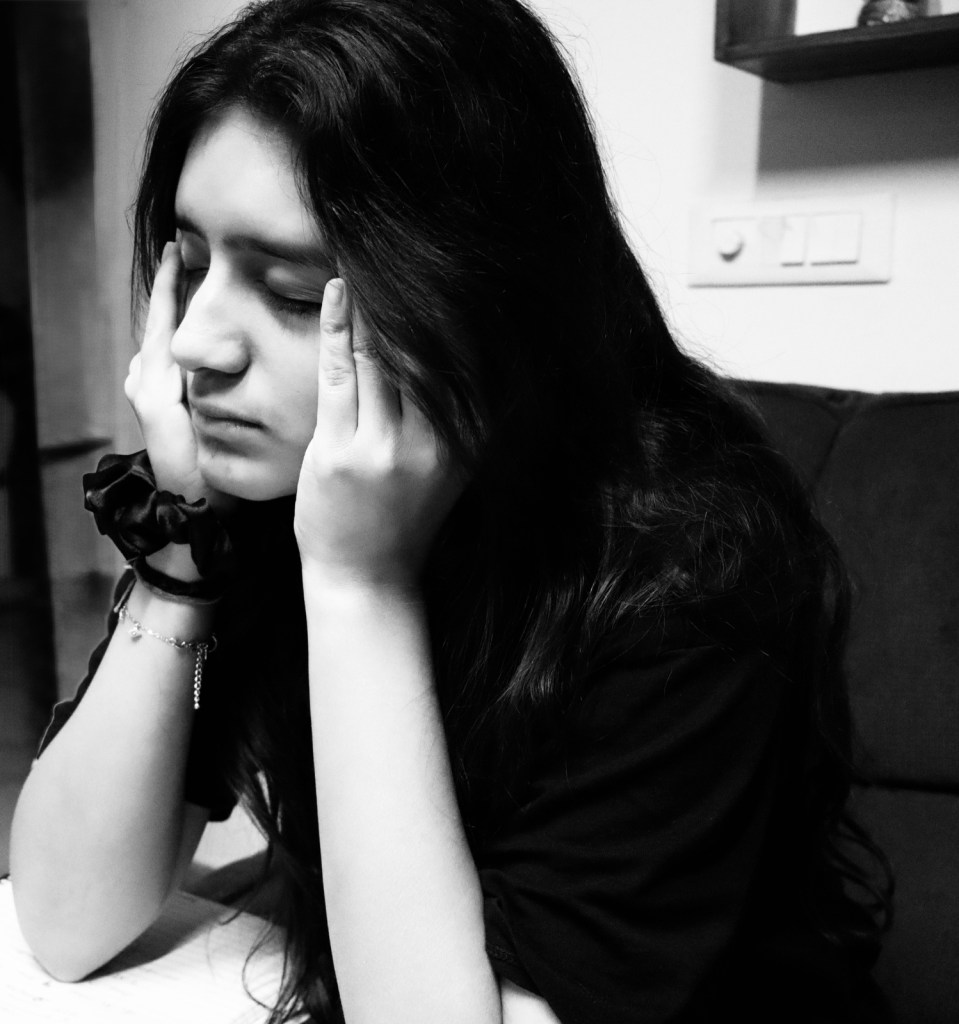
Her hands press gently against her face, the exhaustion finally catching up. She isn’t frustrated with the material, but with the weight of constantly beginning and rarely feeling progress. It’s an honest moment of overwhelm—one that students rarely admit but often experience. In this pause, she isn’t battling the books but the quiet fatigue built from days of trying. It’s the kind of tiredness that settles before she even realises it, reminding us how heavy the smallest tasks can feel when the mind is already running low.
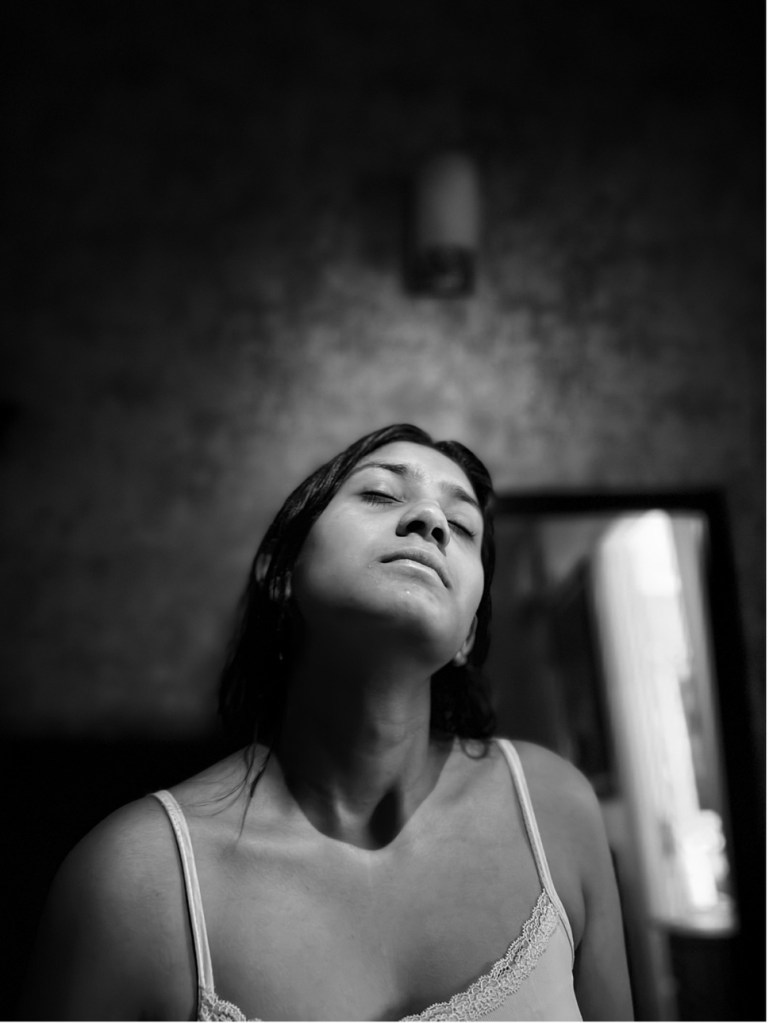
A calm light rests on her face, offering a brief escape from the noise of expectations. In this moment, she imagines a version of herself untouched by deadlines and comparisons—a quieter inner world she longs to inhabit. The image symbolizes her subconscious desire for peace, a place she visits only when her mind drifts away from the pressure.
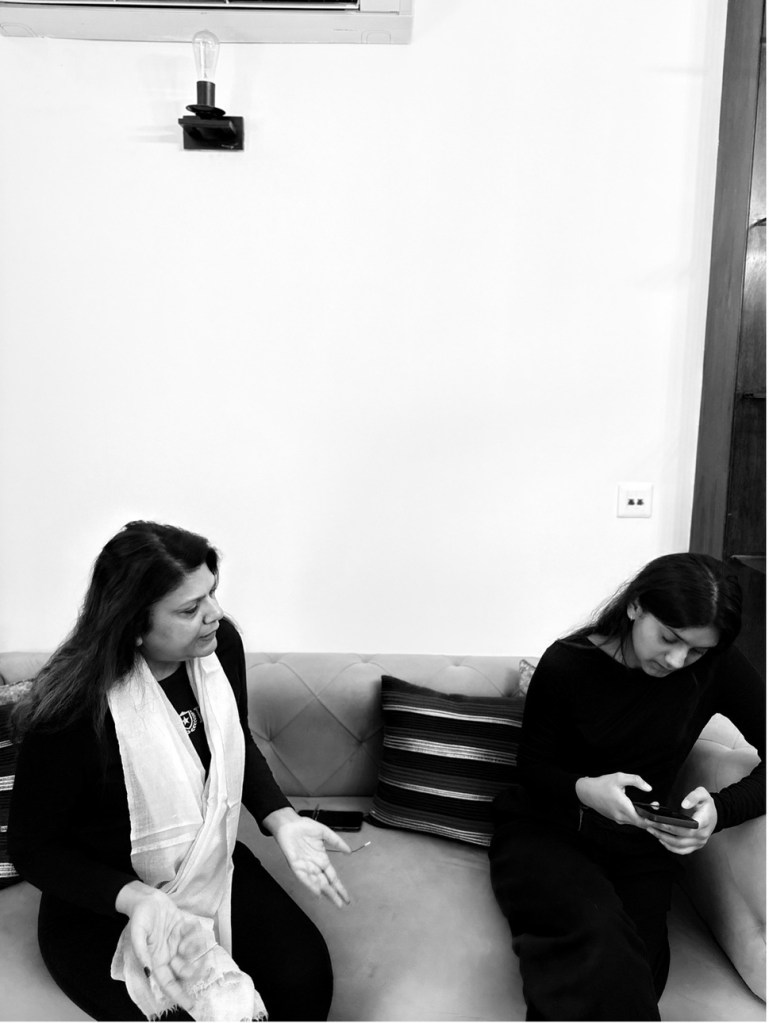
Her mother’s frustration enters the frame—a familiar lecture shaped by worry and repeated reminders. The scolding is not anger, but fear wrapped in parental concern. Yet the subject’s posture shows distance; she absorbs the words without fully listening. The tension between them reflects two people carrying the same pressure in different ways.
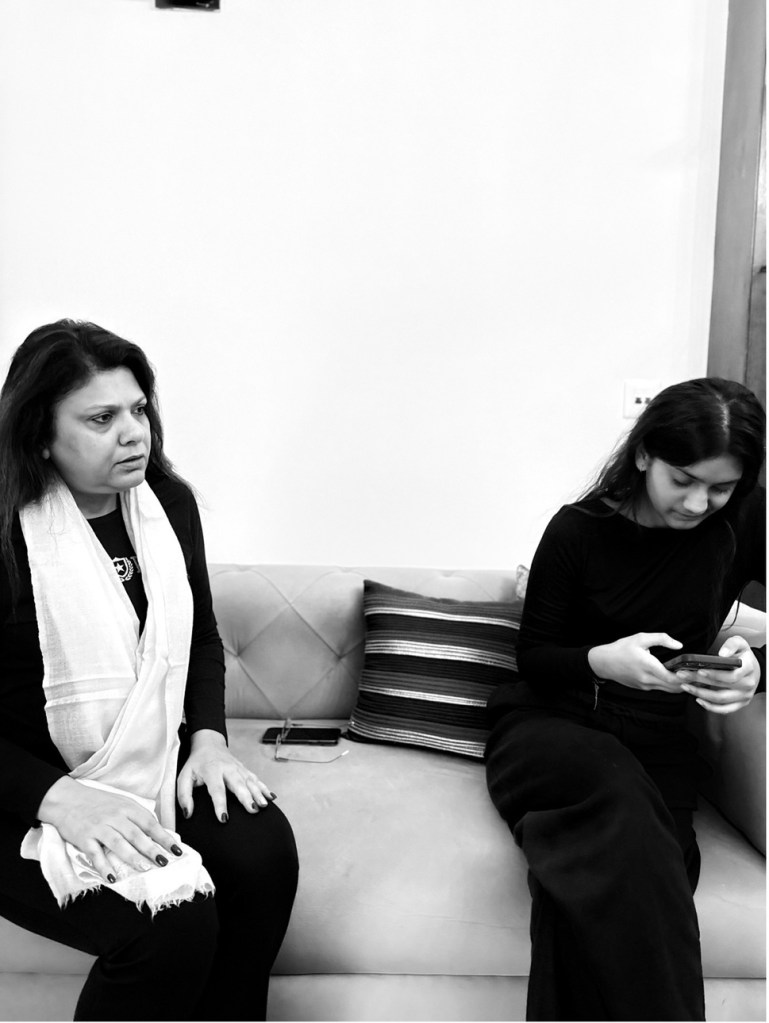
The conversation continues, but her expression remains is as if she just wants to get it over with , almost accepting this as part of daily life. For the mother, this moment is heavy; for the daughter, it feels routine. The disconnection reveals how constant reminders can lose their impact, even when the intention behind them is love and anxiety.
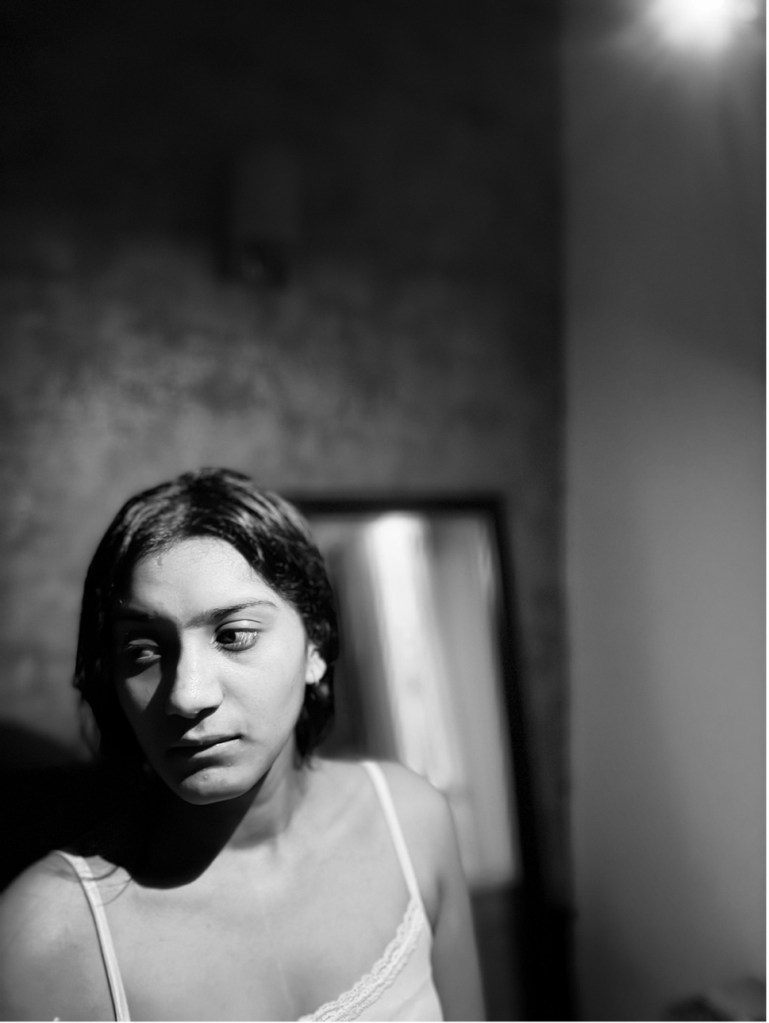
In this image, she turns away from the light, as if looking for another path entirely. It reflects a deeper yearning—not just for rest, but for escape from the expectations
pressing in from every direction. This subconscious vision contrasts sharply with the reality shown moments before, highlighting her inner conflict between staying and fleeing.
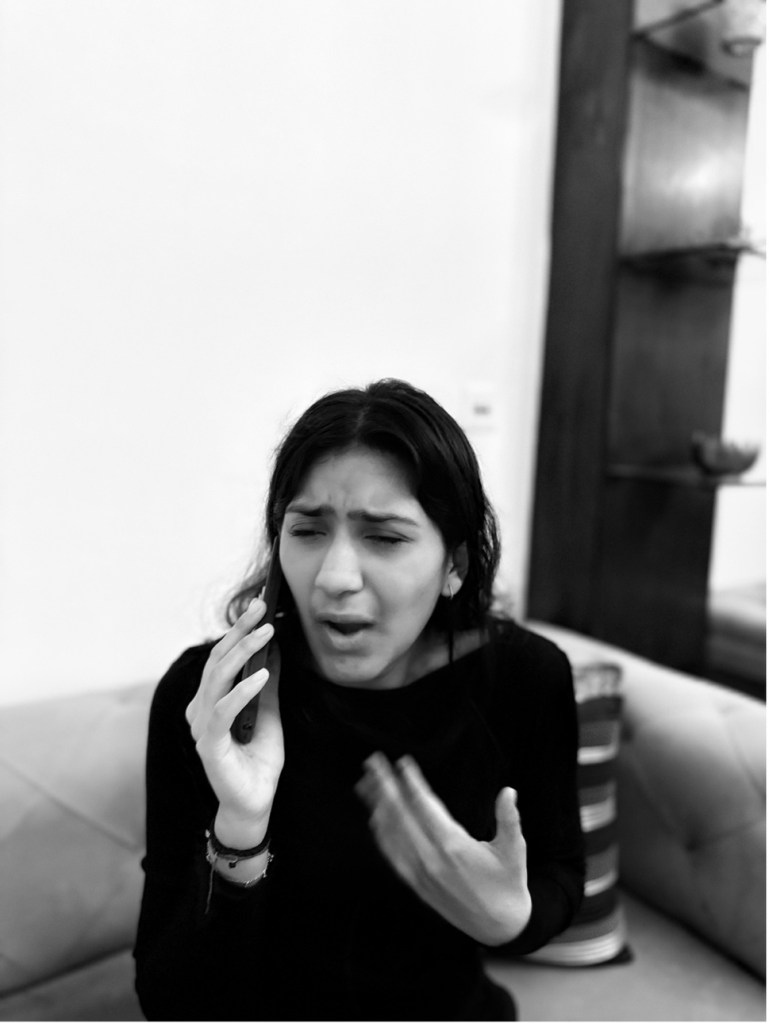
She shares her frustrations with her friends, echoing their complaints and adding her own as if to fit into a collective struggle. Yet the conversation stays at the surface; she speaks of scolding, not of the deeper exhaustion or the desire to run that she holds inside. And in that moment, one wonders—if everyone is complaining, is anyone truly listening? Are they expressing what they truly feel or is it just a way of fitting in?
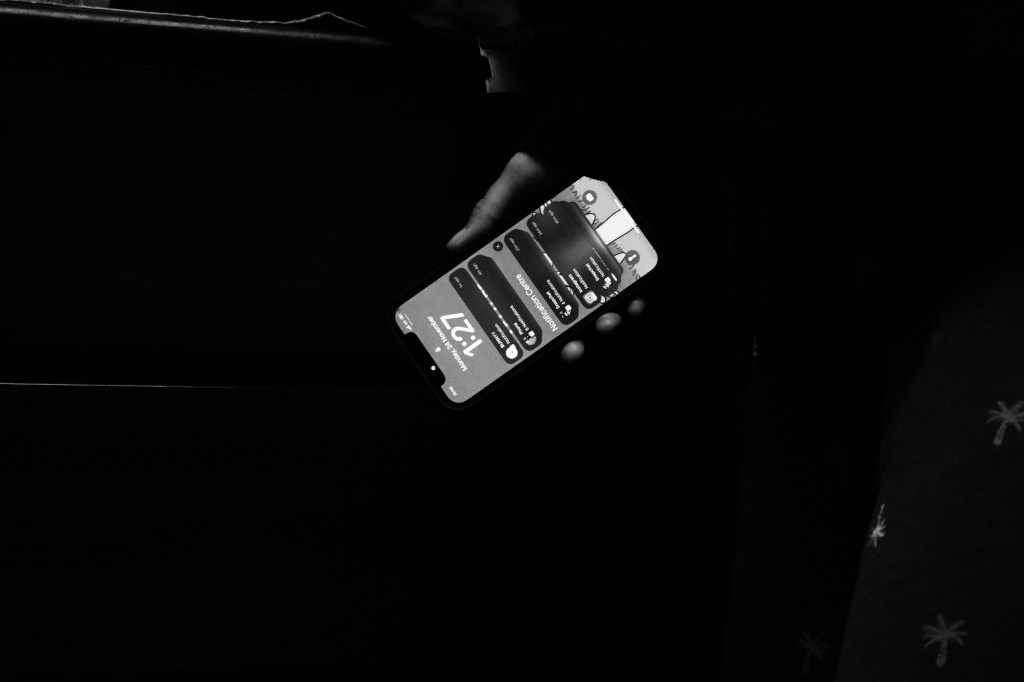
After sharing her complaints, the phone lights up again—another notification, another small pull away from what truly needs her attention. The glow is casual but persistent, reminding her how easily she slips back into the cycle of distraction. It doesn’t matter that the conversation with her friend has ended; the interruptions continue on their own rhythm. Each alert nudges her further from returning to her work, gently but decisively pulling her away from her main purpose. The moment sits quietly between intention and avoidance, setting up the weight carried into the final frame.
Her fingers tap restlessly against the table, a quiet rhythm of pressure and anticipation. It is the physical expression of everything unspoken—the stress, the deadlines, the uncertainty of what comes next. In this final moment, the feature returns to the student herself: her future, her fears, her aspirations, all resting in the palms of her hands. The tension remains, inevitable and inescapable, reminding us that the heart of her stress has always been within her, waiting to be faced. The tapping continues for another beat, as if marking time she can no longer ignore, a reminder that the path ahead will demand her to finally choose movement over distraction.

 DoubleSpeak