

This photo feature is a reflection of a personal connection —
one that began years ago when I first encountered the art of blue pottery as part of a co-curricular subject in school. What started as a small spark during a class project gradually grew into a lasting curiosity. So, when the time came to choose a topic for my photo feature, I naturally returned to this craft. Blue pottery felt close — not just because of that early fascination, but also because it is deeply tied to the place I call home, Jaipur. A craft that the city is renowned for globally, it felt meaningful to explore it through the lens of my camera.
I visited two blue pottery manufacturing units in Jaipur and tried my best to capture their story — narrating it through both images and words. This feature traces the complete journey of blue pottery: from the raw, foundational steps of shaping the clay and carving intricate patterns, to the careful processes of drying, painting, glazing, and firing each piece.
Alongside documenting the stages of creation, I also wanted to shed light on a quieter, often overlooked part of the story — the everyday life of the artisans. These are individuals who create beauty in spaces that are both their homes and their workshops, where tradition lives in every corner.
Through this feature, I’ve aimed to highlight not only the craftsmanship and care each piece requires, but also the quiet determination of the hands that shape them — working not in polished studios, but in modest rooms filled with heritage, resilience, and quiet pride.

Where the Story Begins…
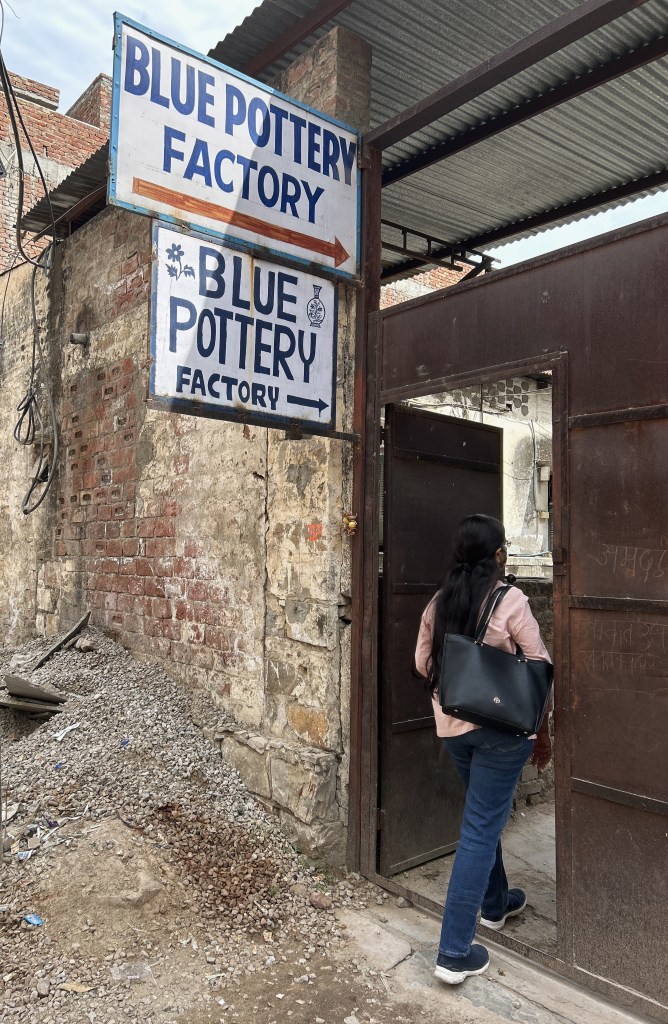
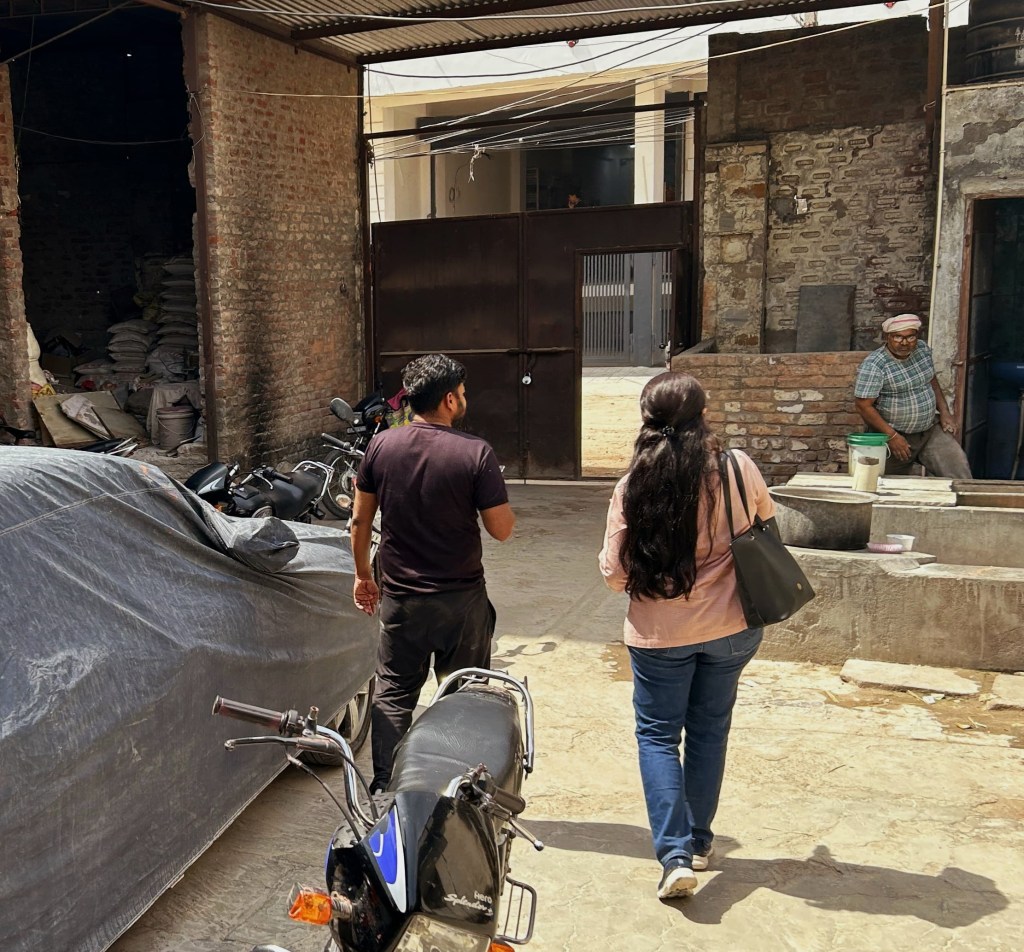
When I was standing outside this rusted iron door of the factory, it felt that there was something special about the faded blue ink and uneven brushstroke on the signboards — to me they hinted at the handmade beauty waiting inside. Inside, the cluttered courtyard came alive with quiet movement — scooters parked, a few people working, the sun casting sharp shadows across the stone floor.
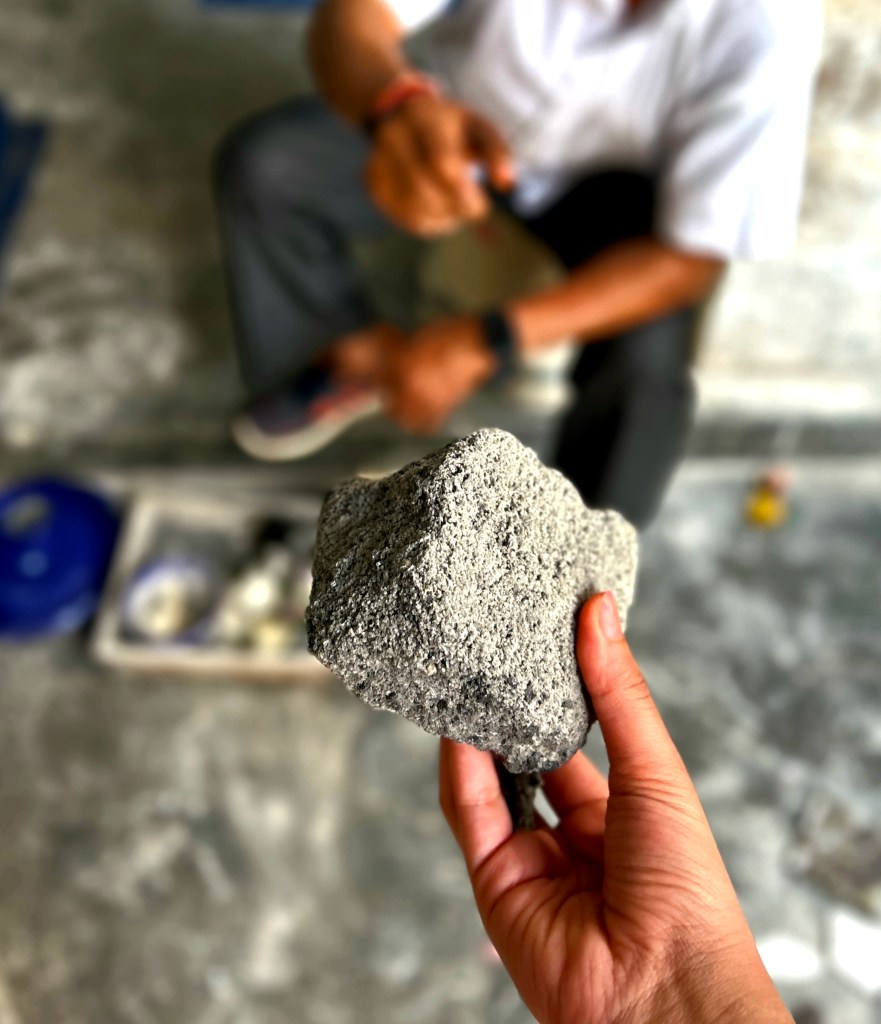
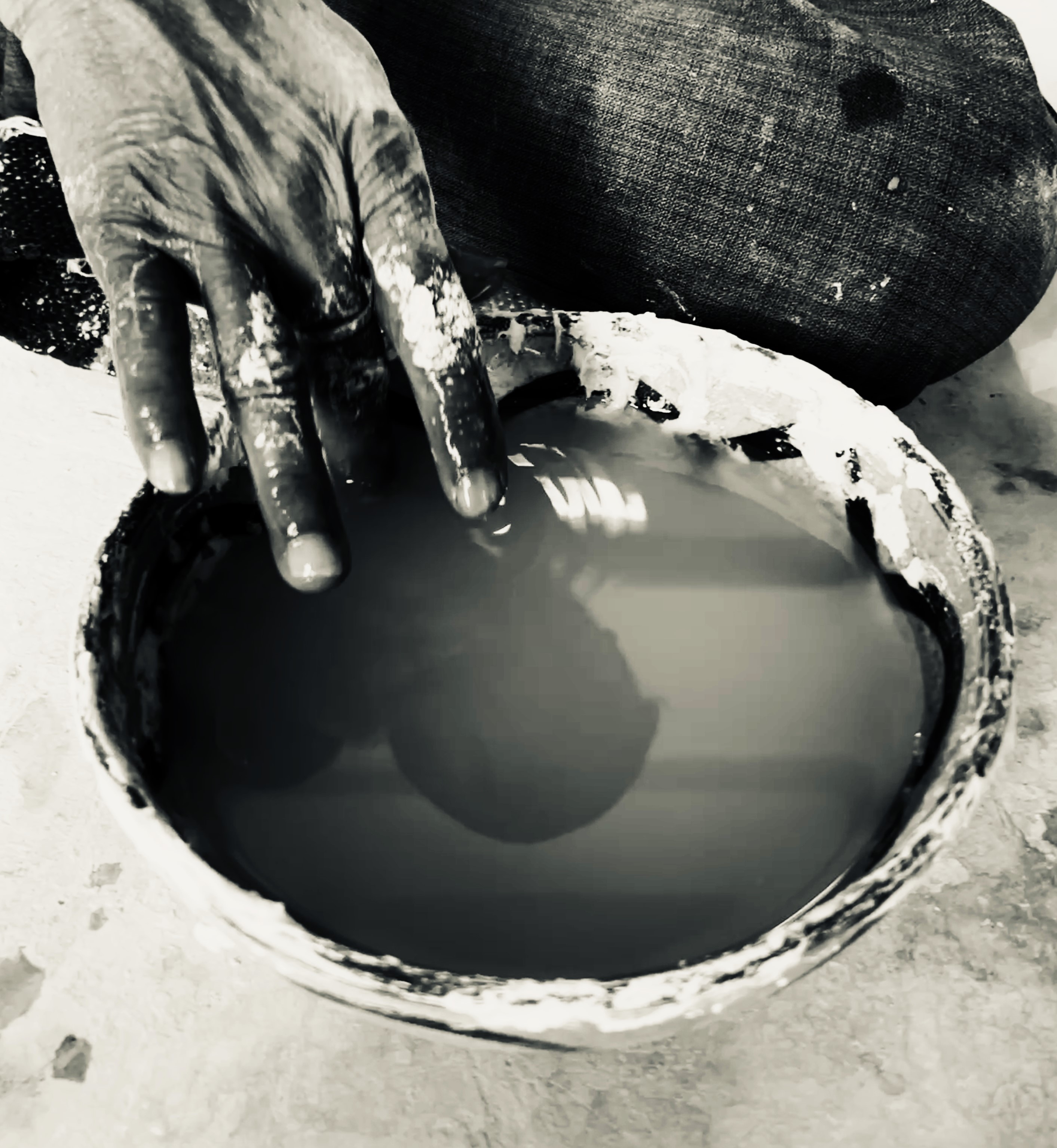
One of the heads of the artisans welcomed me very happily and started explaining to me the history of blue pottery, and which raw materials were used. He told me that it all begins with a blend of quartz powder, multani mitti (Fuller’s earth), katira gond (a natural gum), soda bicarbonate, and water.
Unlike most pottery, there was no use of clay in this. He also told about the high proportions of pieces getting cracked when heated, which led to longer durations of even small batches being made, also adding on to their cost.
As he spoke, there was a quiet pride in his voice. For him, it wasn’t just about materials — it was about legacy. That moment made me slow down and really pay attention. I wasn’t just there to take pictures. I was also there to learn.
Shaping Silence into Form
Ghisai and Moulding
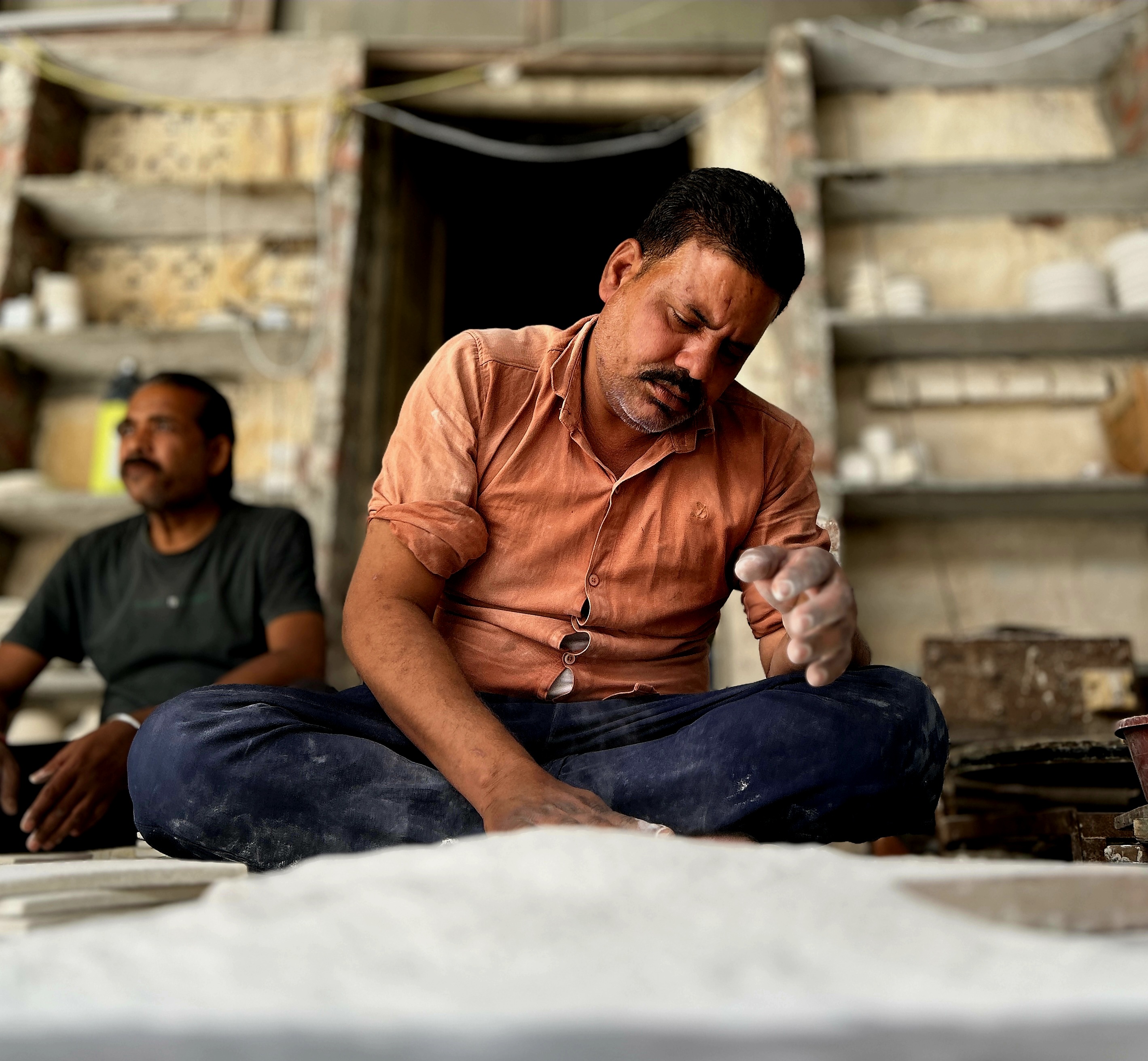
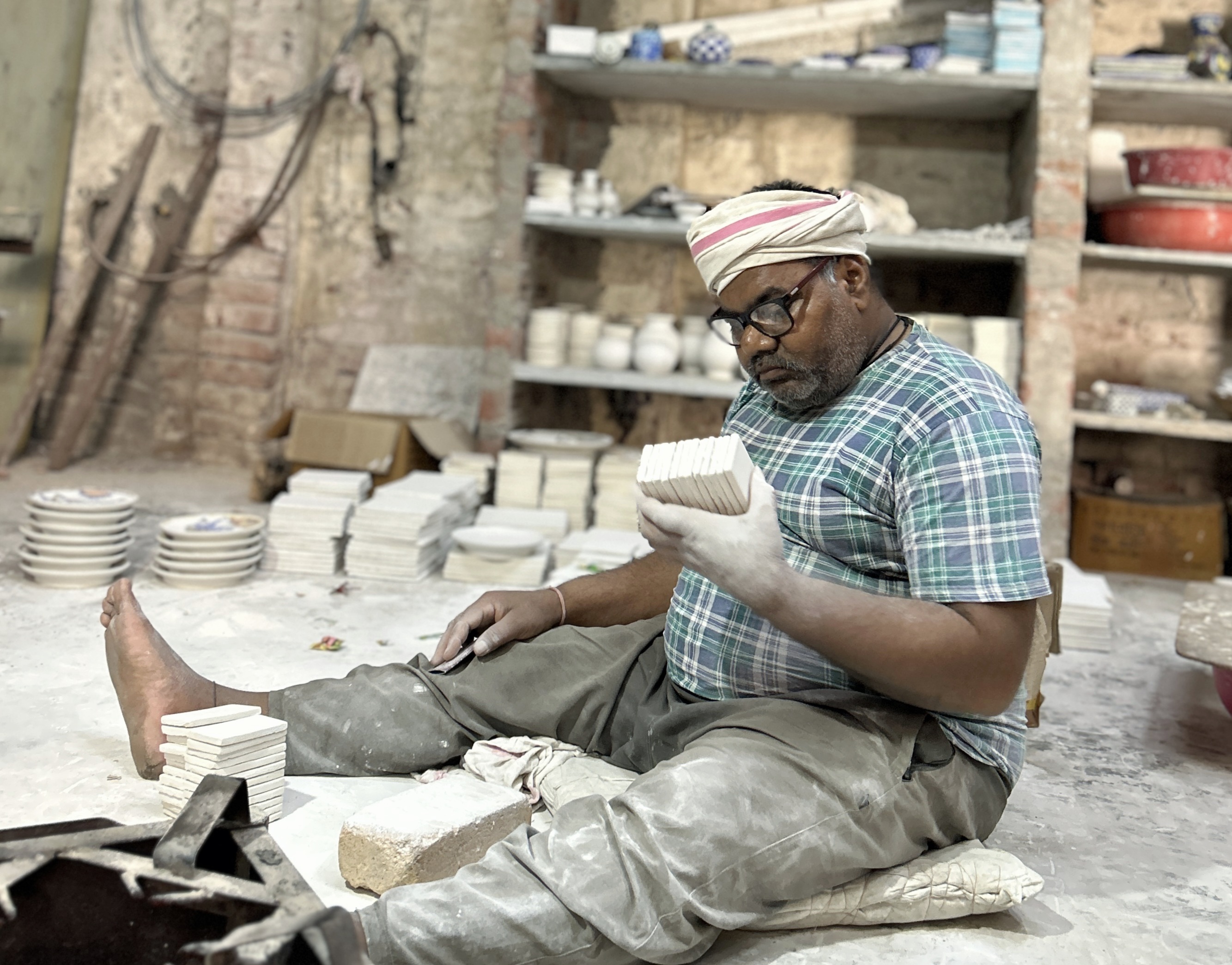
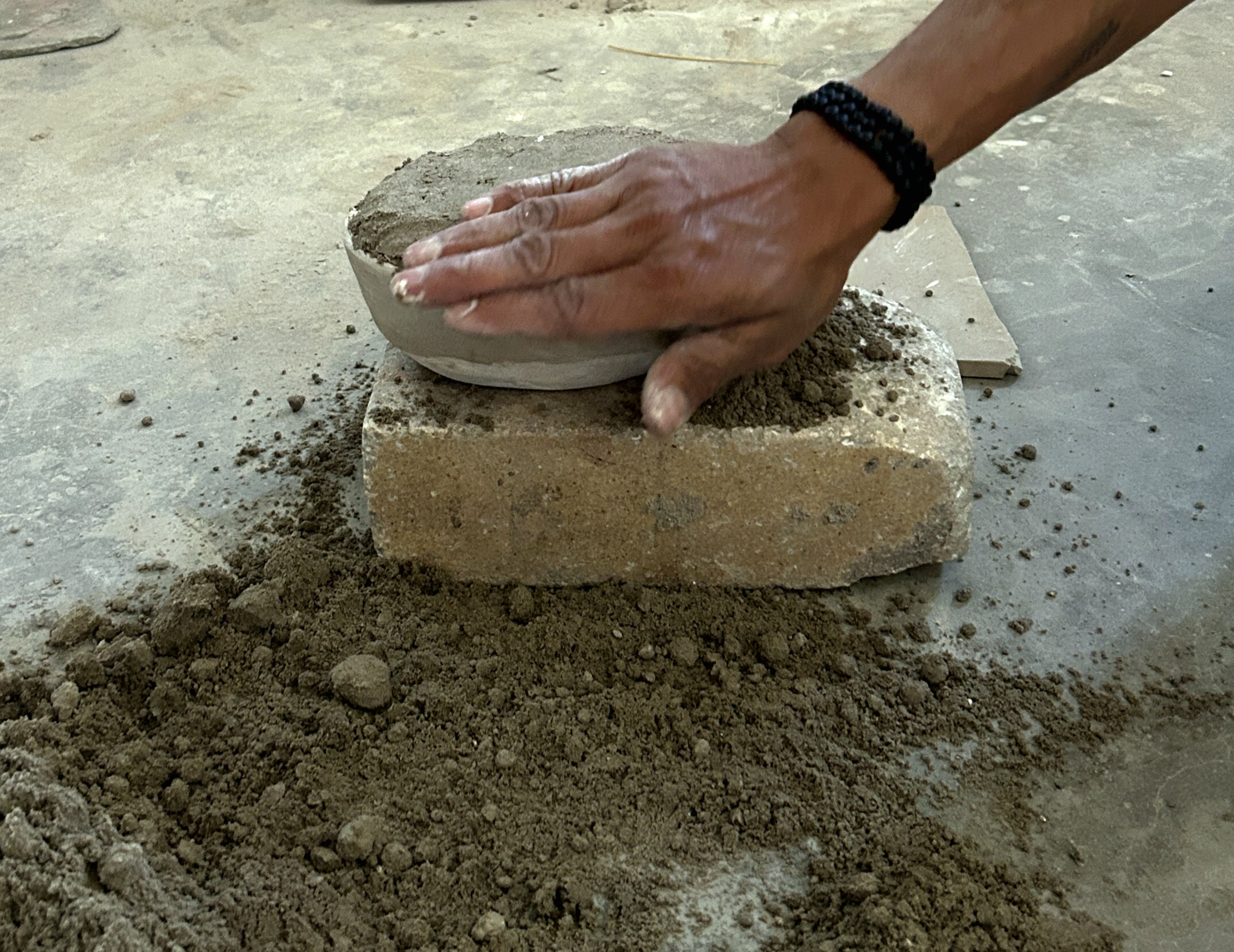
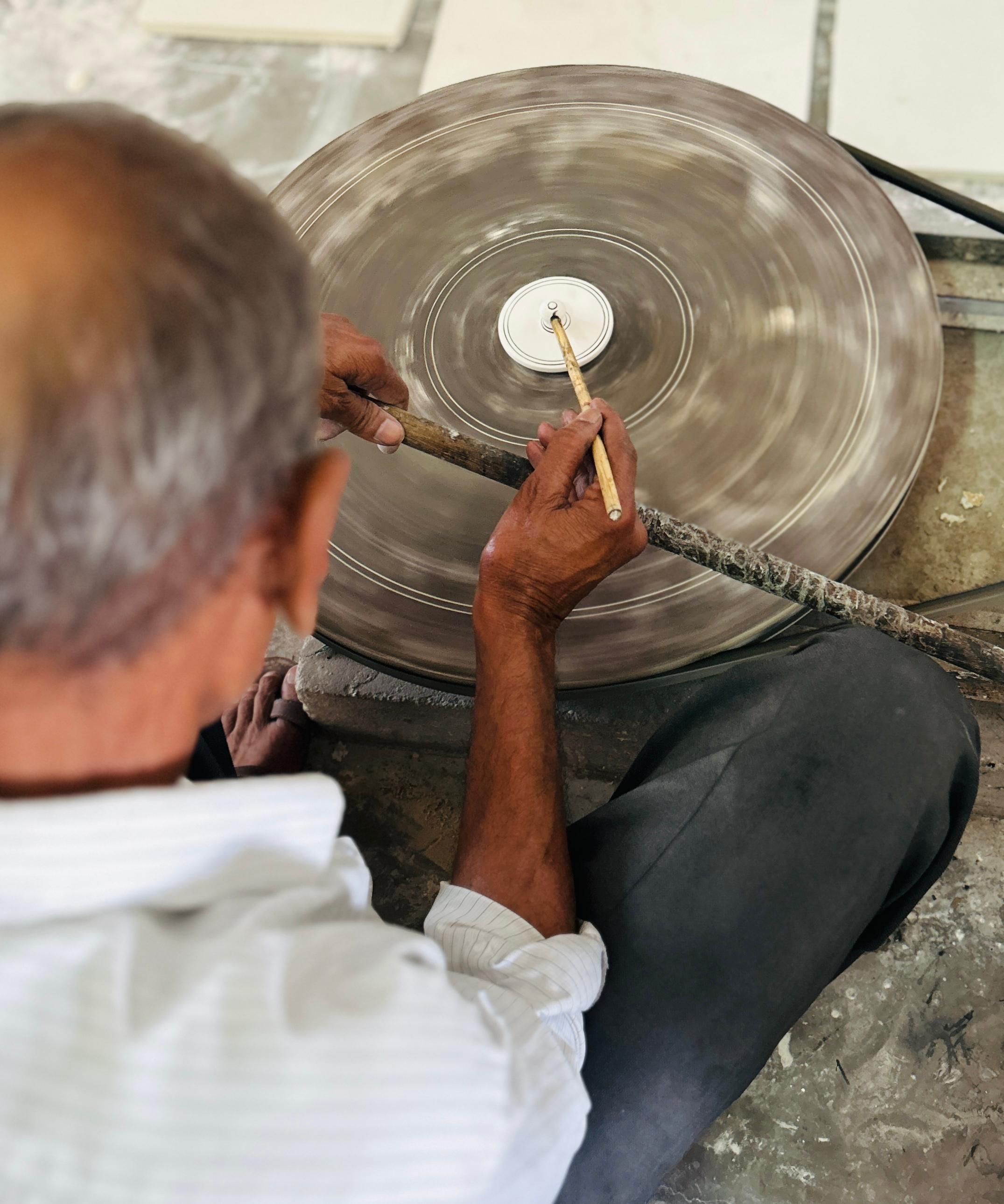
As I walked further into the workshop, the sound of scraping caught my attention — a slow, steady rhythm of stone against the surface. Sitting cross-legged on the dusty floor, the artisans moved their hands with an almost meditative rhythm.
This was ghisai. It looked repetitive, even tiring, but there was a kind of calm dignity in it.
The air smelled like chalk, and fine white dust floated around like snow.
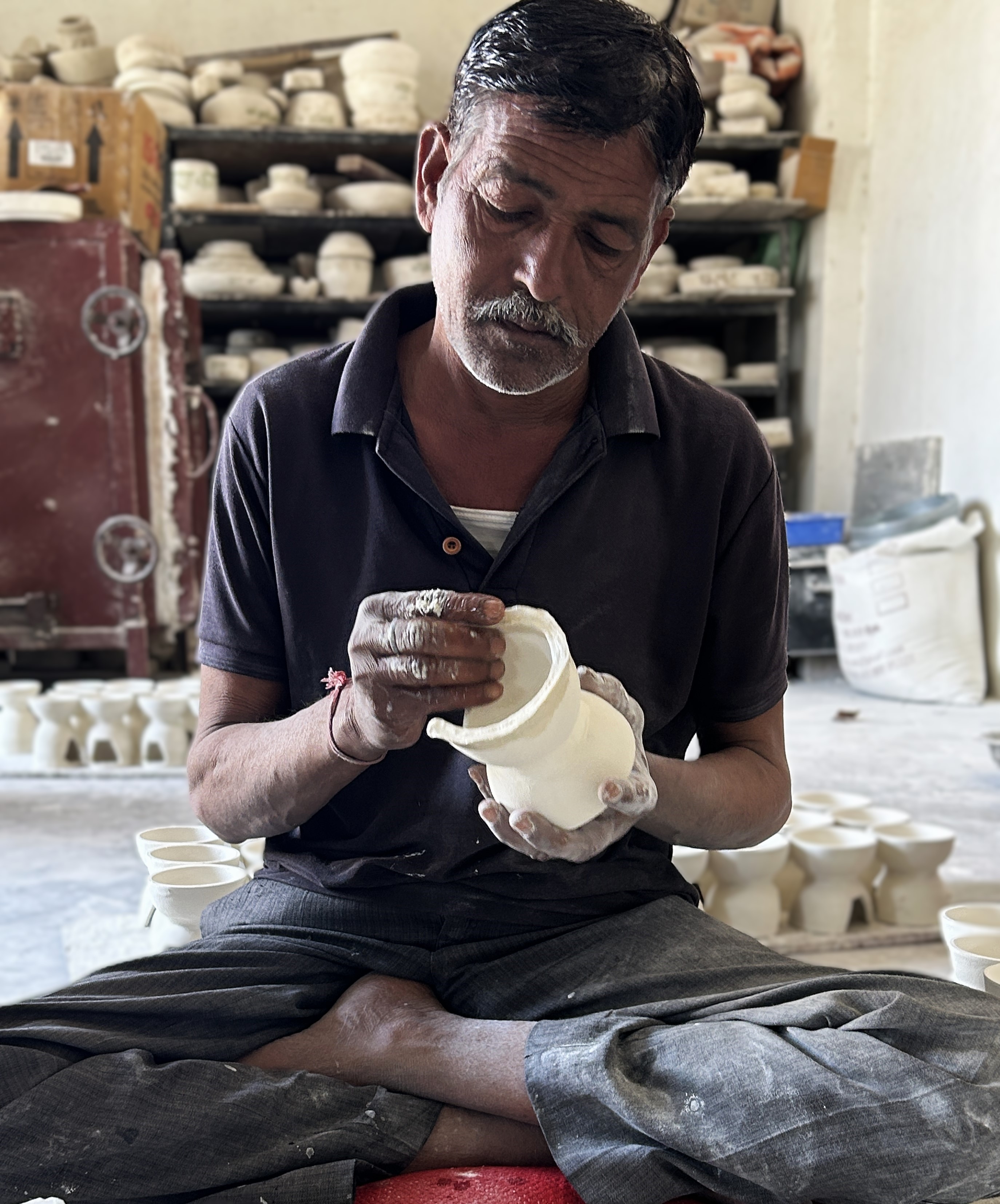
Then came moulding. I watched someone gently rub a newly unmoulded piece with his thumb, feeling for imperfections. Each one of them had a quiet awareness of the shape they were forming, almost as if they could feel the final design before it was even painted. These were the moments before colour, before glaze, before beauty in the traditional sense — but these were also the bones and breath of every blue pottery piece.
What stood out to me most wasn’t just the technique — but the dedication. Every tile, every bowl passed through several human touches before it could be considered ready to move ahead. It made me realise that behind the delicate final product is a journey of hands — patient, skilled, and incredibly proud.
Between Patience and Pattern
Drying and Painting
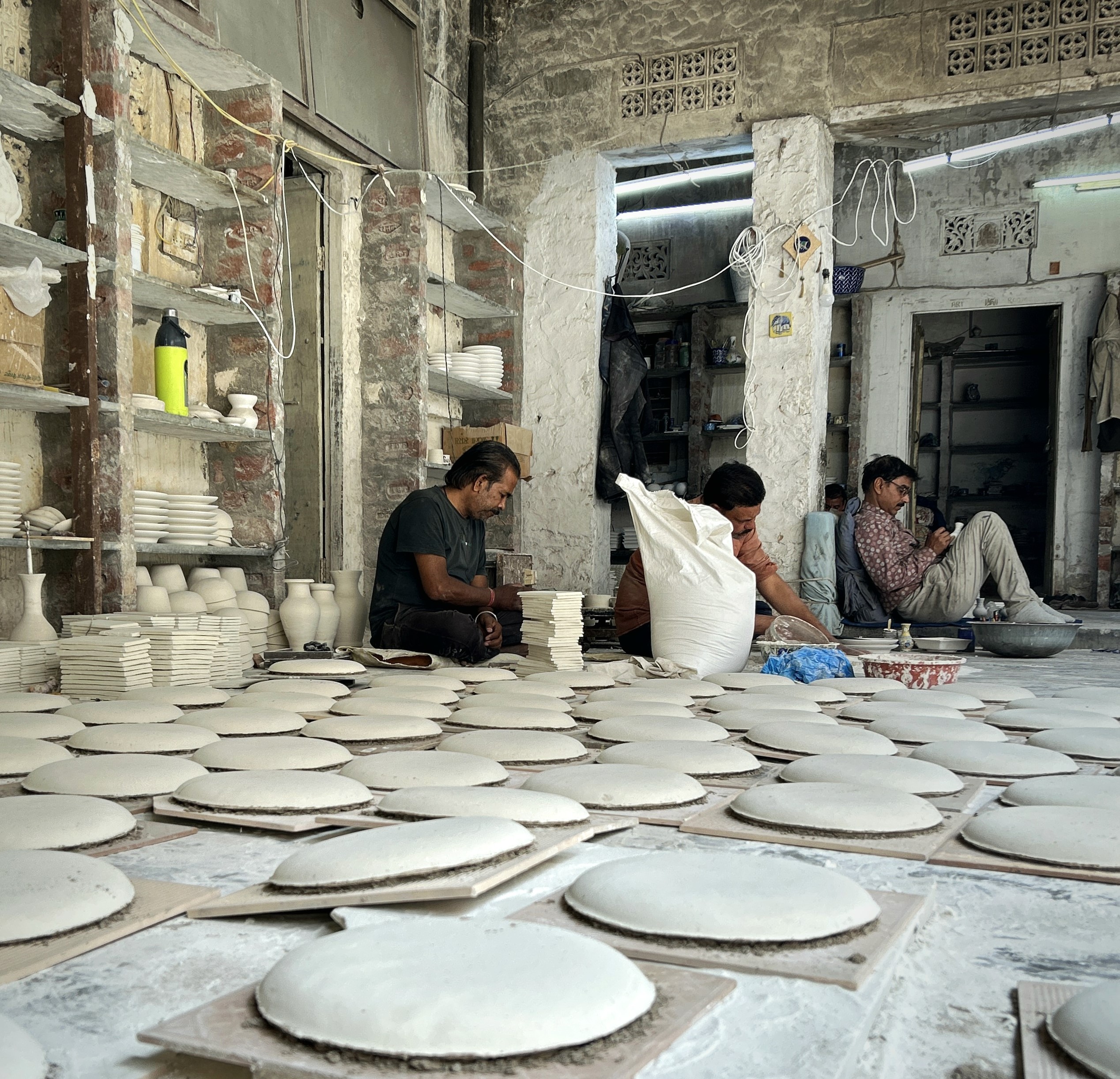
After shaping, the pieces are left to rest, just like how anything handmade needs time to breathe.
I saw a lot of bowls laid out in the sun, and also trays of some other pieces laid out on shelves, slowly drying under the warmth of the day. There was something calming about seeing them all lined up like that, untouched and unfinished, yet full of potential.
Once dried, the surface of each piece becomes the artisan’s next canvas. But before any color is added, the pieces are carefully smoothed — rubbed with gentle hands or fine tools to soften the edges, erase tiny cracks, and prepare the surface for the painting to come.
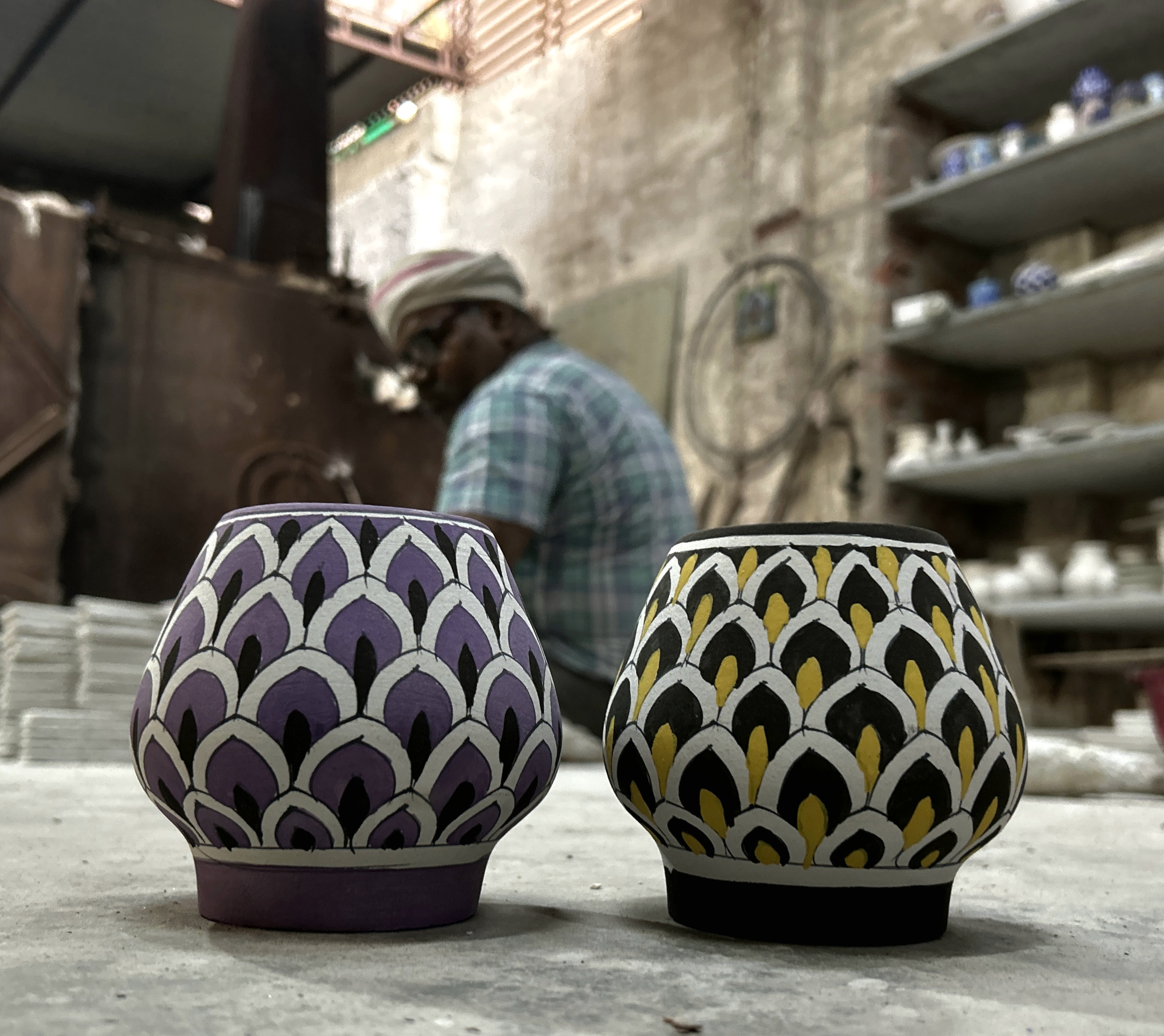
Next, the pieces are drawn on and painted by hand. I was amazed by seeing the artisans draw, without any guiding lines — they began drawing a floral curve that looked too perfect to be freehand. But it was.
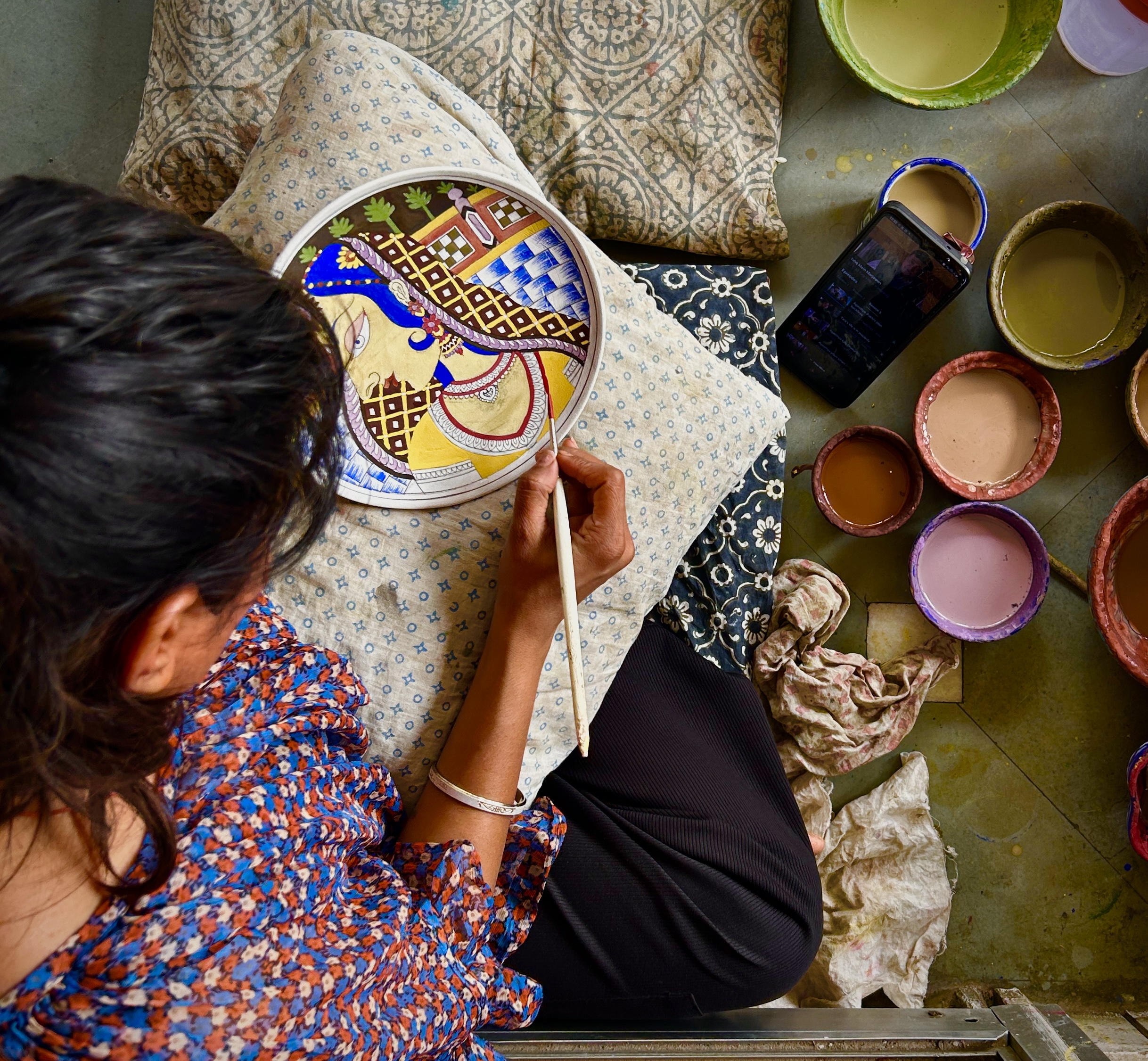

Mostly, they used a squirrel tail brush. They gave it to me to try drawing something and I couldn’t even make a flower. They said that they used the tail of squirrels which were dead already, and did not kill any for this purpose.
I could clearly see that every vine, bud, bird, or petal they sketched was straight from memory — a memory shaped by years of repetition, mistakes, and quiet mastery. What amazed me most wasn’t just the steadiness of their hands, but the clarity in their minds. Each piece was different, yet carried that unmistakable look of tradition. The motifs were timeless, the colors limited — mostly blues, greens, light purples and ochres — but within those bounds, they created endless variations.

Mostly, they used a squirrel tail brush. They gave it to me to try drawing something and I couldn’t even make a flower. They said that they used the tail of squirrels which were dead already, and did not kill any for this purpose.
I could clearly see that every vine, bud, bird, or petal they sketched was straight from memory — a memory shaped by years of repetition, mistakes, and quiet mastery. What amazed me most wasn’t just the steadiness of their hands, but the clarity in their minds. Each piece was different, yet carried that unmistakable look of tradition. The motifs were timeless, the colors limited — mostly blues, greens, light purples and ochres — but within those bounds, they created endless variations.
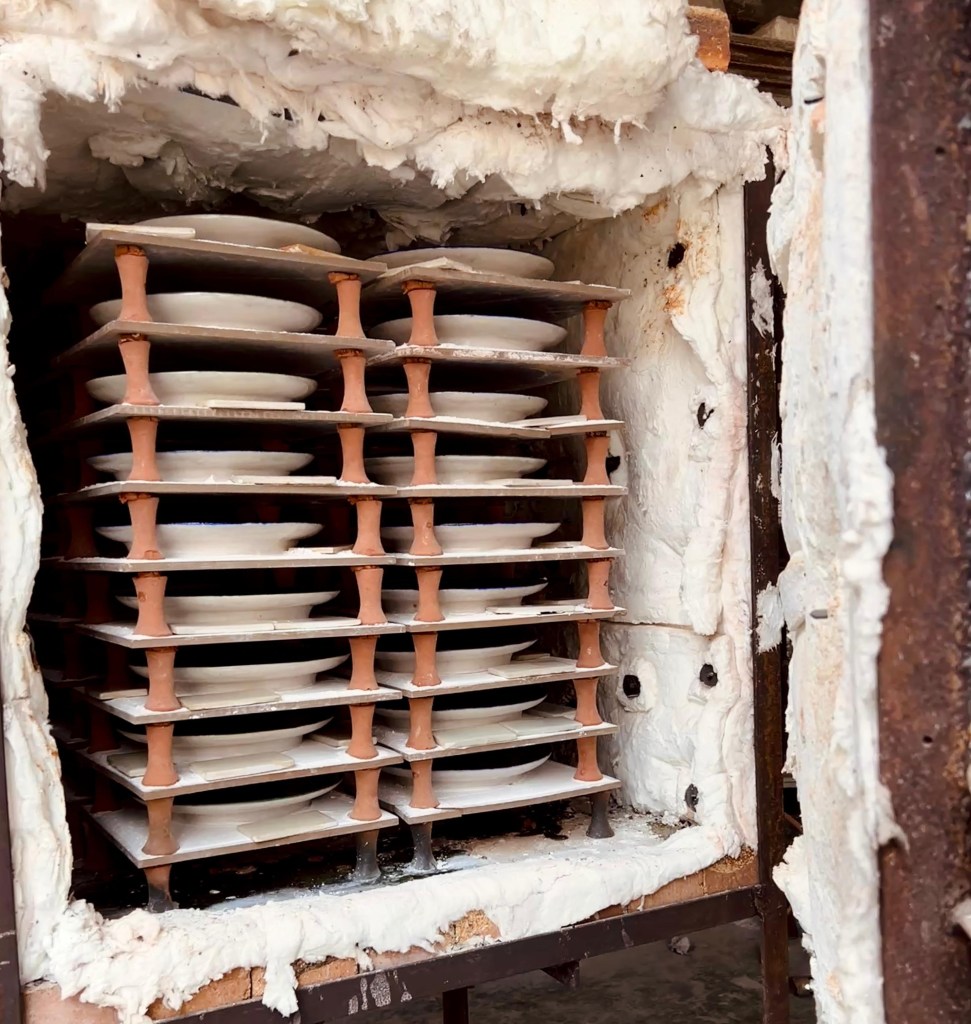
The pieces stay inside for several hours at extremely high temperatures — over 900°C — and the whole process of heating and cooling down takes two to three days. This is the stage when the glaze melts, the colors deepen, and the clay transforms into something solid, permanent, and beautiful.
When the pieces cool down after firing, the ones which come out undamaged are separated. They told me that there is a high chance of many pieces getting damaged in the firing process even if they had one small crack in them before firing. This is also one of the factors which makes their success rate low and the manufacturing time and cost higher.
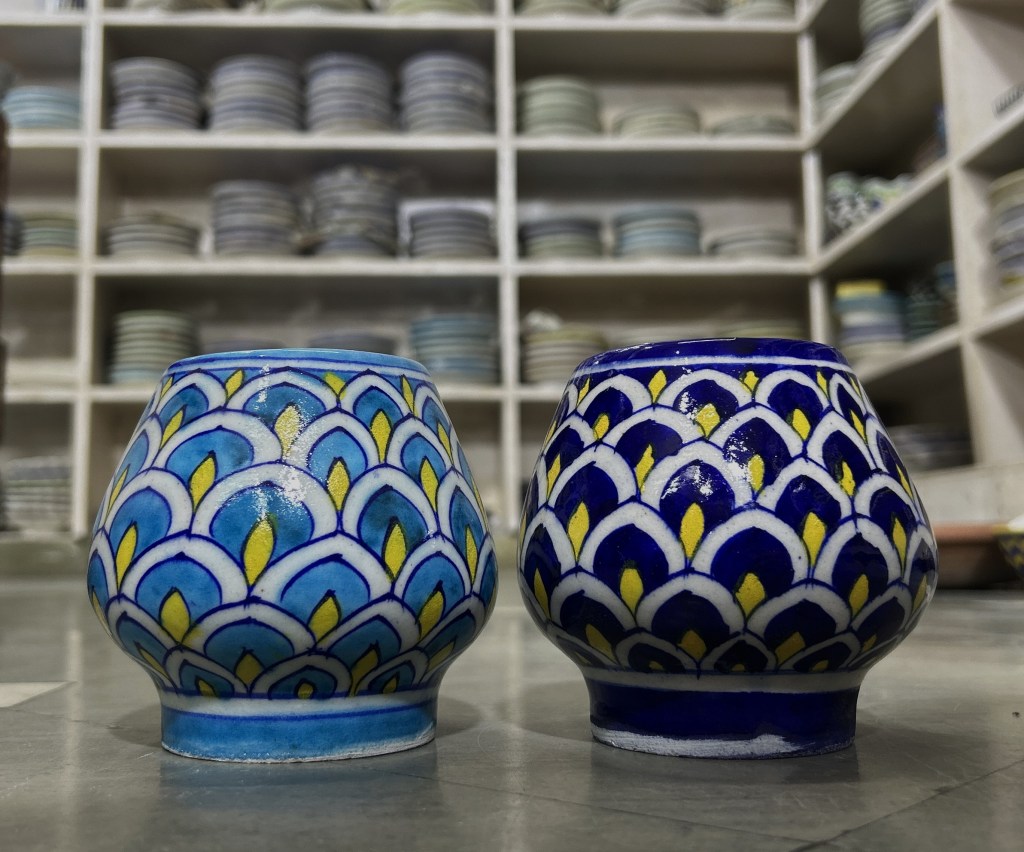
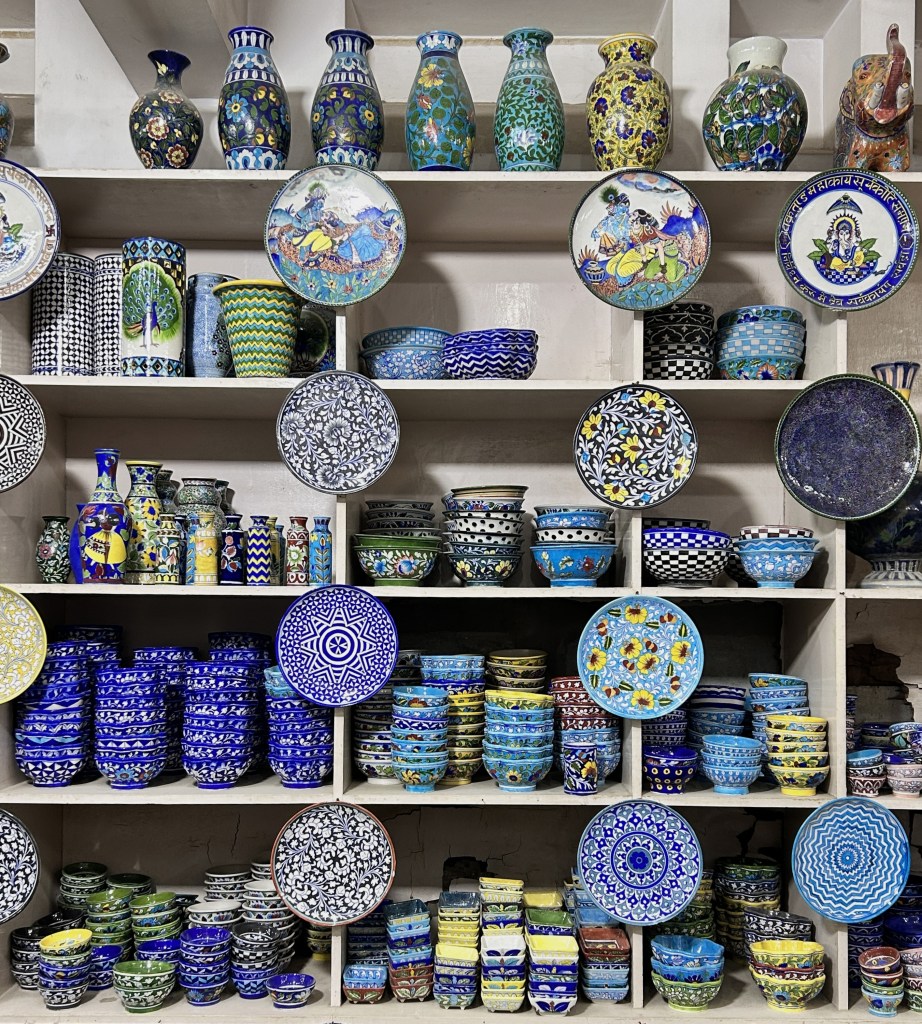

Beauty, Ready to Travel!
Then I went to their shop where they sold their blue pottery. Each bowl, plate, tile, and vase now held its own personality — some delicate with floral vines, others bold with geometric symmetry.
What once was chalky white and fragile now gleamed with color and confidence. The blues had settled deep into the surface, glowing under the glaze like stories set in stone. As I had seen the whole process now, I felt a sense of connection towards the whole place.
Then I saw some men packing the pieces, which were being wrapped one by one in newspaper, bubble wrap, and cardboard. It wasn’t glamorous, but it was careful — like tucking someone in before a long journey. These items, once born from earth and shaped in the quiet rooms of the workshop, were now on their way to shelves, homes, and hands far beyond the factory walls.

The Life Behind the Craft…
The beauty of blue pottery carries with it a quieter, often overlooked story — one that doesn’t sit on the polished shelves of galleries, but lingers in the corners of humble workshops and the routines of everyday life.
For many artisans, the space where they craft these delicate pieces is the same space where they cook, sleep, and raise their families. These rooms are small, timeworn, and filled with quiet signs of labor and life — a bed tucked behind a half-open door, shelves stacked with half-finished pottery, and a floor that doubles as a studio and a home. Most of these artisans don’t work under big labels or in large-scale factories. They’re part of a tradition that has been passed down for generations, yet today, they navigate the challenges of keeping that craft alive in a world that often prioritizes speed and profit.
Their income can be uncertain, especially when middlemen take the larger share, but what stays constant is their quiet dedication. They don’t work for production targets — they work because each piece they make holds a bit of their story. To truly understand how they live is not just to look at their homes, but to see the choice they’ve made — to live a life of making. Often without formal security or support, they continue shaping clay into beauty, guided by the same pride and care that shaped their forebears. In these modest spaces, far from the spotlight, something deeply valuable is still being created — not just art, but a legacy.
Parting Thoughts…
As this visual journey comes to a close, what lingers is not just the beauty of blue pottery, but the quiet strength behind it. Every photograph holds more than colour and form — it carries the rhythm of hands that repeat ancient motions, of spaces filled with both creation and survival. This craft, rooted in soil and flame, continues to live on not through grand factories, but through small rooms, deep focus, and inherited wisdom. In capturing this story, I’ve not only seen how these objects are made, but how they matter — to the artisans, to the city of Jaipur, and to anyone who pauses long enough to truly see them.
 DoubleSpeak