

“Some places don’t fade, and some lives don’t succumb — they quietly reshape themselves to hold on. This is one such place, holding such lives. All it asks for is to be seen — with attention, and with dignity.”
— Rajeev Singh
📍 Chhottelal Ghat, Kolkata – june 2025
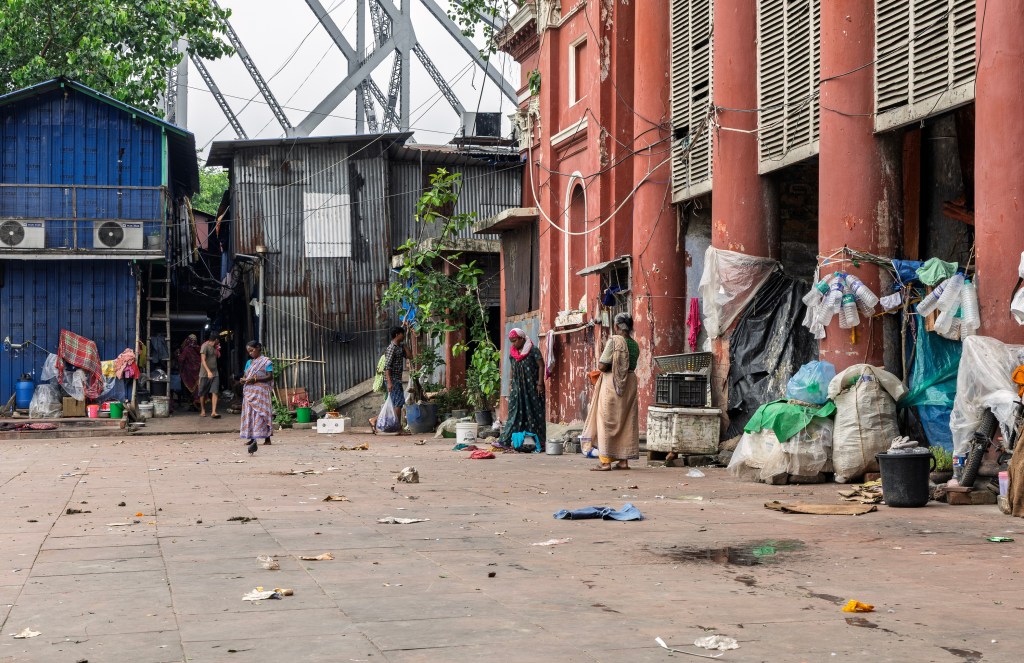
A quiet corner beneath the steel sprawl of Howrah Bridge, where red brick, fading memory, and daily survival coexist.
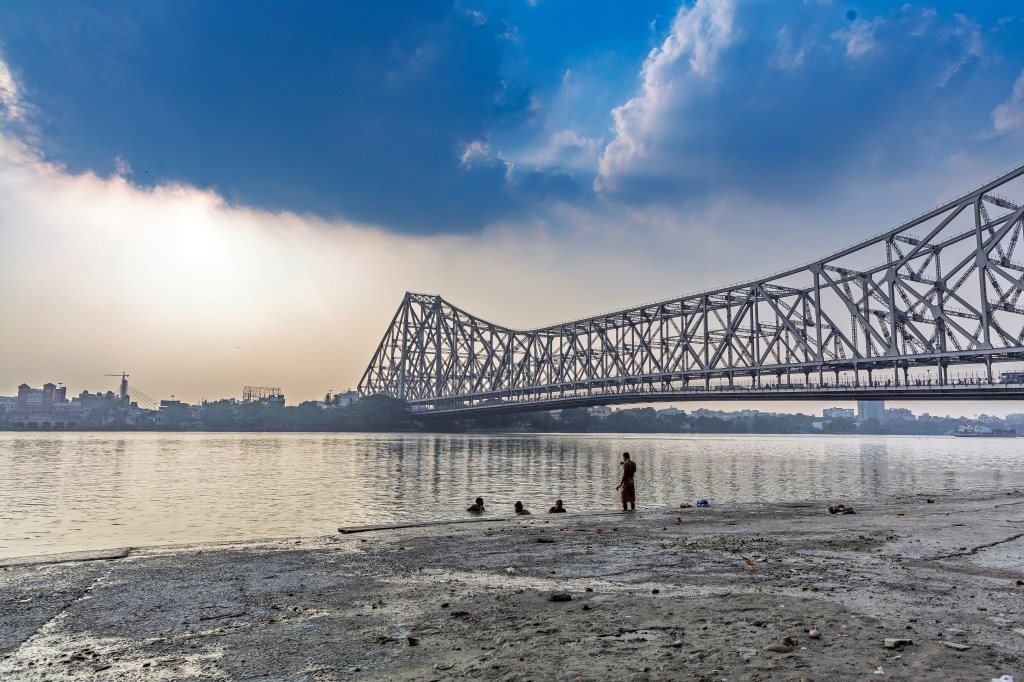
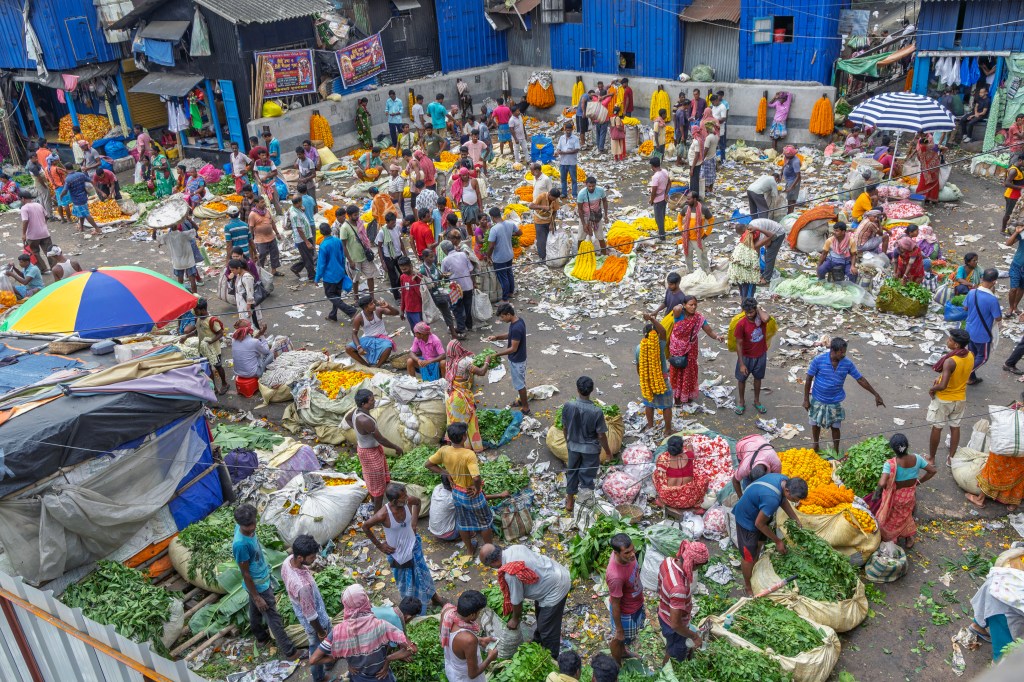
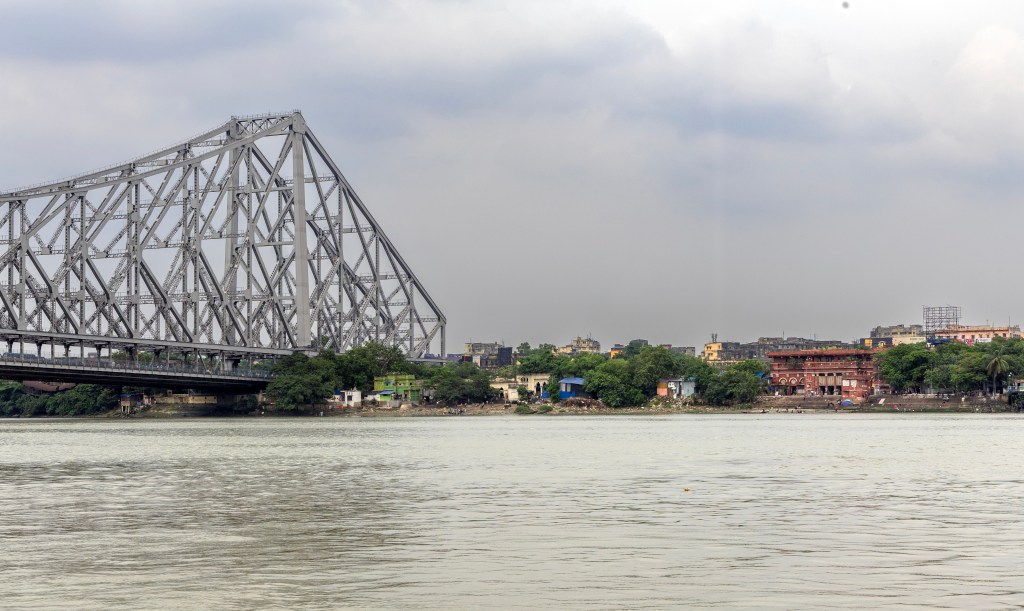
On the banks of the River Hooghly, behind the clamour of the flower markets and the steel bridge, stands a forgotten structure of red.
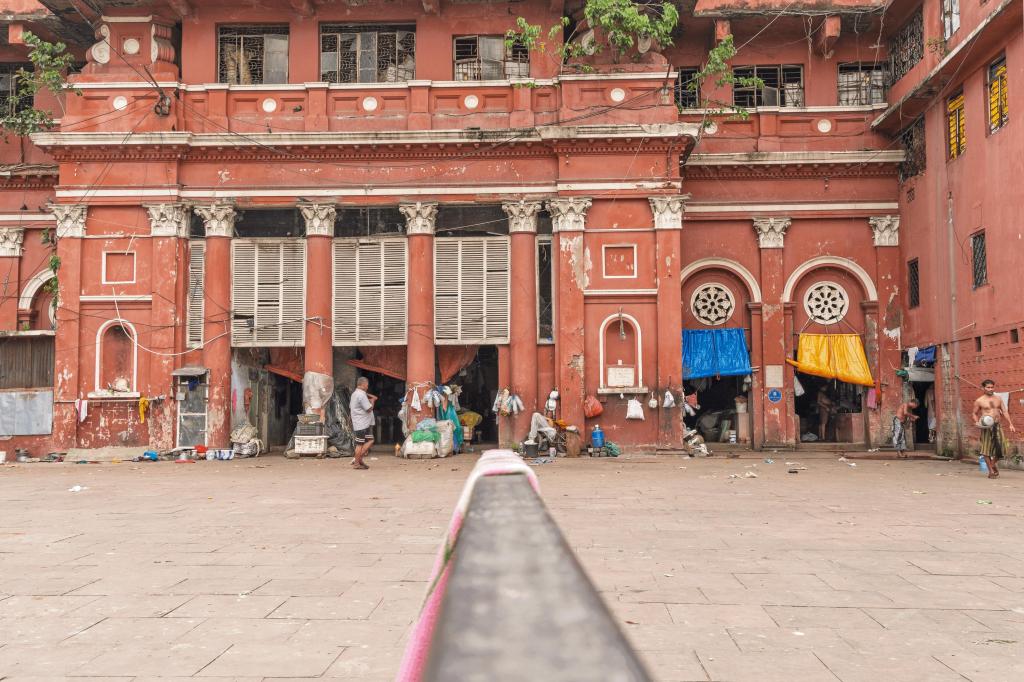
The structure, often misnamed as Mallick Ghat—a name popularised by postcards and film scenes—is, in fact, Chottelal Ghat. Built in 1873 by the family of Durga Prasad Chhottelal, this pavilion once served a ceremonial function. Today, it has been quietly repurposed by necessity. This misidentification isn’t incidental—it reflects how cities overwrite memory through optics.
But in the present, names matter less than needs. Whether called Mallick or Chhottelal, this red colonnade now shelters lives that have quietly outlasted both commemorations and plans.
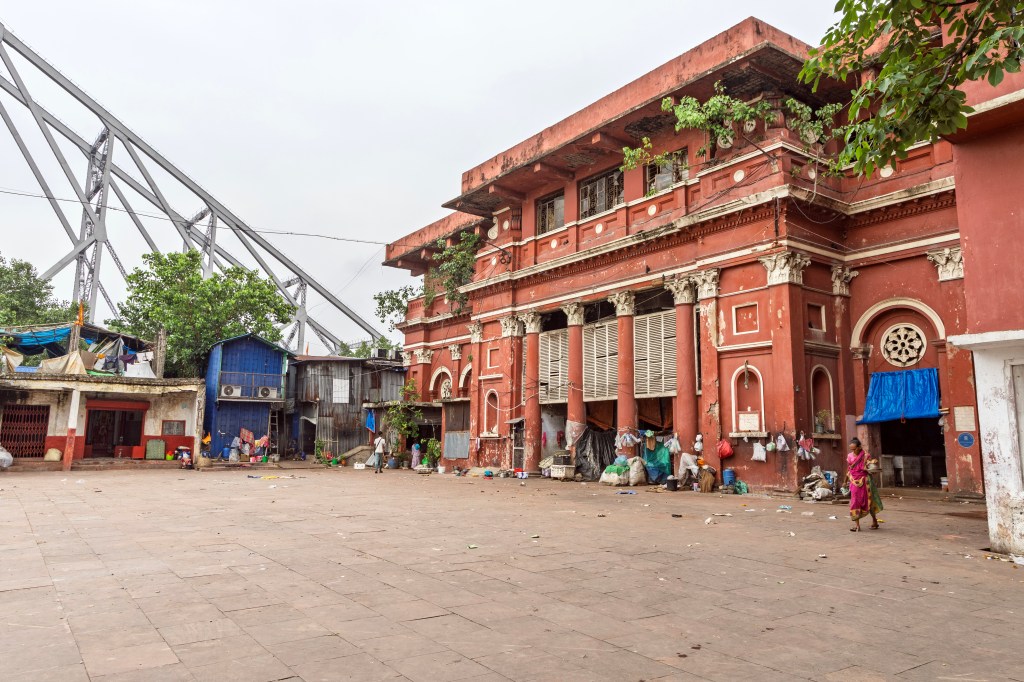
In a city that constantly rearranges its truths, this place remains—held together by unnoticed lives and lived stories. Shaped in the style of colonial grandeur and proportion, it now serves as a shelter, a workplace, a home without walls or permanence. The red paint is fading with each passing decade.
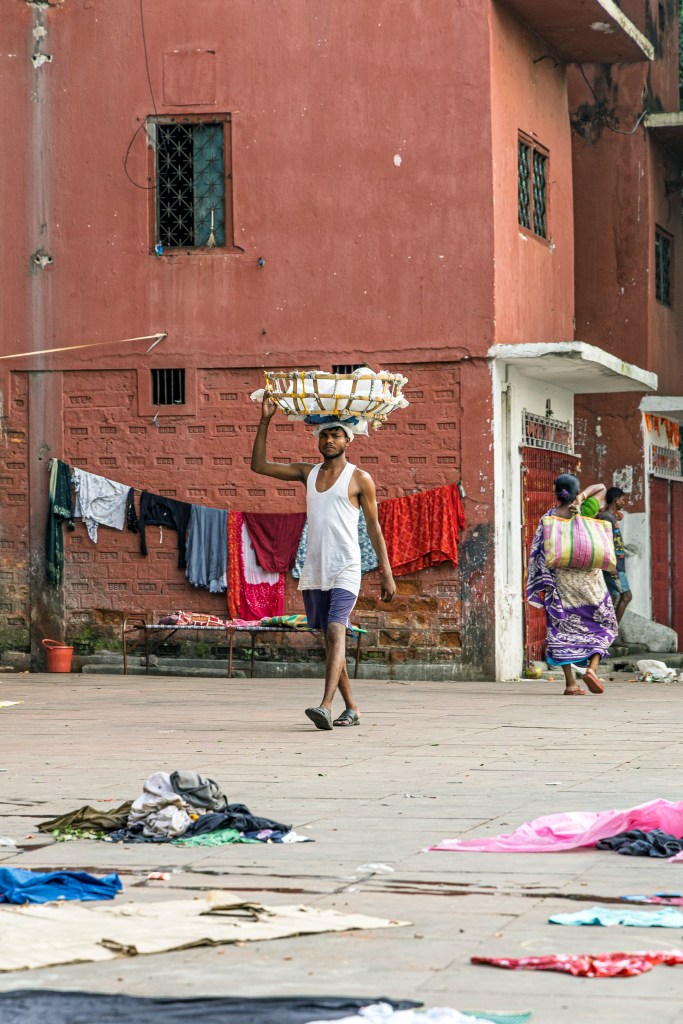
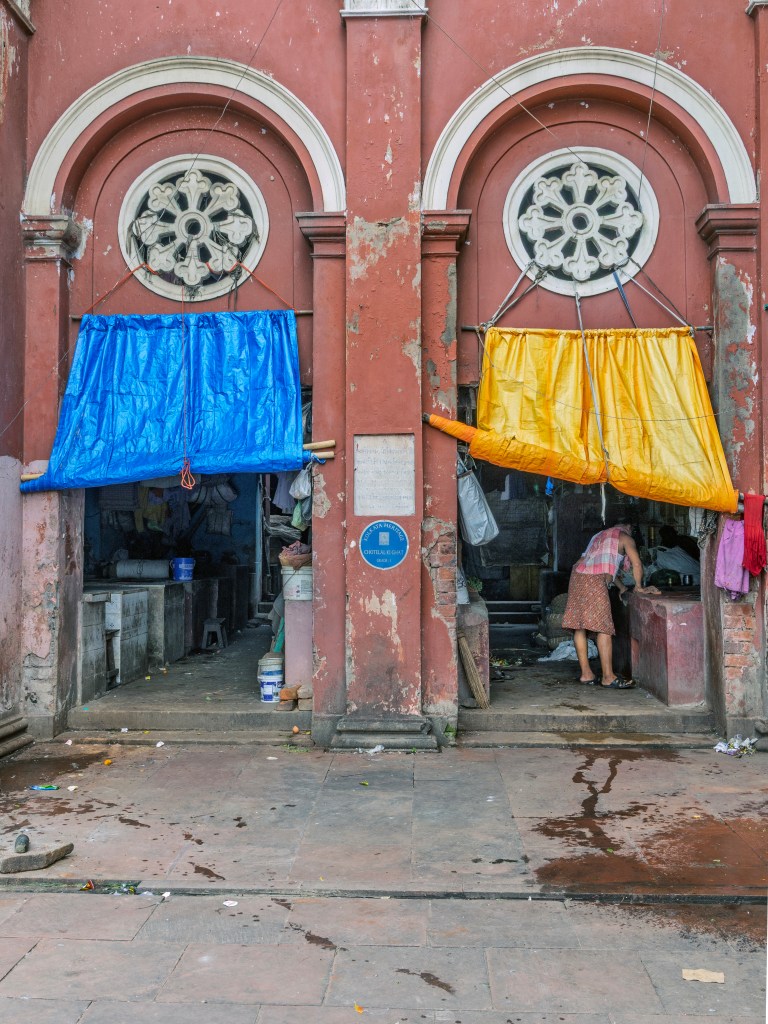
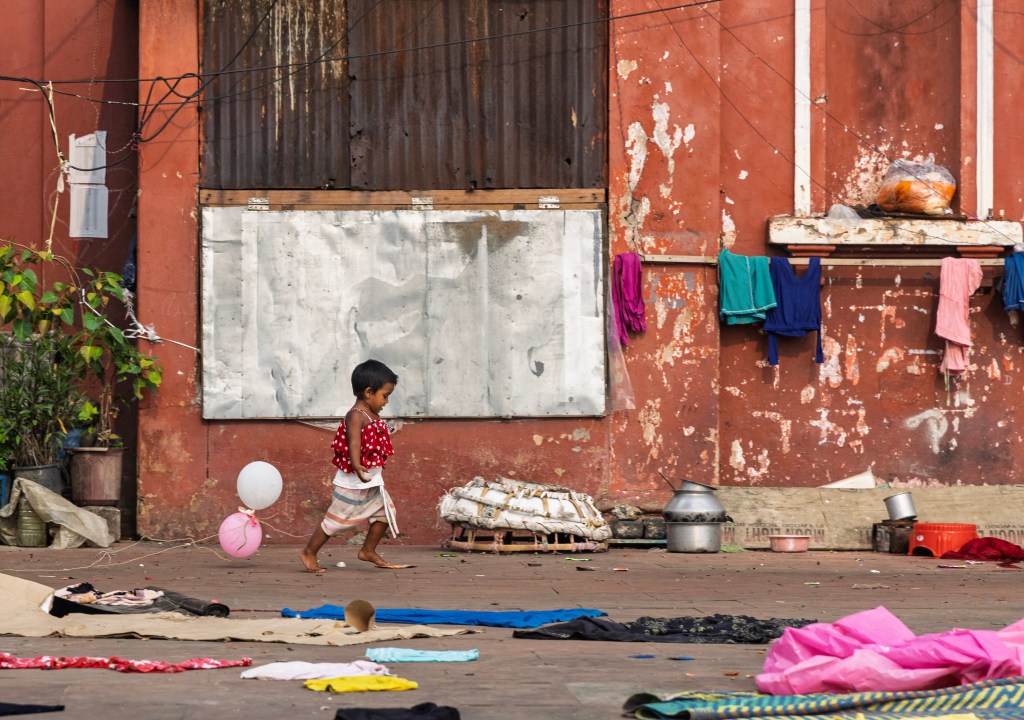
The Corinthian columns remain—weathered, but upright. Life, uninvited yet undeterred, has quietly taken root in every crevice.Men in lungis carry bundles of flowers —heavier, perhaps, than the weight of the days they endure. Women move through the shadows of these pillars, folding, cooking, sweeping—not just spaces, but fragments of dignity. Clothes lie not only on lines, but across the ground—drying under the open sky like scattered affirmations: we belong too. Pots, tins, plastic tubs—the humble architecture of survival—rest against the grand architecture of a bygone time.

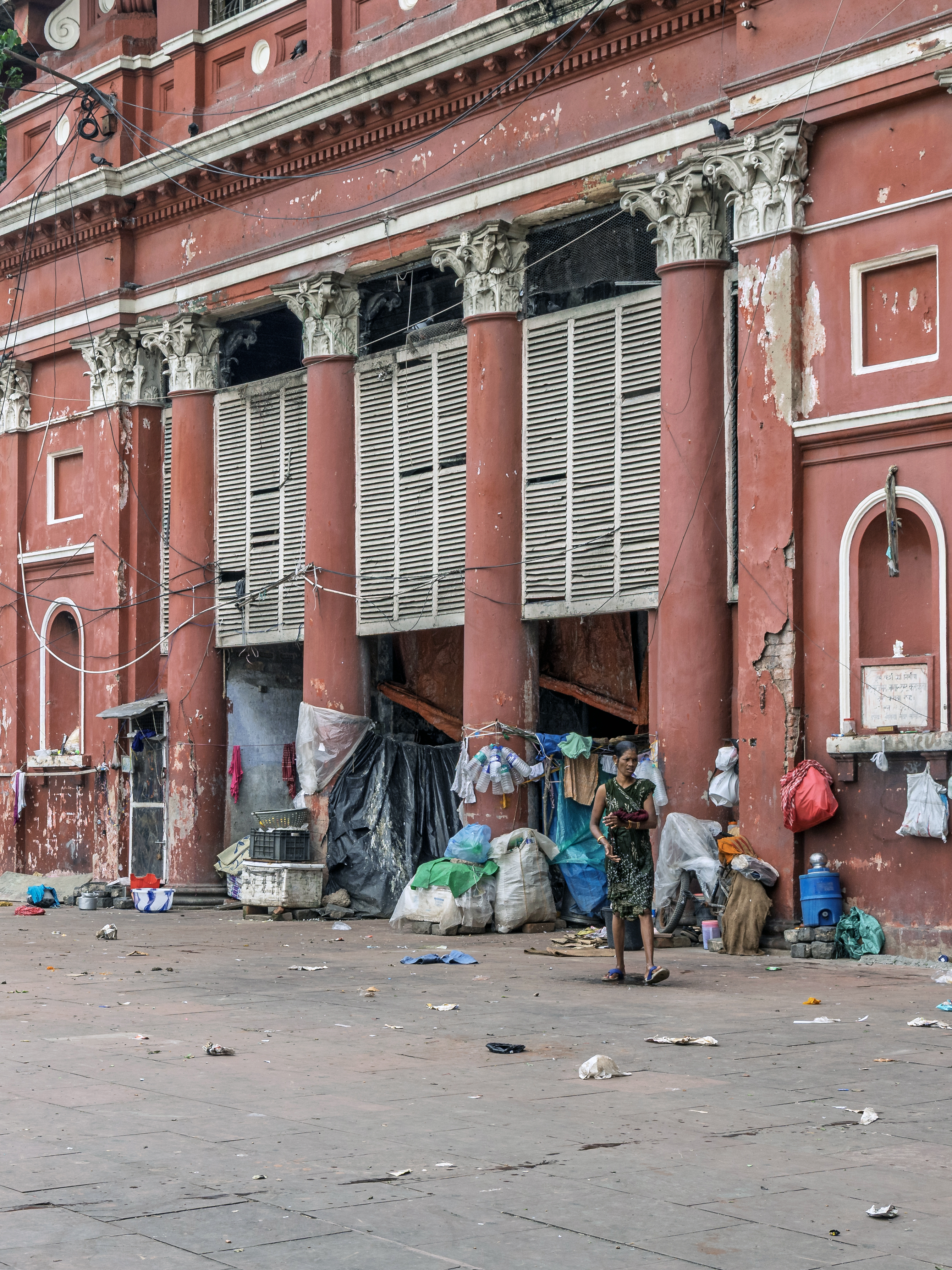

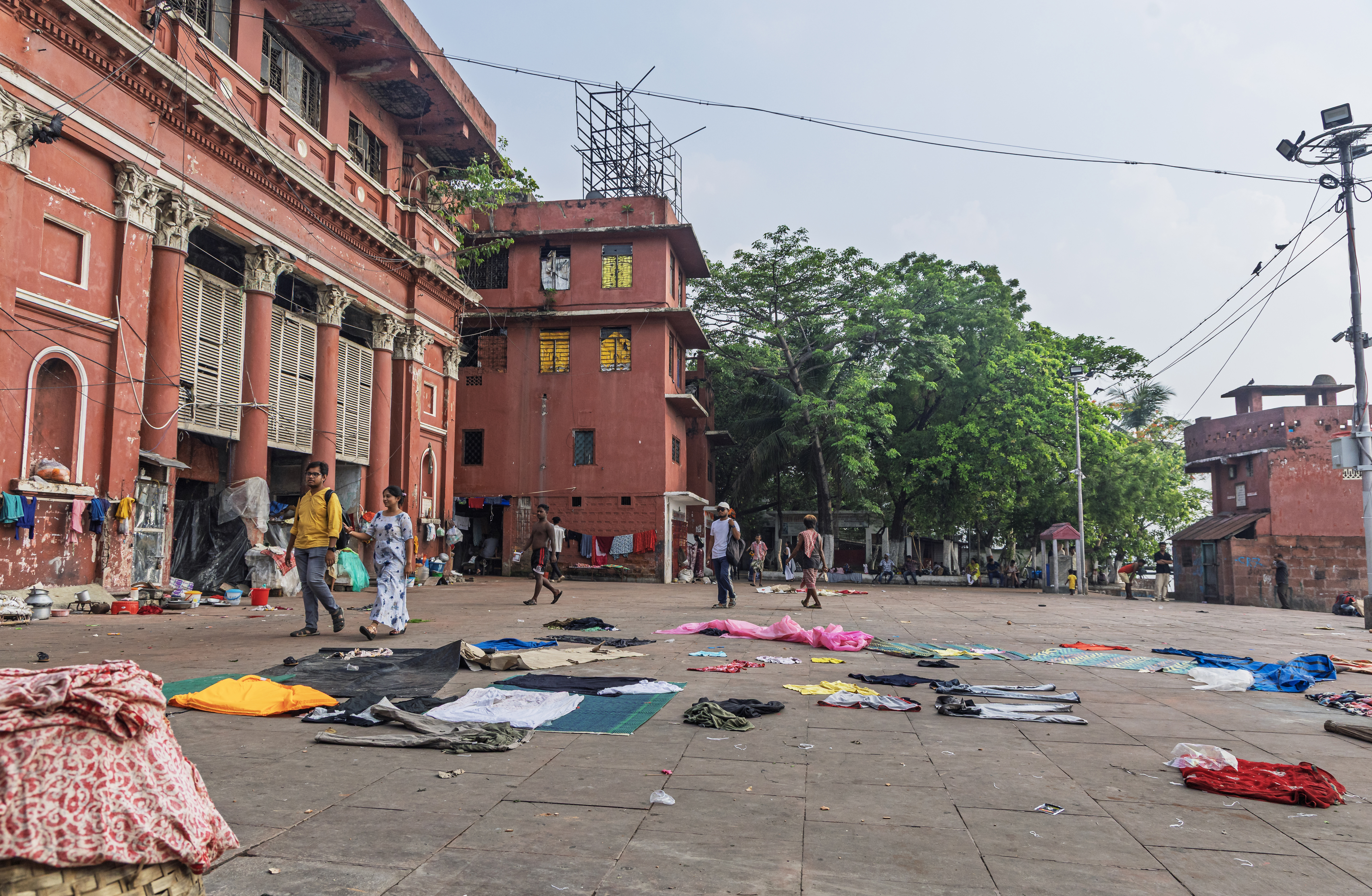
This isn’t just neglect. It’s endurance. Not everyone here has a house. But many have carved out a home—in the echo of corridors once meant for something else. And somehow, amid the exposed bricks, rusted grills, and spreading cloth, life continues—quietly, fiercely, fully.
There are two ways of seeing life in a given time and space. One begins with the life itself. The other, with the world around it. Both are real. Both are incomplete on their own.
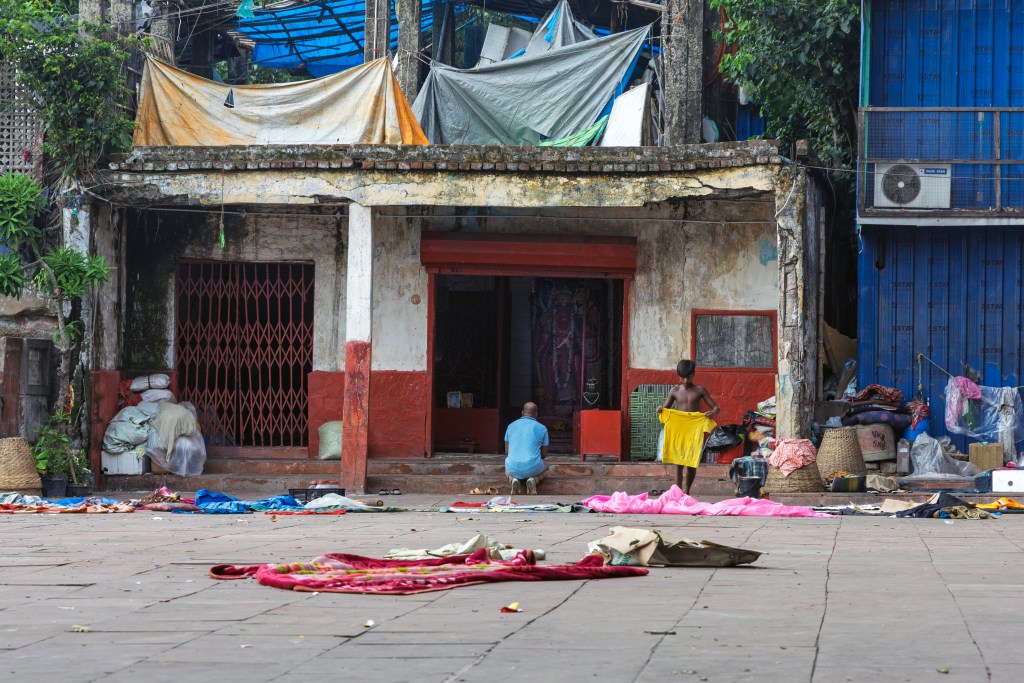
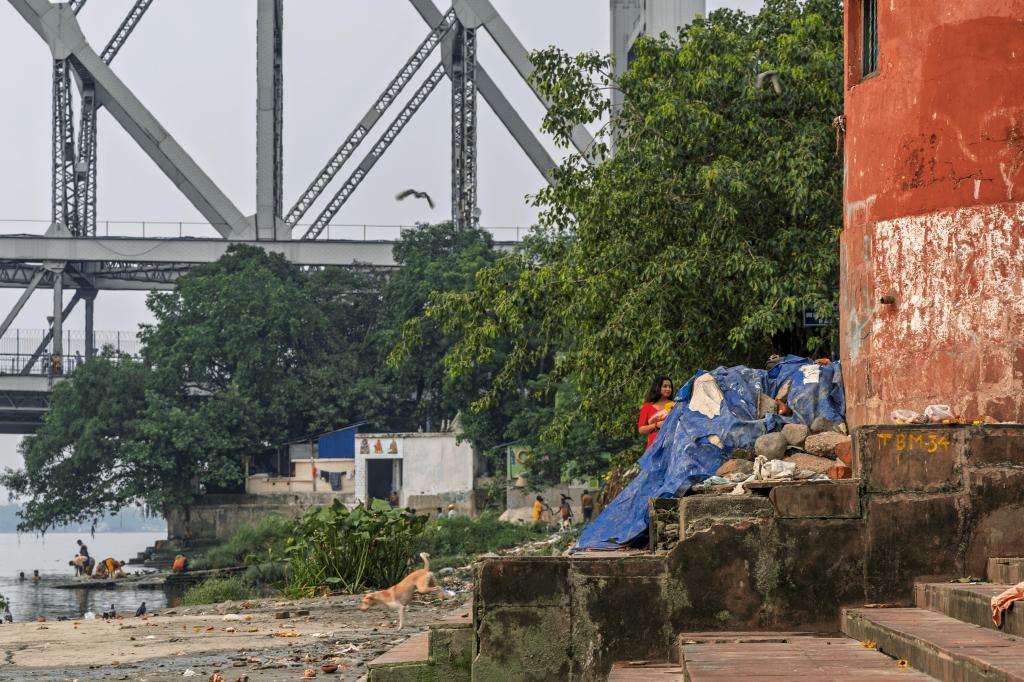
As a witness to life at that moment—what I saw, captured, and now presenting—is emotionally raw, and deliberately economical in words. Each frame can be seen in two ways: moving from the human outward, and from the world inward. The following reflections appear both ways, because perspective changes what is seen.
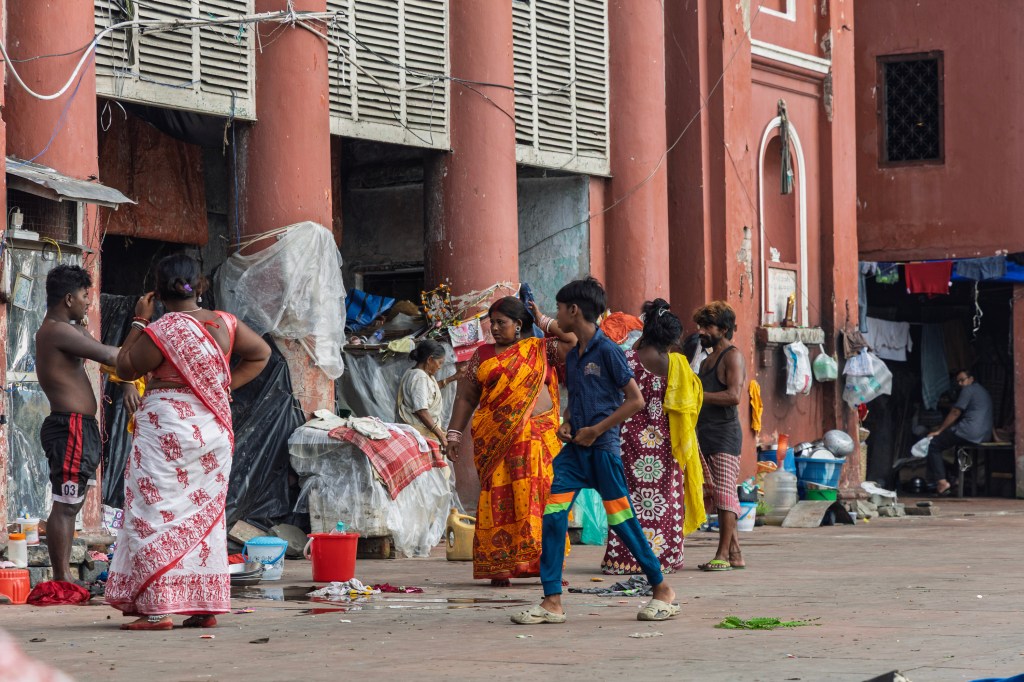
THE HUMAN: Fragile Yet Enduring ( The Human Outward )
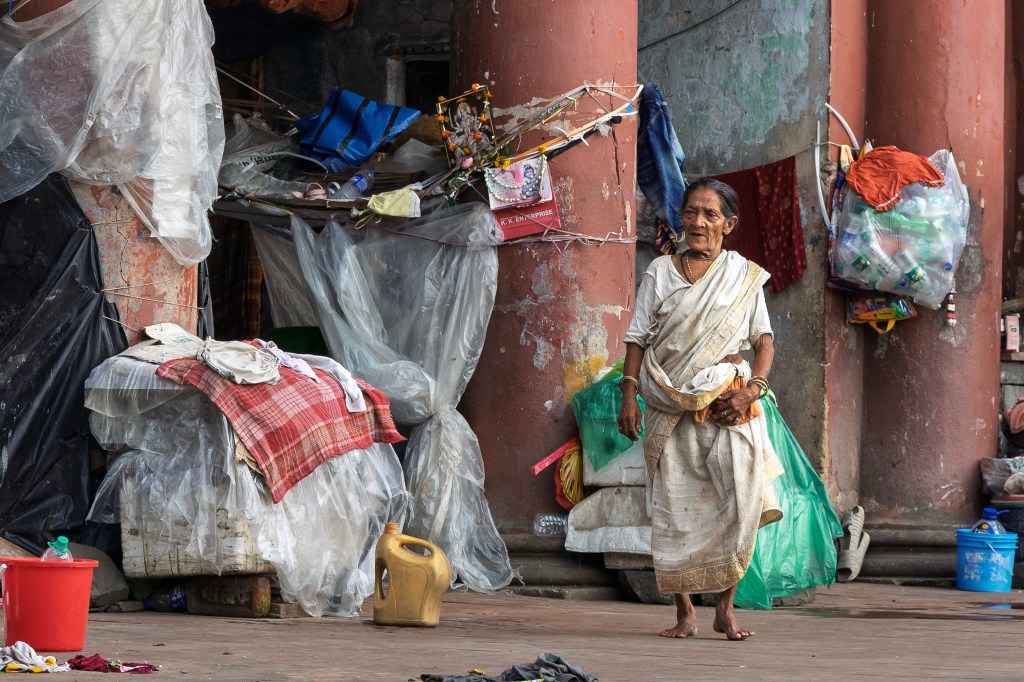
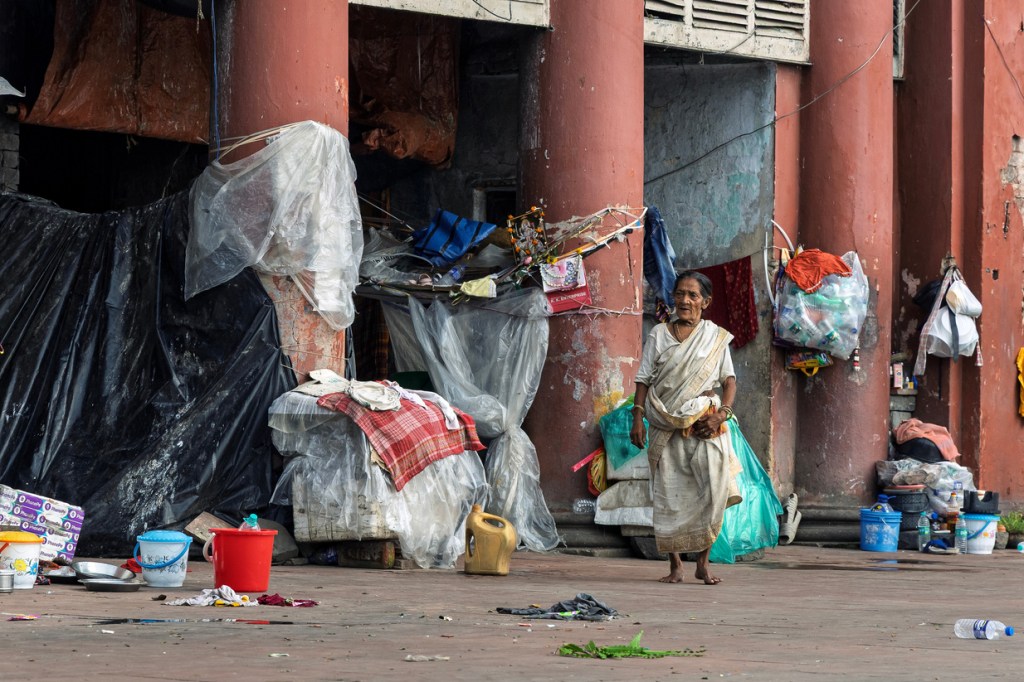
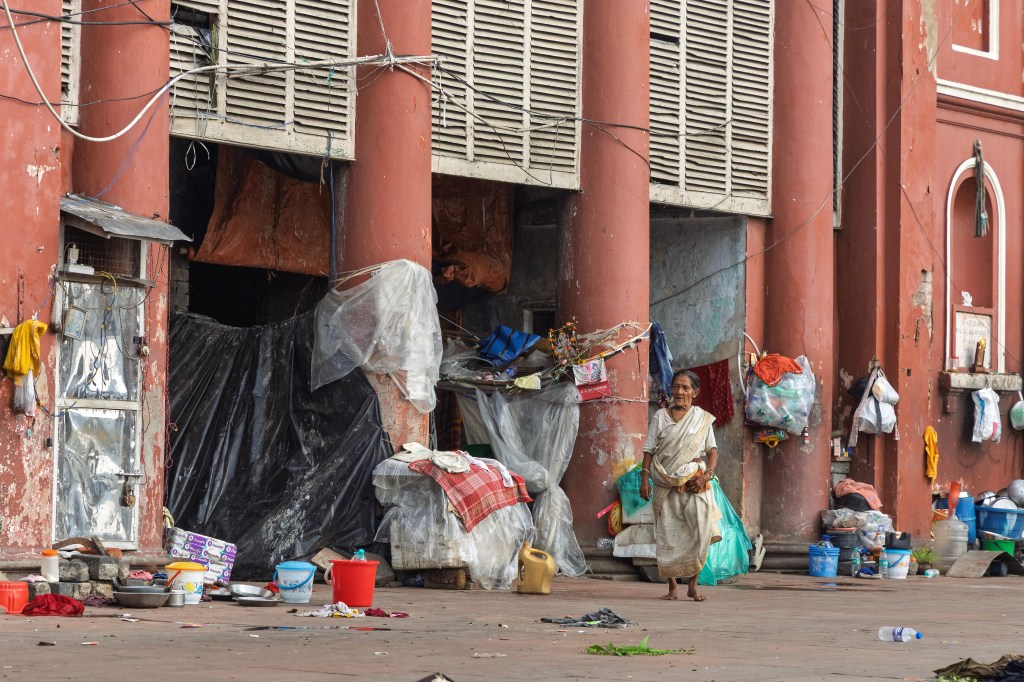
We arrive with nothing but breath—and yet we carry the weight of identity, memory, and longing.
We are shaped not only by who we are, but also by how we stand when nothing stands with us.
In silence or in struggle, a human life seeks meaning—not always through grand gestures, but often through the quiet persistence of presence.
Life does not form in isolation. It gathers—in objects, habits, routines, relationships, and in the invisible systems we build to hold ourselves together.
These are the echoes of our choices and compulsions—a choreography of survival, often unnoticed unless it collapses.
Around every human, there exists a world—handcrafted not for beauty, but for adaptation.
THE WORLD THAT HOLDS LIFE ( The World Inward )
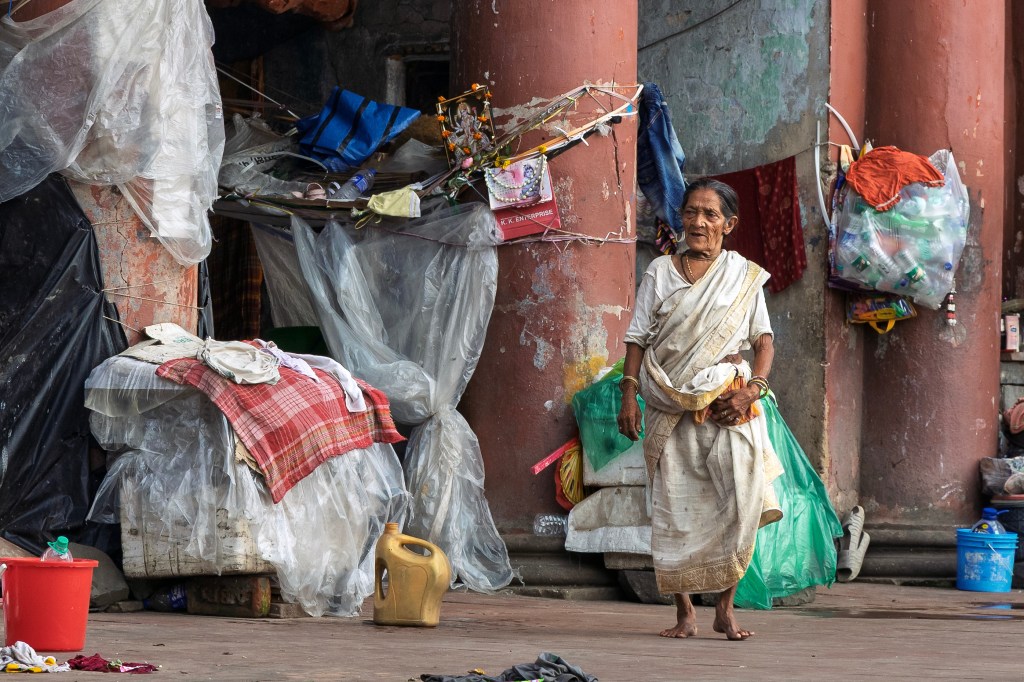
The world arrives first—already built, already named. It doesn’t ask for consent; it offers conditions. It defines borders, legitimacies, and access—often before we even begin. Some are born with shelter; others, into the storm.
The world holds lives—but not all with equal care. Its silence often speaks louder than its laws. Of shelter, of routines, of resistance, of intimacy. Life wraps itself around the human like a second skin, stitched from necessities, losses, and brief moments of choice. What seems like disorder from the outside is often design—crafted out of urgency, not neglect. This is the architecture of the everyday—invisible, until it’s removed. At the core—stripped of context and condition—stands the human. Barefoot on the edge of time, carrying stories the world may never hear. The human is not just a body or a biography. It is presence—quiet, complete, and often overlooked. When everything else falls away, what remains is not nothing—but someone.
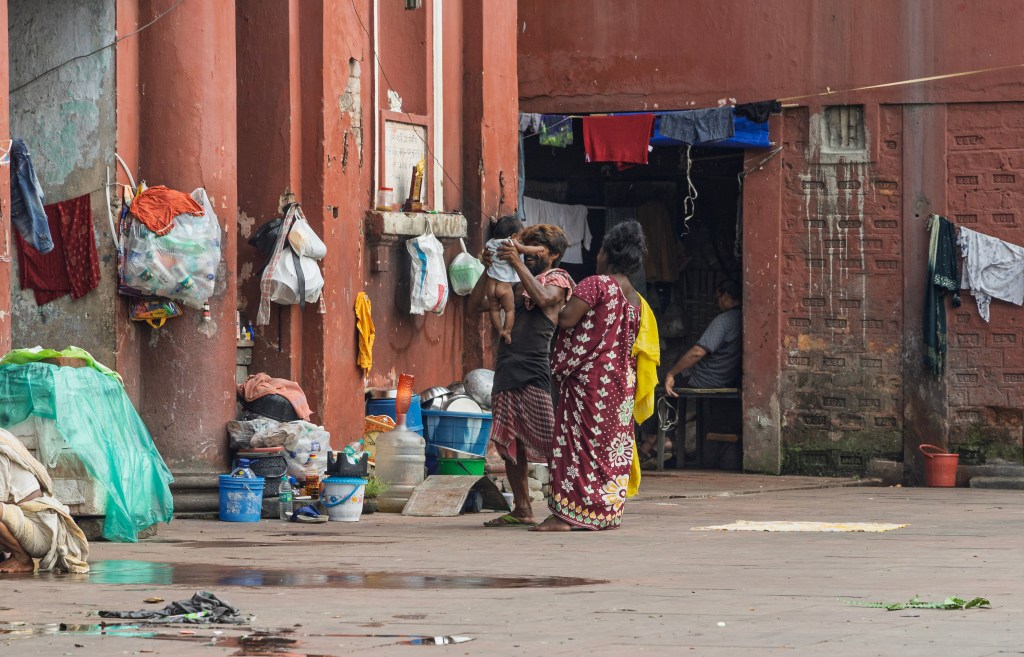
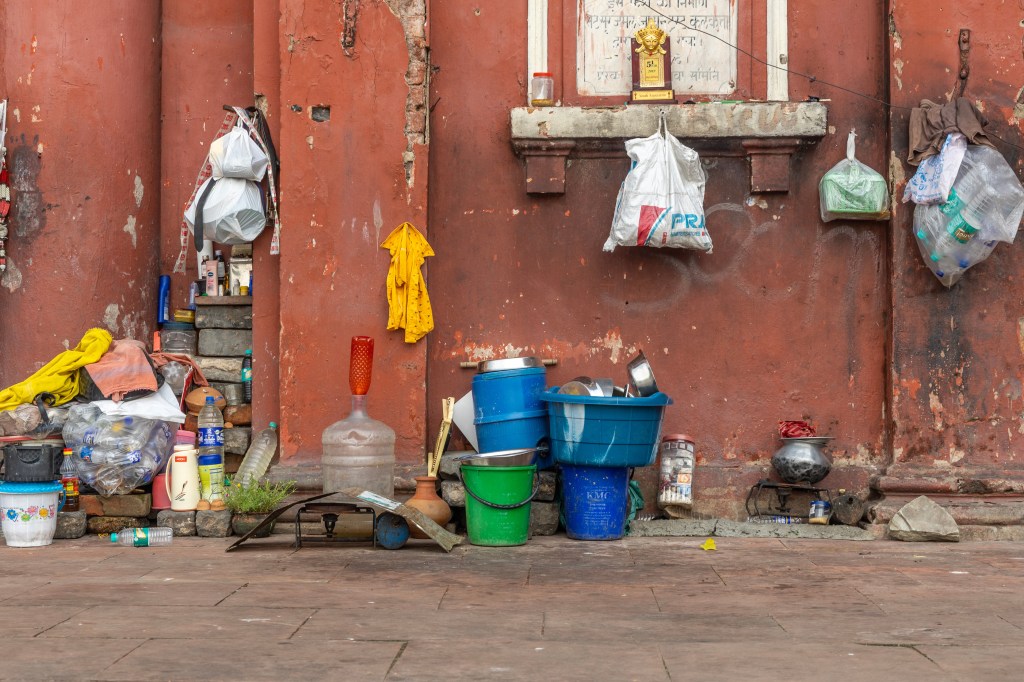
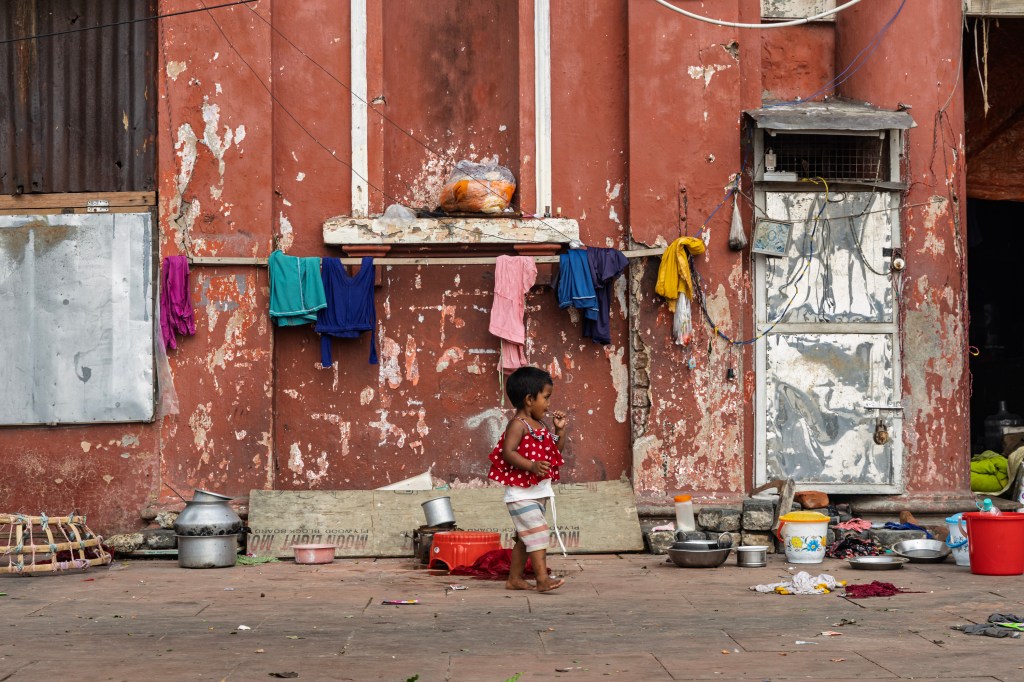
Where we begin the story decides what we see. Start at the centre—and you find dignity. Start at the edge—and you see design. But in both, there is truth. And always, a life. When we see the human first, we are drawn toward empathy—toward poverty, inequality, injustice, survival, abundance, neglect, struggle, and evolution. When we see the structure first, we are drawn toward systems—toward encroachment, legality, politics, law and order, neglect, abundance, and heritage.
Both ways of seeing are valid. But in either frame, one thing remains constant: the presence of life—and the resilience of a character, in a moment, in a space—neither solely defined by the structure, nor entirely separate from it. What we need is not sympathy, but shared responsibility. These stories are not mine to tell fully—but they are ours to stand beside. And sometimes, just noticing with dignity can be the first honest act.
 DoubleSpeak