

Horses have long been symbols of power, grace, and freedom. Their presence invokes an image of untamed wildness, of galloping across open fields, uninhibited by barriers. Yet, this freedom is not a singular, isolated experience. It is shaped by care, nurtured through companionship, and balanced by a partnership that transcends the human-animal divide. The story of a horse, within the walls of a stable and beyond them, is a narrative not just of freedom, but of mutual trust, care, and the quiet moments of preparation that set the stage for its ultimate release.
"Beyond the Fences: A Journey of Freedom and Care" explores the life of a horse through the lens of both the caretaker and the rider, showing the delicate dance between care and liberation, structure and autonomy. This photo feature captures the horse’s life not as an isolated being, but as part of a larger story of connection, preparation, and release. From the stable to the open field, each image represents a moment in the horse's journey—from the hands that care for it to the open spaces where it can finally run free. It is a journey that begins with the gentle guidance of the caretaker and leads to the liberation found in the horse’s gallop, a dance of freedom with the wind.
The stable, a sanctuary of structure and routine, is where the horse’s journey begins. It is here that the caretaker’s role becomes vital. Though the horse is known for its strength and independence, it is through the gentle hands of the caretaker that its physical well-being is ensured. The caretaker, whether grooming, feeding, or preparing the horse for the ride ahead, establishes a foundation of trust. These early moments—simple acts of care—lay the groundwork for a future built on mutual understanding. The caretaker knows the horse’s every move, its unique rhythms, and its temperament. In return, the horse begins to trust the caretaker’s presence, allowing itself to be guided, fed, and nurtured in a way that prepares it for its freedom.
This act of care goes beyond the physical. It is an emotional bond that forms, a quiet relationship of respect between two beings who depend on each other in different ways. The caretaker's gentle touch, the calm voice, and the thoughtful routine are all part of this subtle connection. For the horse, this routine becomes a source of stability. For the caretaker, it is a moment of understanding that shapes their bond with the animal. In the stable, there is a rhythm—an ebb and flow—that allows the horse to thrive, be it in strength or in spirit.
However, the true journey of freedom begins when the stable doors are opened. The transition from care to liberation is one that requires both preparation and release. The horse steps into the open field, its muscles free to stretch, its mind to wander, and its spirit to run. In these moments, the connection between the horse and its caretakers evolves into something deeper. The horse, though ready for freedom, has been shaped by care and guided by love. The open field becomes a place not of sheer escape, but of expression. It is the culmination of a partnership between the caretaker and the horse, a partnership that has allowed the horse to be ready for the openness and the vastness of the world beyond the fences.
Yet, even in this freedom, the presence of the rider is essential. The rider’s role is not to dominate the horse, but to work in harmony with it. It is an extension of the care and guidance the horse receives in the stable, now moving into the field. The rider is both a guide and a companion, providing direction while allowing the horse to experience the full breadth of its freedom. Together, rider and horse become one in motion—there is no separation between the rider’s will and the horse’s power. It is here, in the field, where freedom is truly realised, as the two move as one through the wind and the earth.
"Beyond the Fences" is a visual exploration of these moments of transition and harmony. It shows the horse’s journey from the stable—where care and trust are nurtured—to the fields, where freedom is fully realised. But it also shows the moments in between: the quiet understanding between the horse and its caretaker, the anticipation before the ride, the gentle tug of the reins, and the partnership between the rider and the horse. Each frame tells a different part of this story, capturing the essence of what it means to care for something, to trust it, and ultimately, to release it into its fullest potential.
The story of a horse, and the relationship it shares with its caretaker and rider, is one of mutual respect, of moments of stillness and bursts of action, of care and liberation. It is not simply the story of an animal in the wild or a creature under control, but a testament to the beauty of partnership—the way in which we can shape and guide something, only to see it transform and soar on its own. In the space between care and freedom, the horse finds its true purpose: a powerful being, shaped by love, trust, and understanding, ready to embrace the world beyond the fences.
This photo feature invites the viewer to witness the quiet grace of this journey—of care and freedom interwoven, of a bond that transcends words, and of a horse that is both nurtured and set free, discovering its place in the world beyond the fences.

Where Shadows Speak of Freedom: A Dance Between Care and Wild Spirit
In the quiet corner of the stable, where sunlight barely filters through the wooden slats, a tale unfolds—a story not just of horses, but of the delicate dance between confinement and freedom, between the care we receive and the wild spirit that defines us.

that lies ahead.
In the stable, the caretaker gently ties the rope around the horse’s mouth, preparing it for the field. The horse stands still, trusting yet aware, its freedom momentarily shaped by the hands that care for it. It reminds us of how guidance, though limiting, can also be an act of love and protection, a step toward something greater.

The scene captures a moment of resistance: the caretaker firmly holds the hose, his stance resolute, while the horse pulls away, its body tense and muscles rippling in defiance.
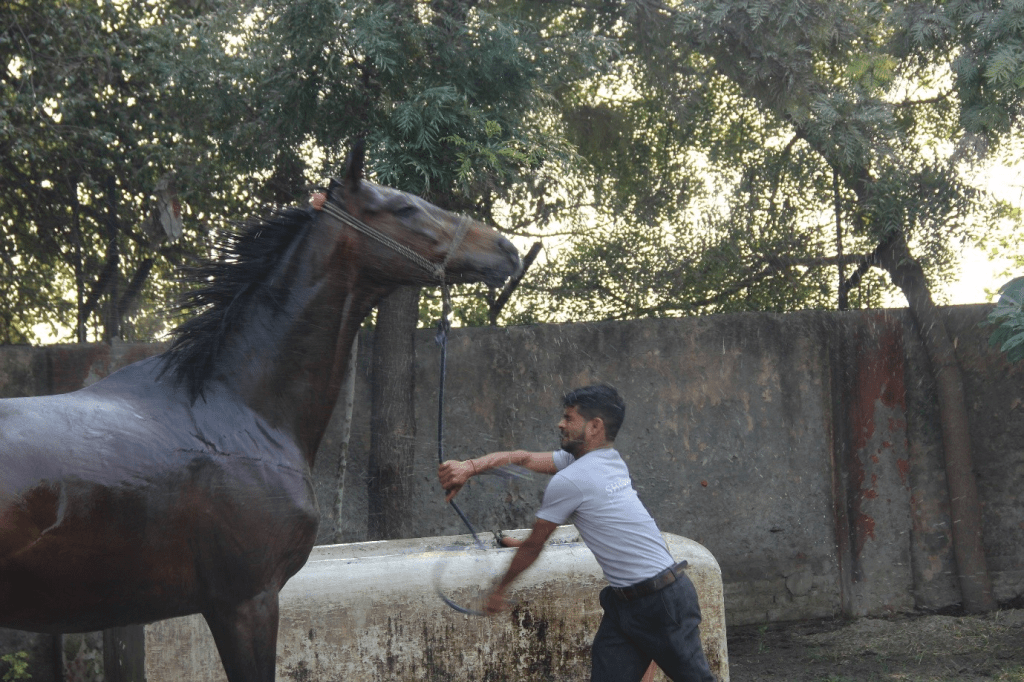
for control.
The caretaker, frustrated and tired, gives a firm tug on the
rope attached to the horse’s halter, trying to regain control as
the horse stubbornly resists. With a swift motion, he taps the rope against the horse’s side, a sharp reminder that it’s time to listen. The horse flinches slightly but doesn’t budge, its stance strong and defiant. The moment is tense, the air thick with the struggle between submission and independence. The caretaker’s hand tightens around the rope, his patience wearing thin, while the horse, though feeling the pressure, remains determined in its resistance.

The caretaker’s firm grip on the hose juxtaposes control with chaos, a delicate balance between taming and respecting the untamed. The droplets suspended mid-air seem to freeze the conflict—a desire for freedom against the embrace of care.

Caretaker bathing a horse, their movements deliberate and intimate. This simple act of care blurs the boundary between freedom and dependence, revealing a relationship built on mutual need and understanding. Beneath the flowing water, the horse’s gleaming coat reflects its strength, while its lowered head suggests a quiet acceptance of captivity.

The horse explodes into motion, its mane flying and muscles rippling as it charges toward the open fence. The sheer force of its movement is captured in mid-stride, every hoof lifted off the ground. Its eyes are wide, filled with a mixture of determination and exhilaration, embodying the raw, untamed energy of freedom.
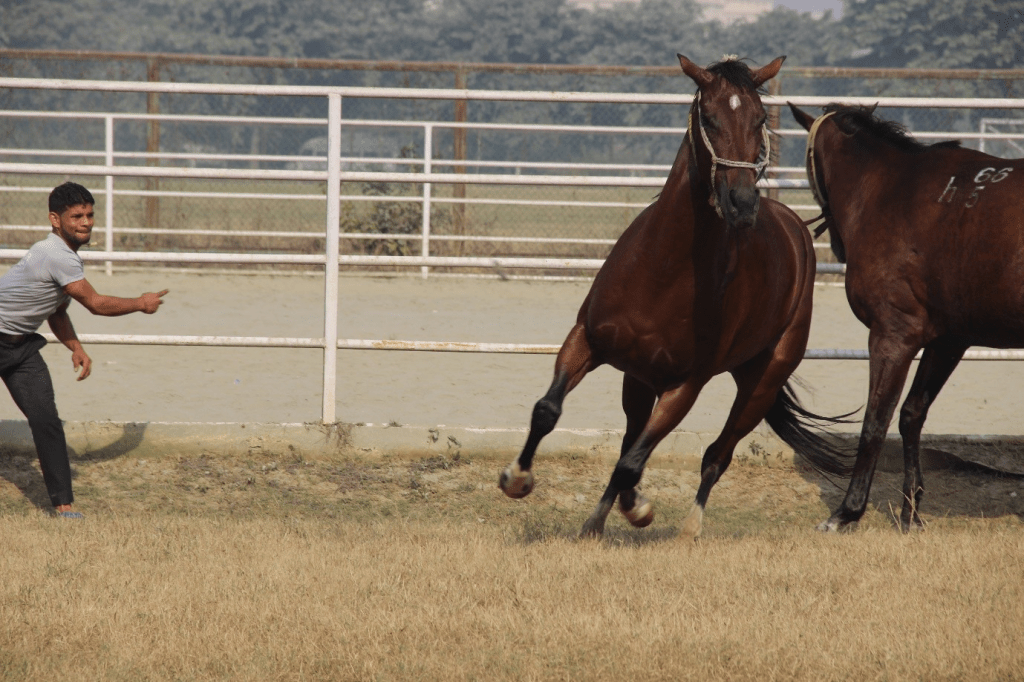
The caretaker gestures, urging them on, embodying a role both of guide and observer. Despite the confines of the fence, the horses’ movement is a dance of freedom, their spirit undiminished by the boundaries that surround them.

In the open field, two horses graze peacefully, their heads bent to the earth. The vastness of the sky stretches above them, but their focus remains on the grass at their feet. It reflects how even in open spaces, we often find comfort in the simple, grounding acts of the present moment. Freedom doesn’t always mean running wild, it can also be found in quiet togetherness.

freedom
The horse’s eyes are bright with exuberance, as if the world itself has become a playground, and every splash is a celebration of pure, unconstrained freedom.
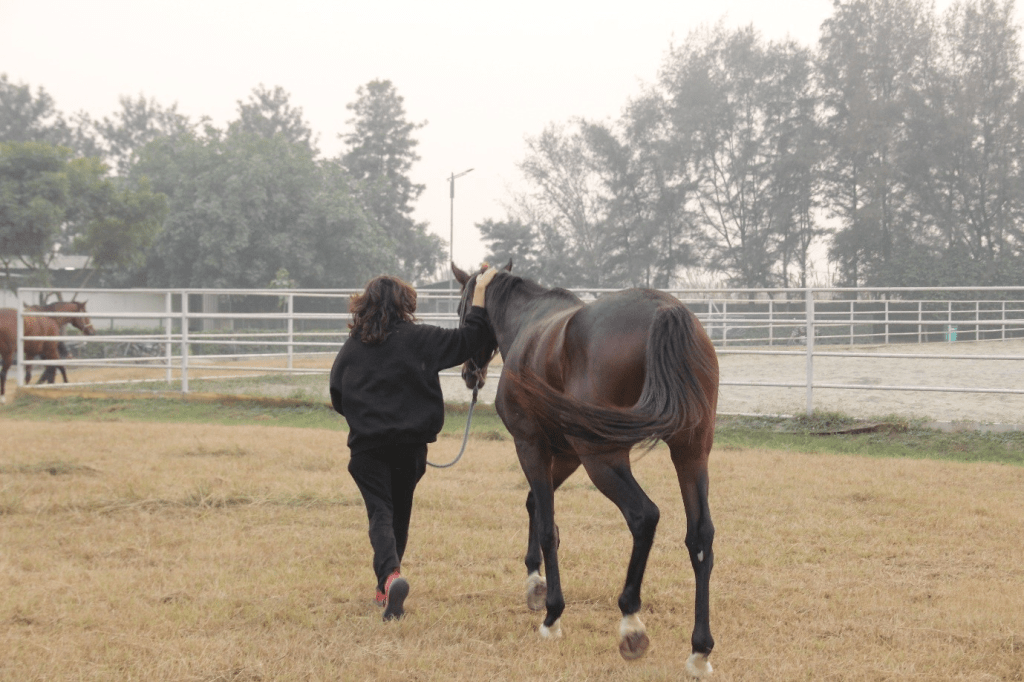
journey begins.
The rider gently places a hand on the horse’s side, walking alongside it with calm intent. There is a quiet understanding between them, a mutual trust that prepares them for the journey ahead. This image symbolises connection—before the ride, there’s a moment of calm and respect. It’s a reminder that true partnership begins with trust, where both the rider and the horse are ready to face what lies ahead, together.

strength.
The horse stands still, its head out of frame, while the riding equipment takes centre stage. Saddles and reins rest on their back, a symbol of preparation and purpose. This image speaks of readiness—a transformation from untamed to disciplined. It represents the roles we are shaped to play, the tools and expectations that guide us, and the strength required to carry them forward.
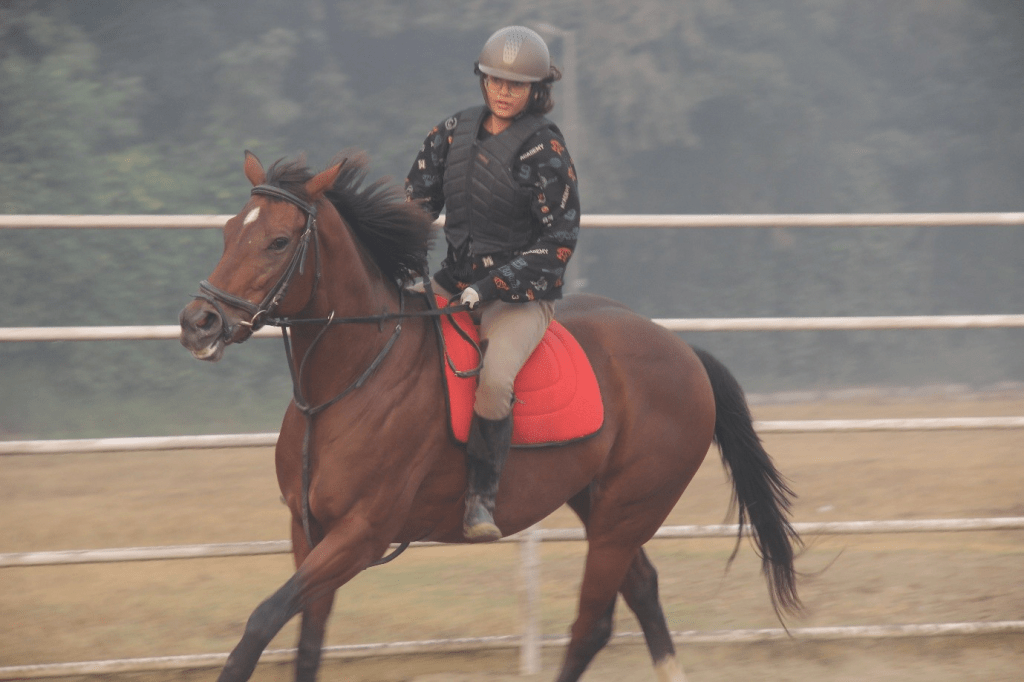
unite in motion.
With the wind rushing past, the rider and horse move as one, galloping across the field. The rhythm of their movement is fluid, an expression of freedom and unity. This image captures the moment of pure liberation—where control and trust merge, allowing both to flow with the wind. It speaks of the beauty found in motion, the harmony that comes when boundaries dissolve and freedom is fully embraced.

in every roll
After a long, strenuous ride, the horse finds a patch of soft earth, instinctively rolling onto its side with a sigh of relief. Its legs kick playfully in the air, dust rising around it as it shifts and wriggles with pure joy. There’s no rush, no burden—just the bliss of freedom. The warmth of the earth beneath it and the soft breeze carries a sense of peace, a reminder that after the effort, there’s always time for care and joyful release.
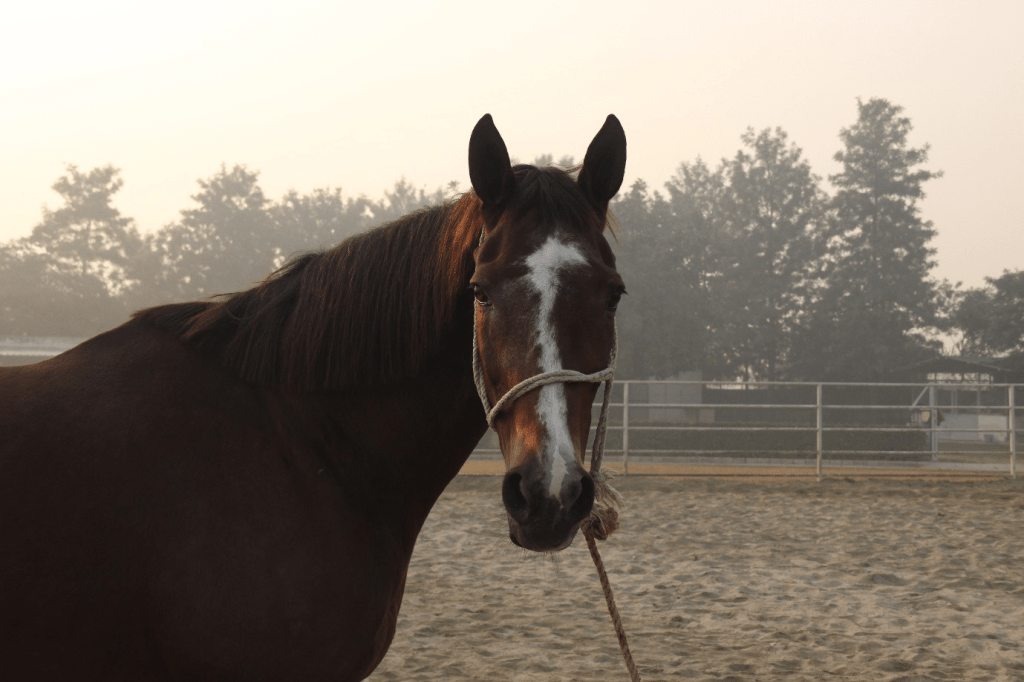
The horse gazes directly into the camera, its expression all too familiar—like it’s had enough of the spotlight and is silently asking, “Are we finished here?”. The final shot of the feature, and this horse is giving you peak model attitude— complete with a side of “I’ve got better things to do.”
 DoubleSpeak